Welsh is one of the oldest living languages in Europe and it is not a museum piece. It is spoken daily by several hundred thousand people, taught in schools across the country, used in local government and broadcasting, and it appears on every road sign in Wales alongside English. Visitors need no Welsh at all, but understanding how it works makes travelling here considerably more comfortable.
Will you be understood in English?
Yes, everywhere. Essentially all Welsh speakers are also fluent English speakers, and there is nowhere in Wales where a visitor speaking English will fail to be understood or served.
What changes is the language you will hear around you. In parts of Gwynedd, Anglesey, Ceredigion and Carmarthenshire, Welsh is the everyday language of the shop, the pub and the street, and conversations will frequently be in Welsh until someone addresses you.
Where is Welsh most widely spoken?
The north west and the west, broadly Gwynedd, Anglesey, Ceredigion and rural Carmarthenshire, where a majority in many communities speak it. The Llyn Peninsula has among the highest proportions in the country.
In the south east around Cardiff and Newport, and along much of the north east border, English predominates in daily use, though Welsh medium education has grown substantially and the number of young speakers in these areas is rising.
How do bilingual road signs work?
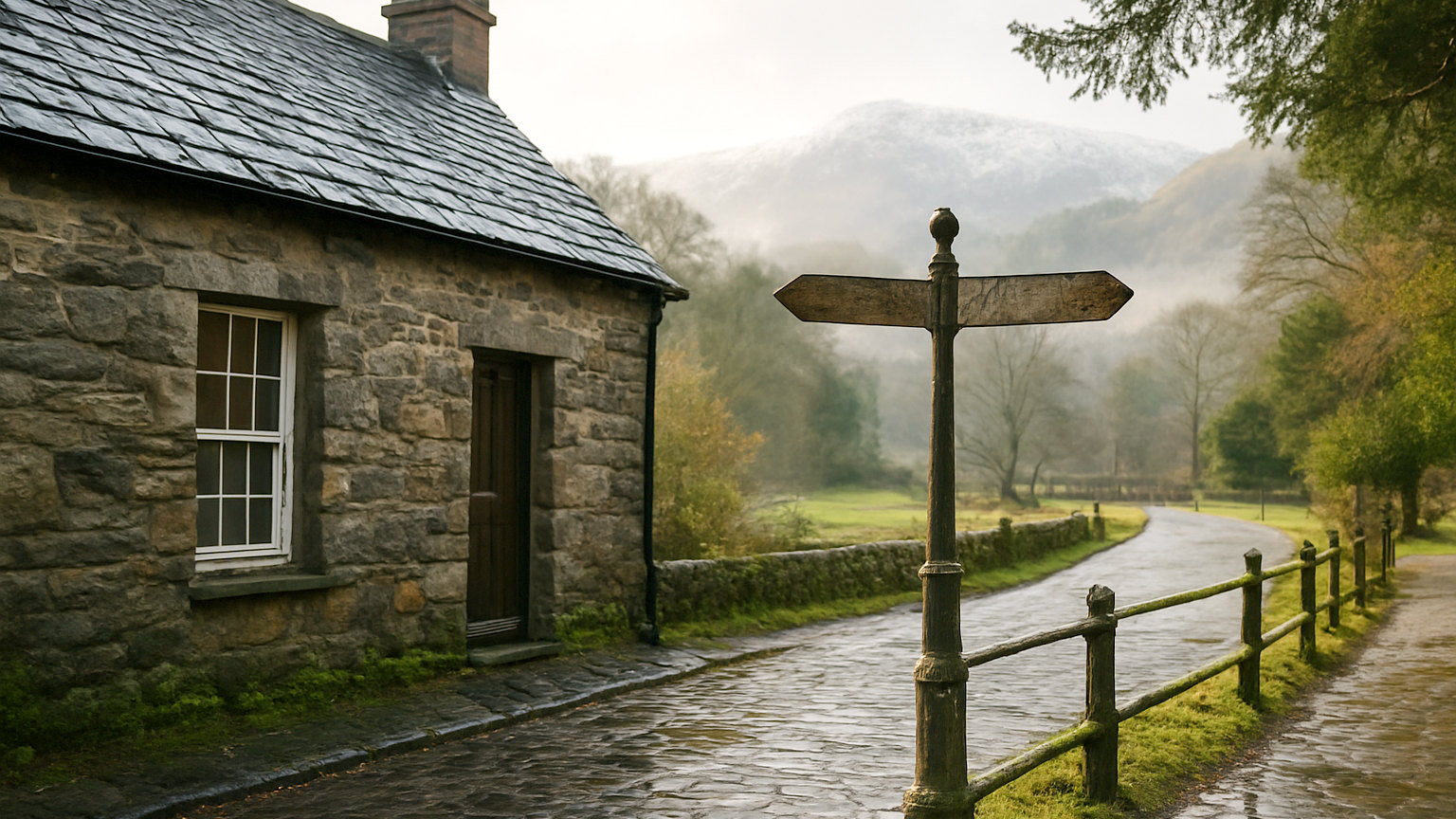
Both languages appear on every sign, with the order varying by local authority. Some place names have distinct Welsh and English forms, so Caerdydd is Cardiff, Abertawe is Swansea, Casnewydd is Newport and Caerfyrddin is Carmarthen.
Others exist only in Welsh and are used unchanged. Increasingly the Welsh form is used alone for natural features, so maps and signs now show Yr Wyddfa for Snowdon and Eryri for Snowdonia, and Bannau Brycheiniog for the Brecon Beacons. Satellite navigation systems do not always keep pace, which occasionally causes confusion.
How are Welsh place names pronounced?
Consistently, once you know the rules, which is more than can be said for English. The letter w is a vowel sounded like the oo in book, so Cwm is roughly coom. The letter y is usually like the u in fun, or the i in pin in final syllables.
Double l is the sound that gives visitors most trouble: place the tongue as though saying l and blow air around the sides. Double d is a voiced th as in the. The letter f is sounded as v, and ff as f, so Ffestiniog begins with a hard f.
Which phrases are worth knowing?
Very few, but they are appreciated. Bore da is good morning, prynhawn da is good afternoon, diolch is thank you, croeso is welcome and iechyd da is a toast. Araf painted on the road means slow.
Nobody expects a visitor to attempt more than this, and attempting it is received warmly rather than critically. Getting a pronunciation wrong is not a problem; the effort registers regardless.
Is there any etiquette to be aware of?
Only common courtesy. If you walk into a shop where a conversation is happening in Welsh, it is not about you, and people will switch to English to serve you as a matter of routine.
The one thing to avoid is treating the language as an inconvenience or a novelty. It has survived considerable pressure over several centuries and its use is a matter of genuine importance to many people. Complaining about signage or asking why people do not simply speak English lands badly.
What else should visitors know?
Wales has its own government with responsibility for areas including transport and health, and rules can differ from England. The default speed limit on restricted roads in built up areas is twenty miles an hour rather than thirty, which catches out a great many drivers crossing the border.
Welsh language media, including a dedicated television channel and radio station, is widely available, and hearing the language used normally is one of the more distinctive things about travelling here.