Essex is unusually well connected for a rural county, because it sits directly north east of London and carries three separate railway lines, a major airport and the ferry port for the Netherlands. That makes almost all of it reachable without a car.
What are the three railway lines?
The Great Eastern main line from Liverpool Street through Chelmsford and Colchester towards Ipswich and Norwich, which is the fastest.
The c2c line from Fenchurch Street along the Thames to Southend, and the Elizabeth line running out to Shenfield, which links across central London without changing.
What is at Stansted?
A major international airport in the north west of the county, served by a rail link to Liverpool Street and by coach to several London points.
It handles a very large number of low cost European flights and is frequently the cheapest way into the region.
Where do the ferries go?
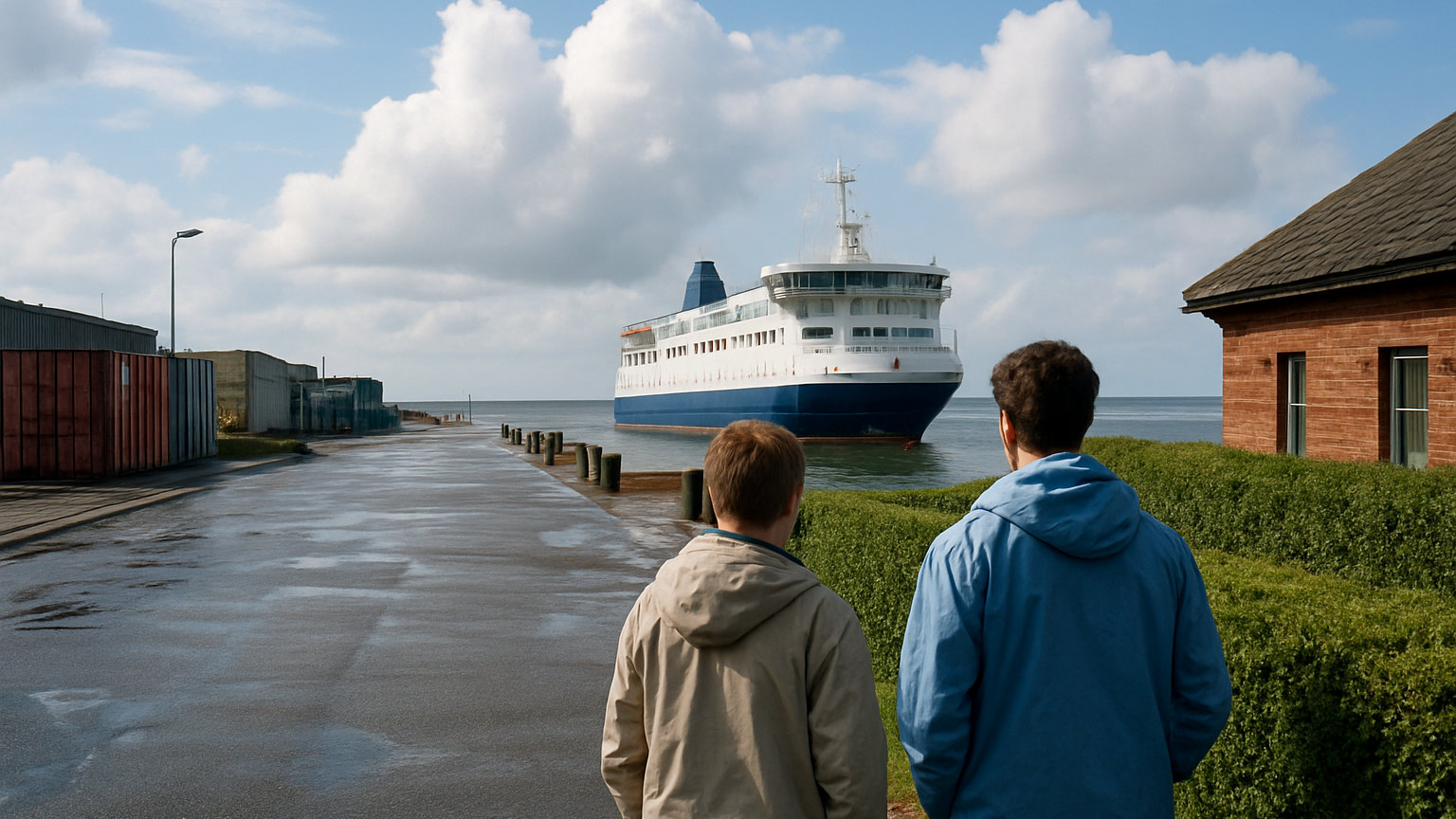
From Harwich International to the Hook of Holland, an overnight or day crossing which is the main direct passenger route to the Netherlands.
Tilbury on the Thames handles cruise ships, and Harwich has its own historic town alongside the port.
What is Southend Pier?
The longest pleasure pier in the world at over a mile and a third, with a railway running the length of it because walking takes around half an hour each way.
The pier has burned down several times and been rebuilt. The train is the sensible option in either direction.
What is the coast like?
Not what people expect. Essex has one of the longest coastlines of any English county, mostly saltmarsh, mudflat and creek rather than beaches.
It is exceptional for birds, with internationally important wintering populations, and largely empty apart from the resorts at Southend, Clacton and Frinton.
What about the estuary islands?
Mersea Island is reached by a causeway that floods on high tides, so check crossing times. Foulness and Osea are restricted.
Mersea has oyster beds worked since Roman times and is a short drive from Colchester.
What is at Colchester?
Britain's first Roman city and its earliest recorded town, with a Norman castle built on the vaults of a Roman temple, substantial wall remains and a good museum.
It is fifty minutes from London by train and is the obvious base for the north of the county.
How do you reach the countryside?
Trains serve the main towns and buses fill the gaps thinly, so the Dengie peninsula, the Blackwater and the smaller villages effectively need a car.
The Essex Way, a long distance path of around eighty miles, runs across the county between stations at either end.
What about the roads?
The M11 north, the A12 north east and the M25 forming the western boundary, all busy at peak times and heavily used.
The Dartford crossing at the southern tip carries a charge that must be paid online rather than at a barrier, which catches out visitors.
What is worth seeing?
Constable country in the Stour valley on the Suffolk border, the Roman town at Colchester, Audley End house near Saffron Walden and the coastal marshes.
Saffron Walden itself has a maze cut into the common and a good deal of plasterwork on its buildings.
What do people get wrong about it?
They assume it is entirely commuter suburb, which describes the south west corner and not the rest.
Most of the county is farmland, marsh and small towns, and the eastern half is genuinely remote by south eastern standards.
What about the Essex marshes?
The Dengie peninsula and the Blackwater estuary hold some of the emptiest country in south east England, with sea walls to walk, ancient churches including a seventh century chapel standing alone on the shore, and enormous numbers of wintering birds. Public transport barely reaches it, which is why it stays as it is.
One final note: the Dartford crossing charge applies in both directions and must be paid online by midnight the following day, since there are no barriers or booths. Unpaid crossings generate penalty notices, which catches out a great many visitors.