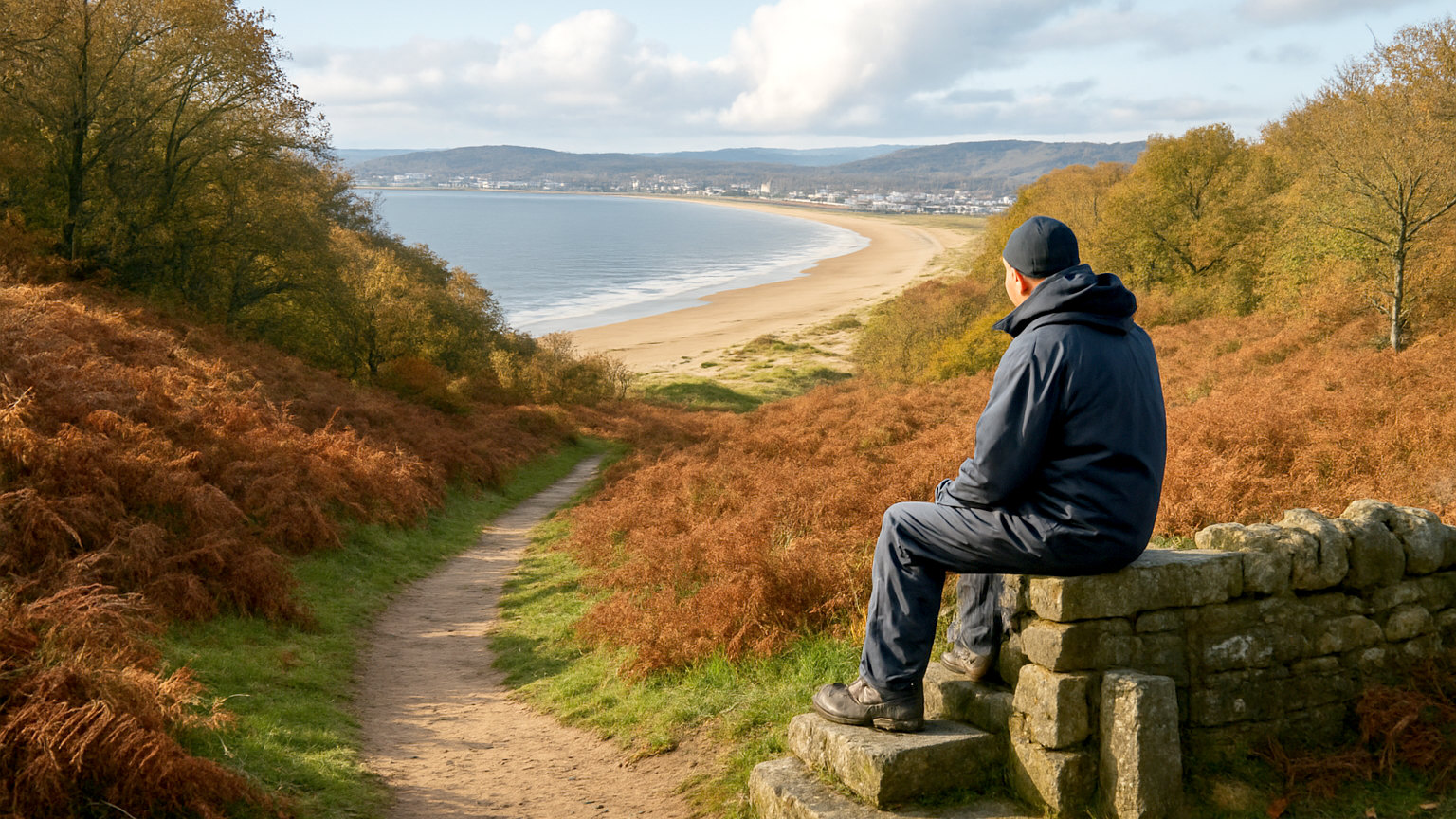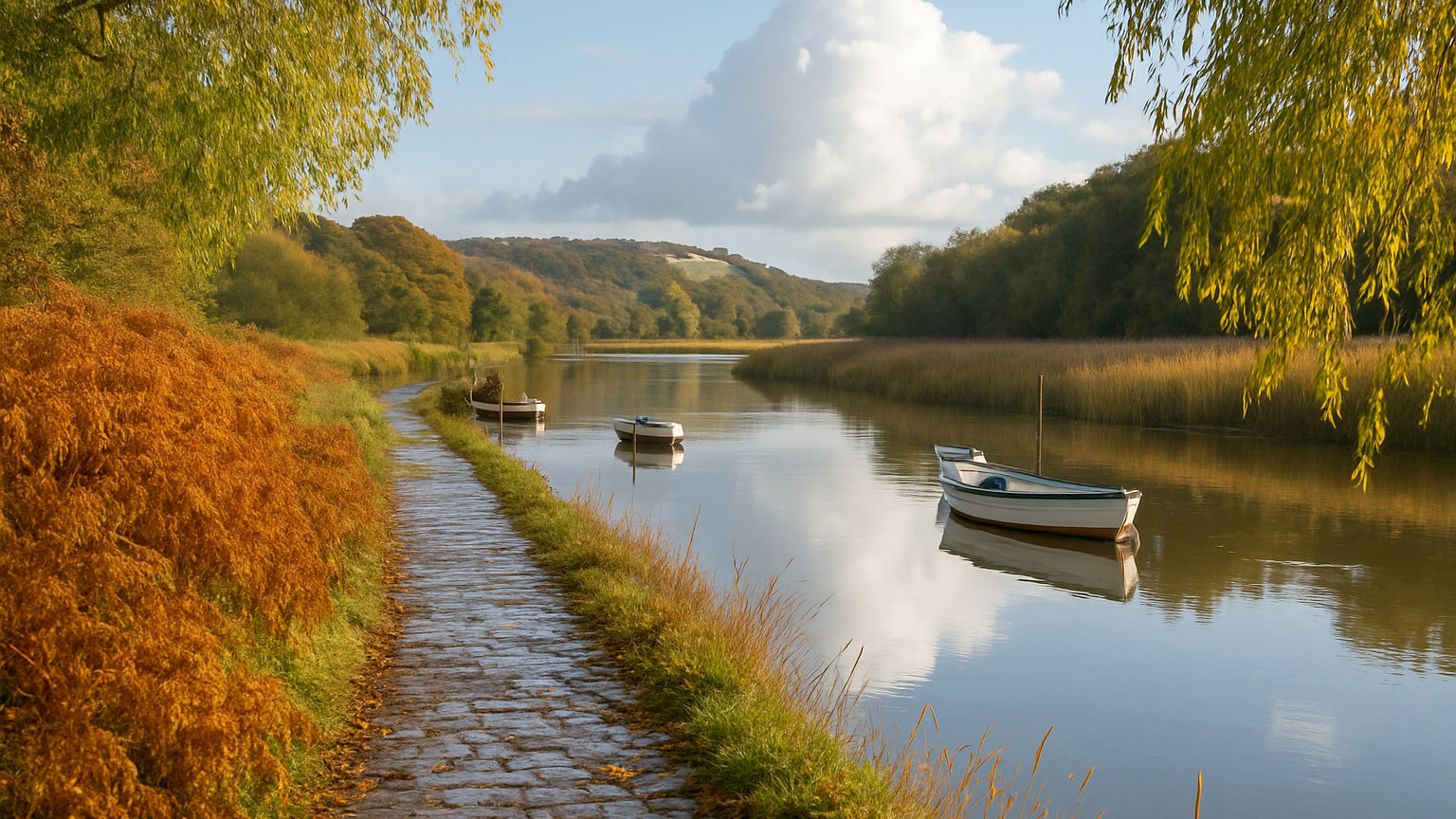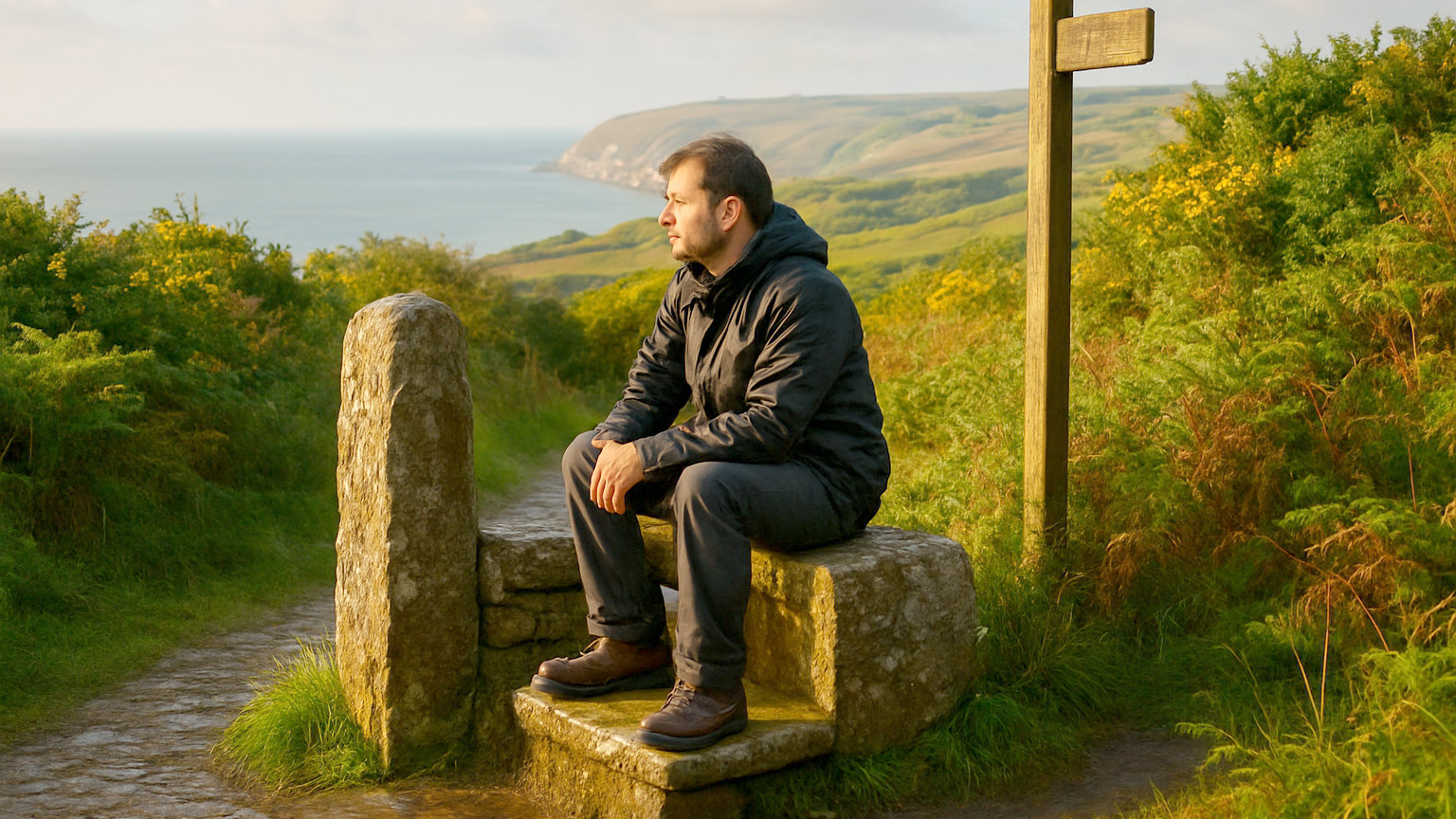
The Gower is a peninsula about fifteen miles long extending west from Swansea, and in the middle of the twentieth century it became the first place in Britain to be designated an area of outstanding natural beauty. It packs limestone cliffs, dune systems, salt marsh and a series of exceptional beaches into an area you can drive across in half an hour.
Which are the best beaches?
Rhossili Bay at the western end is the one that appears in national and international rankings, a three mile sweep of sand backed by a down with the wreck of a sailing ship emerging from the sand at low tide.
Three Cliffs Bay is the other signature location, where a river crosses the sand beneath a limestone ridge pierced by an arch. Oxwich, Port Eynon, Caswell and Langland are all substantial and easier to reach with children.
How accessible are they?
Variable, and this catches people out. Rhossili involves a steep descent and climb back, and Three Cliffs is reached only on foot across dunes or down a steep path, with no vehicle access at all.
Caswell, Langland, Oxwich and Port Eynon have car parks close to the sand and are the practical choices for anyone with limited mobility or a lot of equipment. Car parks fill early on fine summer days across the whole peninsula.
What is the walking like?
Excellent. The Wales Coast Path runs around the whole peninsula, and the southern cliffs give continuous walking above limestone bays with easy escape routes inland. The circuit of Rhossili Down gives the best views on the Gower for modest effort.
The north coast is entirely different, with salt marsh and estuary at Llanrhidian where sheep graze on the marsh and the resulting lamb has a protected designation.
What is Worms Head?
A serpentine tidal island at the far end of Rhossili, reachable across a rocky causeway for a window of about two and a half hours either side of low water. It is a genuine highlight and a genuine hazard.
People are cut off on it every year and require rescue, and the coastguard lookout posts the safe crossing times daily. The crossing itself is rough and slippery, and the window is not advisory. Check the times, wear proper footwear and start back well before the deadline.
Is it good for surfing?
Yes, and it is one of the main surfing areas in Wales. Llangennith at the north end of Rhossili picks up Atlantic swell reliably and has surf schools and hire. Caswell and Langland are more sheltered and suit beginners.
Rip currents are present on the exposed beaches and are the main cause of incidents. Swim between the flags at lifeguarded beaches in season, and treat unlifeguarded beaches with caution.
How busy does it get?
Very busy on fine summer weekends, because Swansea and Cardiff are close and the peninsula absorbs a large day visitor population as well as holidaymakers. The single road out from Swansea becomes congested and the beach car parks fill by mid morning.
Weekdays and the shoulder seasons are transformed. May, June and September give warm enough conditions with a fraction of the traffic, and the sea is at its warmest in early September.
Where should you stay?
Villages on the peninsula itself such as Rhossili, Llangennith, Reynoldston, Port Eynon and Oxwich put you within walking distance of the coast and avoid the daily drive. Options are limited and book well ahead for summer.
Mumbles at the Swansea end has far more accommodation and restaurants and is a pleasant seaside village in its own right, at the cost of a twenty to forty minute drive to the western beaches. Swansea itself is cheapest and works if you do not mind commuting.
However you plan it, the Gower rewards two or three days rather than a single day trip. The peninsula is small but the good beaches are spread across both coasts, the walking between them is the point rather than a means of reaching them, and the tide dictates when several of the best spots are worth seeing at all.