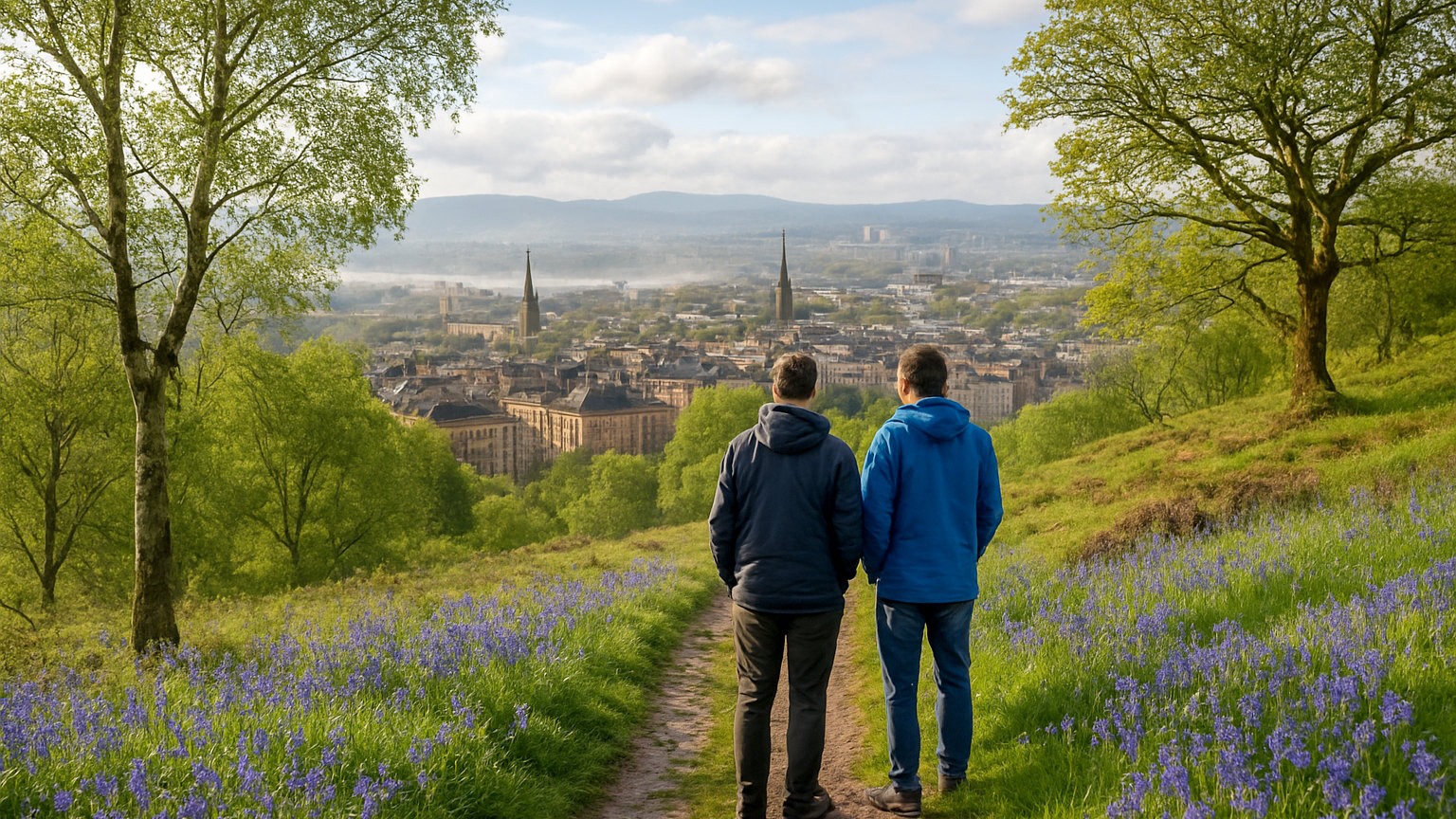
Glasgow is the largest city in Scotland and consistently overlooked by visitors heading for Edinburgh an hour away. It has the better museums, the stronger music scene, more distinctive architecture and noticeably lower prices, and it is friendlier in a way that residents will tell you about at length.
What should you see first?
Kelvingrove Art Gallery and Museum, free, a red sandstone building holding an extraordinary range from Old Masters to natural history to a Spitfire hanging from the ceiling.
It is among the most visited museums in Britain outside London and it deserves to be. A pipe organ recital takes place daily in the central hall.
What about the Burrell Collection?
A collection assembled by one shipping magnate and given to the city, housed in a purpose built gallery in a park to the south and recently reopened after a major refurbishment.
It covers Chinese ceramics, medieval tapestries, stained glass and French painting, and it is free.
Who was Mackintosh?
Charles Rennie Mackintosh, an architect and designer whose work defines Glasgow's visual identity, combining Scottish tradition with art nouveau in a manner recognised internationally.
Several buildings survive, including a house reconstructed within a gallery, tea rooms and a church. His art school building was severely damaged by fire and its future has been the subject of long debate.
Which areas should you walk?
The West End around Byres Road and Finnieston, with independent shops, restaurants and the university's Gothic revival buildings above the park.
The Merchant City in the centre, the Barras market in the east end, and the Clyde waterfront with its transport museum and tall ship.
What about the music?
Glasgow has produced a disproportionate number of significant bands and holds a formal designation as a city of music. Venues range from small basements to a large arena.
Live music happens most nights of the week and the smaller venues are among the best in Britain.
Where should you eat?
Finnieston, which has become the city's restaurant district, and the West End generally. The city has a strong Indian and Pakistani food tradition.
Prices are noticeably below Edinburgh for comparable quality, which applies to accommodation as well.
How do you get around?
On foot in the centre, with a small circular underground network known locally by an affectionate nickname, and an extensive suburban rail system.
Edinburgh is fifty minutes by train, and the city is the gateway to the Highlands and the west coast ferry ports.
What day trips work?
Loch Lomond in forty minutes, the Trossachs, and Argyll with its sea lochs and ferry connections to Arran, Bute and the Inner Hebrides.
The West Highland Line runs from the city to Fort William and Mallaig and is among the finest railway journeys in the world.
How long do you need?
Two or three nights for the city itself, and Glasgow could fill three days on free museums alone, which for the cost of the travel makes it one of the best value cultural destinations in Europe.
Longer if using it as a base for Loch Lomond or the west coast.
When should you go?
Any time, since the museums are indoors and free. Summer is busiest but the city absorbs visitors far better than Edinburgh does in August.
Winter is cheap, dark and lively, and the city is at its most characteristic then.
What about the architecture generally?
Glasgow has an exceptional stock of Victorian commercial building in red and blond sandstone, laid out on a grid that gives the centre a character unlike any other British city. Several buildings by one nineteenth century architect are of international importance, and the city's tenement housing is a distinctive form worth understanding, with one preserved flat open as a museum.
How does it compare with Edinburgh?
Different rather than lesser. Edinburgh has the setting, the castle and the festival; Glasgow has the museums, the music and the prices. Many visitors do both, which is easy given a fifty minute train, and a good number who expected to prefer Edinburgh report otherwise.