The Cairngorms National Park is the largest national park in Britain, covering an area roughly twice the size of the Lake District. It contains the highest and most extensive mountain plateau in the country, the largest remnants of native Caledonian pine forest, and a concentration of wildlife found almost nowhere else in Britain.
What makes the plateau unusual?
Altitude and exposure combine to produce an environment closer to arctic tundra than to anything else in Britain. Five of the six highest mountains in the country are here, and the high ground is a rolling plateau rather than a series of peaks, with snow patches that in some years survive the whole summer.
The weather on the plateau is the most severe in Britain, with some of the highest wind speeds ever recorded in the country. It is superb walking country in good conditions and genuinely dangerous in poor ones, and it should not be judged by the gentle appearance of Strathspey below.
What is the Caledonian forest?
The remnant of the pine forest that once covered much of the Highlands, now reduced to scattered fragments of which the largest are in the Cairngorms. Rothiemurchus, Abernethy and Glen Feshie hold ancient Scots pines, some several hundred years old, over blaeberry and heather.
These woods support species that depend on them, and substantial restoration and regeneration work is underway across the park. Walking among the old pines is one of the quieter pleasures of the area and requires no ascent at all.
What wildlife can you see?
The park holds red squirrels, pine martens, red deer, mountain hares that turn white in winter, golden eagles and ospreys. It is also the only place in Britain with reindeer, a free ranging herd introduced in the twentieth century that can be visited on guided hill walks.
Capercaillie, a large forest grouse, cling on here in very small numbers and are highly sensitive to disturbance, which is why some forest paths carry seasonal restrictions in spring. Ospreys at Loch Garten return each spring and are watchable from a hide.
Where should you base yourself?
Aviemore has the most accommodation, shops and activity operators and sits directly beneath the mountains. Boat of Garten, Nethy Bridge, Kingussie and Newtonmore are quieter alternatives in the same valley. Braemar and Ballater serve the eastern side and Royal Deeside.
The park is large enough that the eastern and western sides make separate trips. Driving between Aviemore and Braemar takes well over an hour by road despite the short distance across the mountains.
What can you do besides walking?
Mountain biking on an extensive trail network, watersports on Loch Morlich and Loch Insh, the funicular railway on Cairn Gorm, the Strathspey steam railway, and the distilleries of Speyside immediately to the north east.
In winter the Cairngorm and Glenshee ski areas operate when conditions allow, and the park is the centre of Scottish skiing and winter mountaineering. Snow cover is variable year to year and worth checking rather than assuming.
How should you approach the high ground?
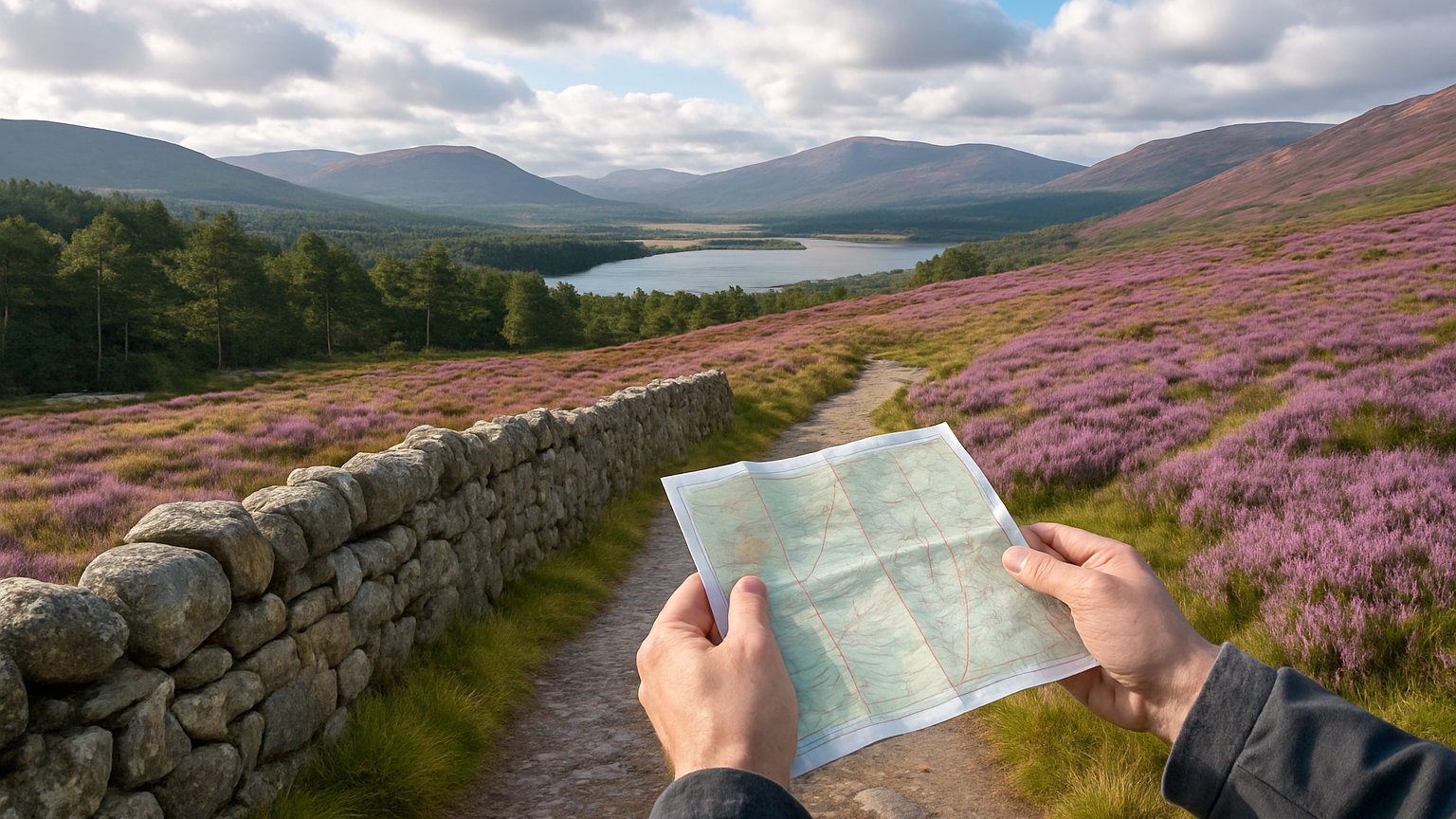
With navigation skills, proper equipment and a genuine willingness to turn back. The plateau has few landmarks, features are widely spaced, and in cloud or spindrift it is very easy to become disoriented. Compass and map skills matter more here than almost anywhere in Britain.
Winter conditions occur from October to May and require an ice axe, crampons and the training to use them. Avalanche forecasts are published for the Cairngorms through the winter season and should be checked before any high route.
When is the best time to visit?
May and June for long days, dry weather and low midge numbers. September and October for autumn colour in the birch and the deer rut. Winter for snow and skiing, with the caveat of short daylight. July and August are pleasant but busier and wetter, and the midges are present in the forest though less troublesome than on the west coast.