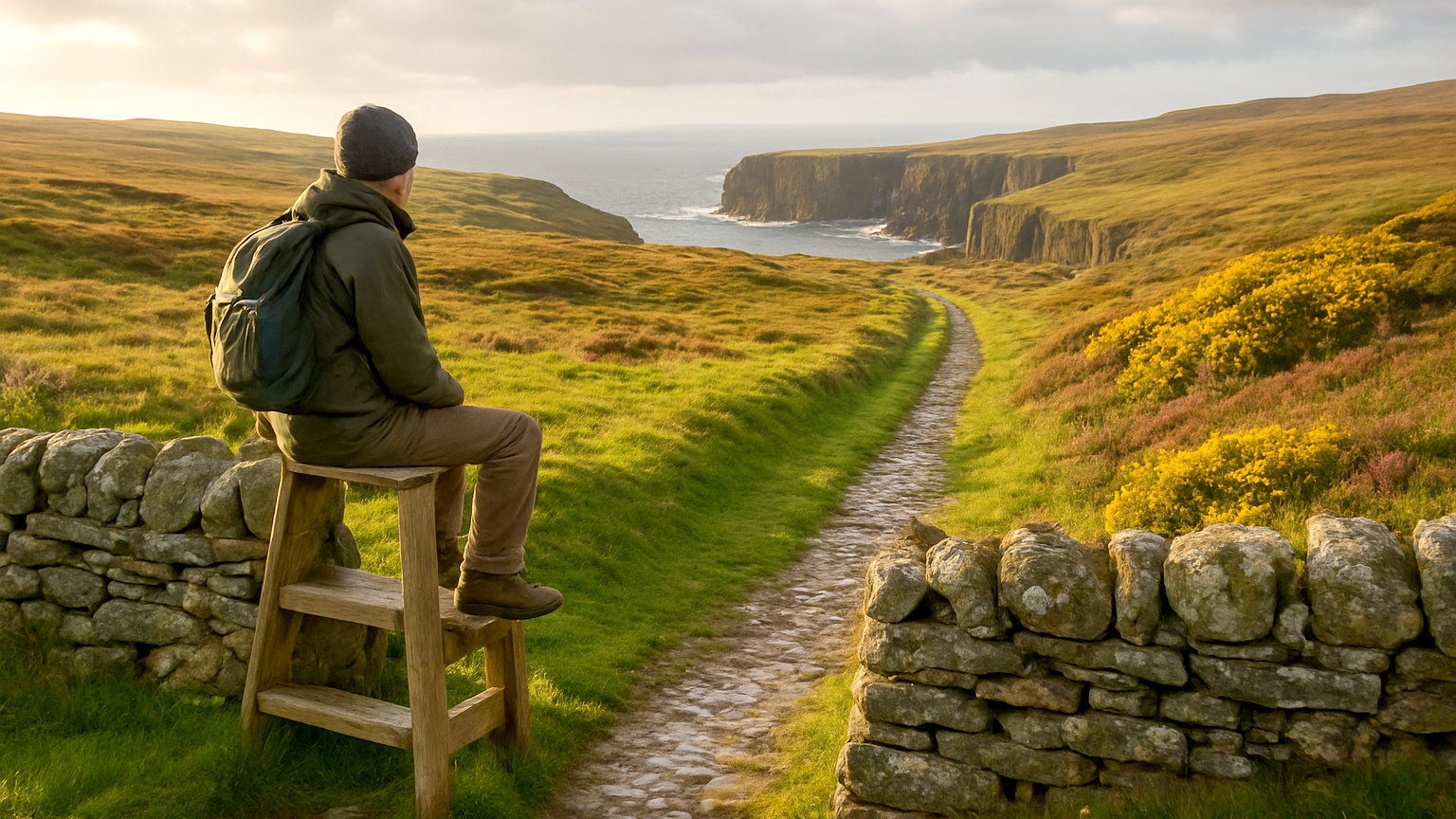
Shetland lies around a hundred miles north east of the Scottish mainland, closer to Bergen than to Edinburgh, and its position produces a visitor season shaped almost entirely by daylight. The islands have Norse heritage, some of the best seabird colonies in Europe and archaeology spanning five thousand years, but when you go changes the experience more than where you go.
What is the simmer dim?
The local name for the midsummer twilight, when the sun barely dips below the horizon and it never becomes properly dark. Around the solstice there is enough light to read outdoors at midnight.
This is the single best reason to visit in June. Days become effectively unlimited, you can walk a cliff path at ten in the evening, and the light itself is remarkable. The reverse applies in December, when there are under six hours between sunrise and sunset.
When are the seabirds there?
Puffins are ashore roughly from late April to early August, with the best viewing in June and July. Sumburgh Head at the southern tip is the most accessible colony, where puffins nest on banks a few metres from the path.
Noss and Hermaness hold enormous gannet colonies, and Fair Isle between Shetland and Orkney is one of the most important bird observatories in Europe for migration. Arriving in late August means the cliffs are largely empty.
What is Up Helly Aa?
A fire festival held in Lerwick in late January, in which a squad in Viking dress parades through the town with hundreds of torches and burns a replica galley. It is the largest of several such festivals across the islands.
It is a genuine community event rather than a tourist spectacle, and accommodation books out a long way in advance. Visiting in January otherwise means very short days and a real chance of disrupted travel, so it is a trip for the festival rather than a general holiday.
What is the weather like?
Windy above all else. Shetland is one of the windiest inhabited places in Britain, and gales are routine in winter. Temperatures are moderated by the sea, so it is neither as cold in winter nor as warm in summer as the latitude suggests, and snow rarely lies long.
Fog is common in early summer, particularly in June, and can close the airport at Sumburgh. Rain is frequent but usually light and blown through quickly rather than settling in.
How do you get there and when is it roughest?
The overnight ferry from Aberdeen takes twelve to fourteen hours, and flights run from Aberdeen, Edinburgh, Glasgow, Inverness and Kirkwall. The crossing is open sea and can be very rough between October and March.
Cabins on the ferry book up for summer. Flights are more weather sensitive than the ferry, with fog the main cause of disruption. Anyone with a fixed onward connection should build in a spare day.
What is there to see beyond wildlife?
Jarlshof at Sumburgh, where settlement layers run from the Bronze Age through Norse longhouses to a laird's house, all in one excavated site. Mousa Broch, the best preserved Iron Age broch anywhere, reached by a small boat and still standing over forty feet high.
Lerwick has a good museum, a stone built waterfront and a strong music scene. The Shetland Folk Festival in spring draws musicians internationally.
So when should you go?
Late May to mid July for the combination of seabirds, endless daylight and the best weather odds. Late April and August work well with fewer visitors. September gives good light and quieter roads but the birds have gone.
Winter is for the fire festivals and the northern lights, locally called the mirrie dancers, which are seen here more often than anywhere else in Britain. It is not a general sightseeing season.
How long should you stay?
A week at minimum, given that reaching the islands takes most of a day in each direction. That allows time for the Mainland, a day at Sumburgh, a boat to Mousa or Noss and a trip to one of the outer islands such as Unst or Yell, both of which are reached by short inter island ferries that run frequently and need no booking.