Holy Island, also called Lindisfarne, lies off the Northumberland coast and is reached by a causeway that floods twice a day. A monastery founded here in the seventh century became the centre from which Christianity spread across northern England, and the island remains a place of pilgrimage.
How does the causeway work?
A road across tidal sand, passable for a period either side of low water and covered by the sea for the rest of the time. Safe crossing times are published in advance and displayed at both ends.
They are not advisory. Vehicles are stranded and drivers rescued from the refuge box on the causeway every year, and the sea rises fast across flat sand.
What should you check before going?
The safe crossing times for your specific date, which are published by the local authority months ahead, and then again on the day.
Allow a generous margin at both ends. Wind and pressure affect actual water levels, and the published window is the outer limit rather than a target.
What is the priory?
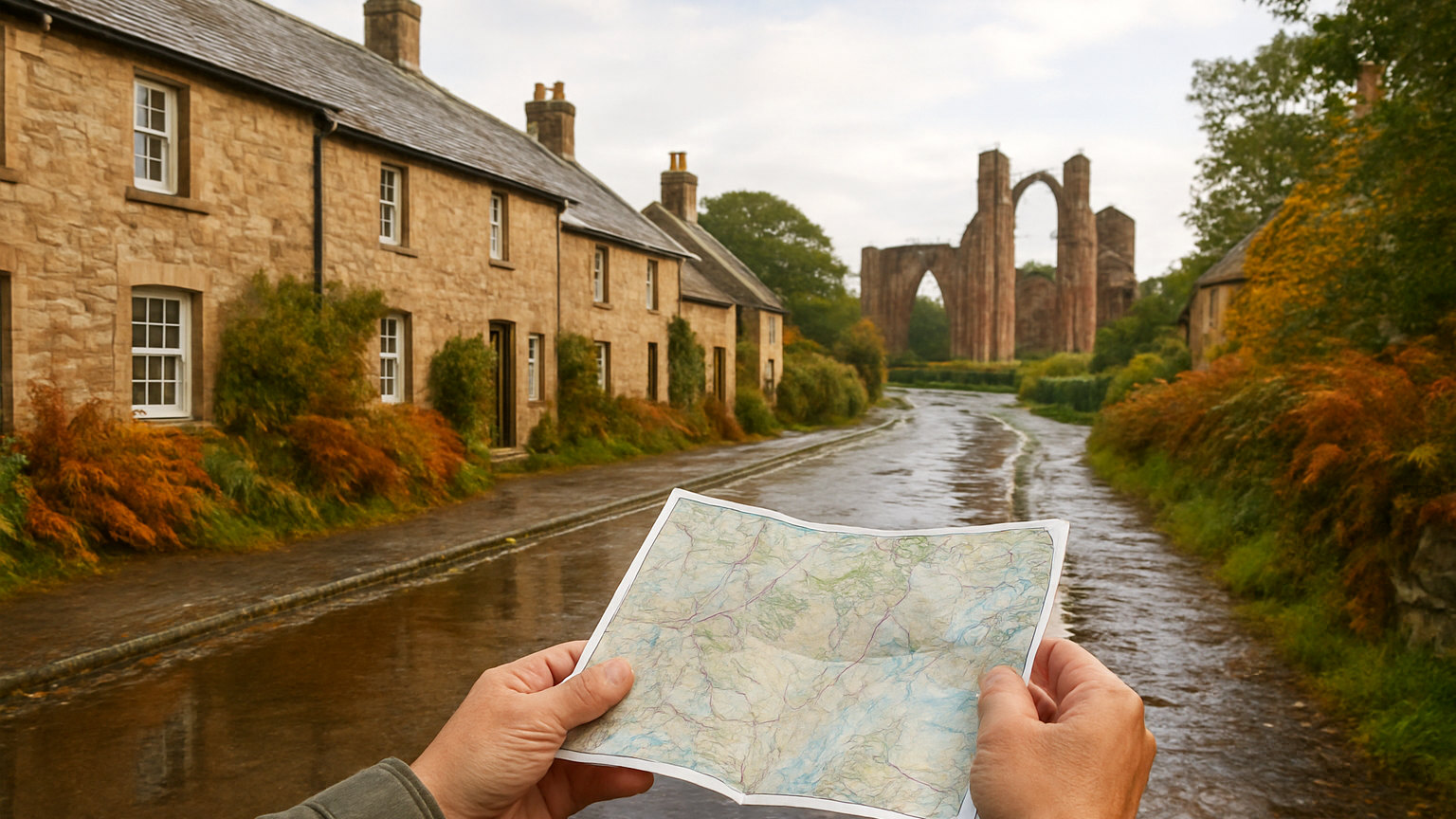
The ruins of a Norman monastery on the site of the earlier Anglo Saxon foundation, with a distinctive surviving rainbow arch and a small museum covering the community and its manuscripts.
The illuminated gospels produced here in the eighth century are among the finest surviving from early medieval Europe and are held in London rather than on the island.
What happened here in 793?
A Viking raid on the monastery, widely treated as the beginning of the Viking age in Britain and recorded with shock in the chronicles of the time.
The community eventually left, carrying the body of their saint, and after long wandering settled at Durham, where the cathedral was built over his shrine.
What is the castle?
A small Tudor fort on a rocky outcrop at the southern tip, converted into a private house in the early twentieth century by a well known architect and now open to visitors.
A walled garden designed by a celebrated gardener sits in a field nearby, and the lime kilns below are substantial.
What else is on the island?
A village with pubs, shops and a mead producer. Upturned herring boats used as sheds on the shore. A nature reserve covering the dunes and the mudflats, which hold enormous numbers of wintering birds.
Grey seals are visible offshore and the island is on a major migration route.
What is the Pilgrims' Way?
A route across the sands marked by poles, following the traditional walking approach rather than the road, and crossable barefoot at low water.
It takes around an hour and should only be attempted with the tide times understood, appropriate footwear and preferably in company.
When should you visit?
Whenever the tide allows, which some days means early morning and other days late afternoon. That constraint shapes the whole visit.
Winter is quiet, atmospheric and cold, with the bird populations at their peak. Summer brings substantial visitor numbers within each tidal window.
Can you stay overnight?
Yes, and it is the best way to experience it, since the island empties completely when the causeway closes and the evening belongs to residents and overnight guests.
Accommodation is limited and books well ahead.
How long do you need?
One tidal window covers the priory, the castle and the village at a rush. Two nights allows the island to be seen properly.
It combines with the Northumberland coast, with Bamburgh and the Farne Islands a short distance south.
What should you do if you get it wrong?
If you are caught on the causeway with water rising, abandon the vehicle and climb to the refuge box on stilts, which exists for exactly this purpose, and call 999 for the Coastguard. Do not attempt to drive through moving water. Vehicles are written off by salt water every year and insurers frequently decline claims where published crossing times were ignored.
One final suggestion: check the crossing times before booking accommodation on the mainland, since a tidal window falling early in the morning and late in the evening shapes the whole day and is worth planning around rather than discovering.