Several parts of Britain have free roaming ponies, and they are one of the more accessible pieces of British wildlife watching, since they are large, unbothered by people and present all year. Almost none of them are genuinely wild, which is a distinction that matters for how you treat them.
Are they actually wild?
Mostly not. The ponies of the New Forest, Dartmoor and Exmoor are owned, marked and rounded up periodically, grazing common land under rights held by local people. They are free roaming livestock rather than wild animals.
They are nonetheless unhandled for most of the year, live outdoors in all weather and behave as wild animals do. The exception is that ownership means welfare, straying and accidents are somebody's legal responsibility.
Where can you see them?
The New Forest, where several thousand roam freely across heath, woodland and through the villages, and are the easiest to see in Britain. Dartmoor, on the open moor and beside the roads.
Exmoor, where the Exmoor pony is a distinct and ancient breed. The Carneddau in north Wales, where a semi feral herd lives high on the mountains. Also parts of the Long Mynd, the Gower and several commons.
What makes the Exmoor pony distinctive?
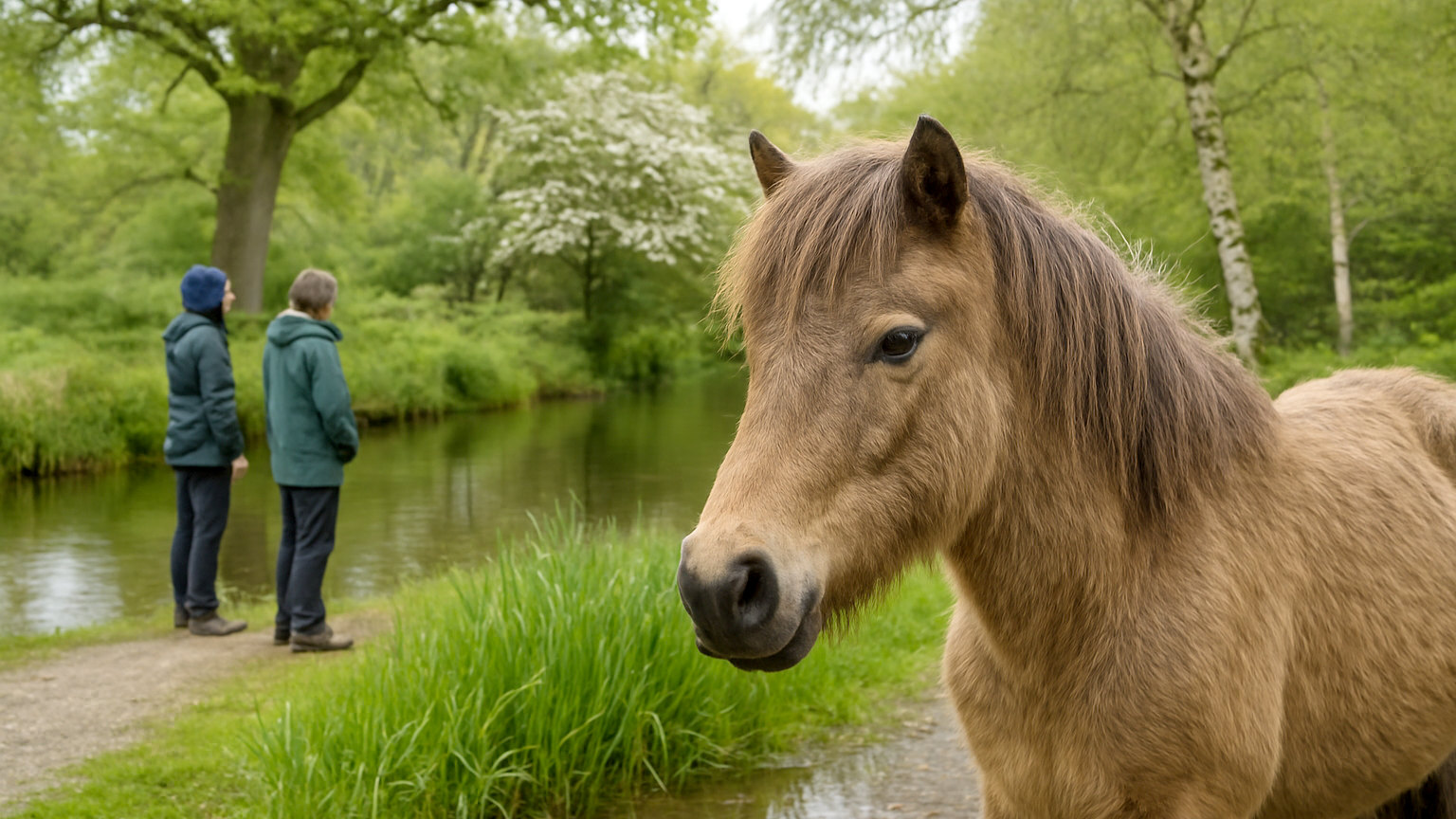
It is one of the oldest and purest native breeds, with a characteristic mealy muzzle, pale ring around the eye and a thick winter coat that sheds water. Numbers are small enough that the breed is classified as at risk.
The Carneddau ponies in Wales are similarly distinct, isolated on the mountains and adapted to conditions that would kill less hardy animals.
Why should you not feed them?
Because it kills them. Hand feeding draws ponies to roadsides, where they are struck by vehicles, and every year a substantial number die this way in the New Forest and on Dartmoor.
It also makes them approach and occasionally bite or kick people, and human food causes digestive problems. In the New Forest feeding is illegal, and signs saying so are not decorative.
How close should you get?
Not close. They are large animals that kick and bite, and mares with foals are protective. Do not stand between a mare and a foal, do not touch them and do not attempt photographs at arm's length.
Keep dogs on leads. A dog running at ponies can provoke a serious reaction, and ponies have injured both dogs and owners.
What should drivers know?
That the animals have right of way in practice and no road sense at all. Speed limits in the New Forest and on Dartmoor exist specifically because of livestock, and collisions are common at dusk and at night.
Drive slowly, expect animals around bends and on the road at night, and never assume a pony standing on the verge will stay there.
When are they most visible?
All year, though behaviour changes. Foals appear from spring into summer, which is when the animals are most photographed and most sensitive. In winter they move to lower ground and gather in more sheltered spots.
Autumn brings the drifts or round ups, when ponies are gathered for health checks and sales, which are public events in the New Forest and on Dartmoor and worth seeing.
What other free roaming animals are there?
Cattle on the same commons, including Highland cattle in several places, which look benign and are large animals with horns. Feral goats on the Great Orme in Wales, at Cheddar and in Galloway.
Chillingham cattle in Northumberland are a genuinely wild herd, unhandled for centuries and viewable only on a guided visit. Soay sheep on St Kilda are similarly ancient and unmanaged.
Why do they matter ecologically?
Grazing maintains the habitats these places are valued for. Without ponies and cattle, heath and moorland revert to scrub within a few decades, taking the ground nesting birds, reptiles and plants with them.
The ponies are not a picturesque addition to the New Forest or Dartmoor. They are the reason those landscapes look the way they do.