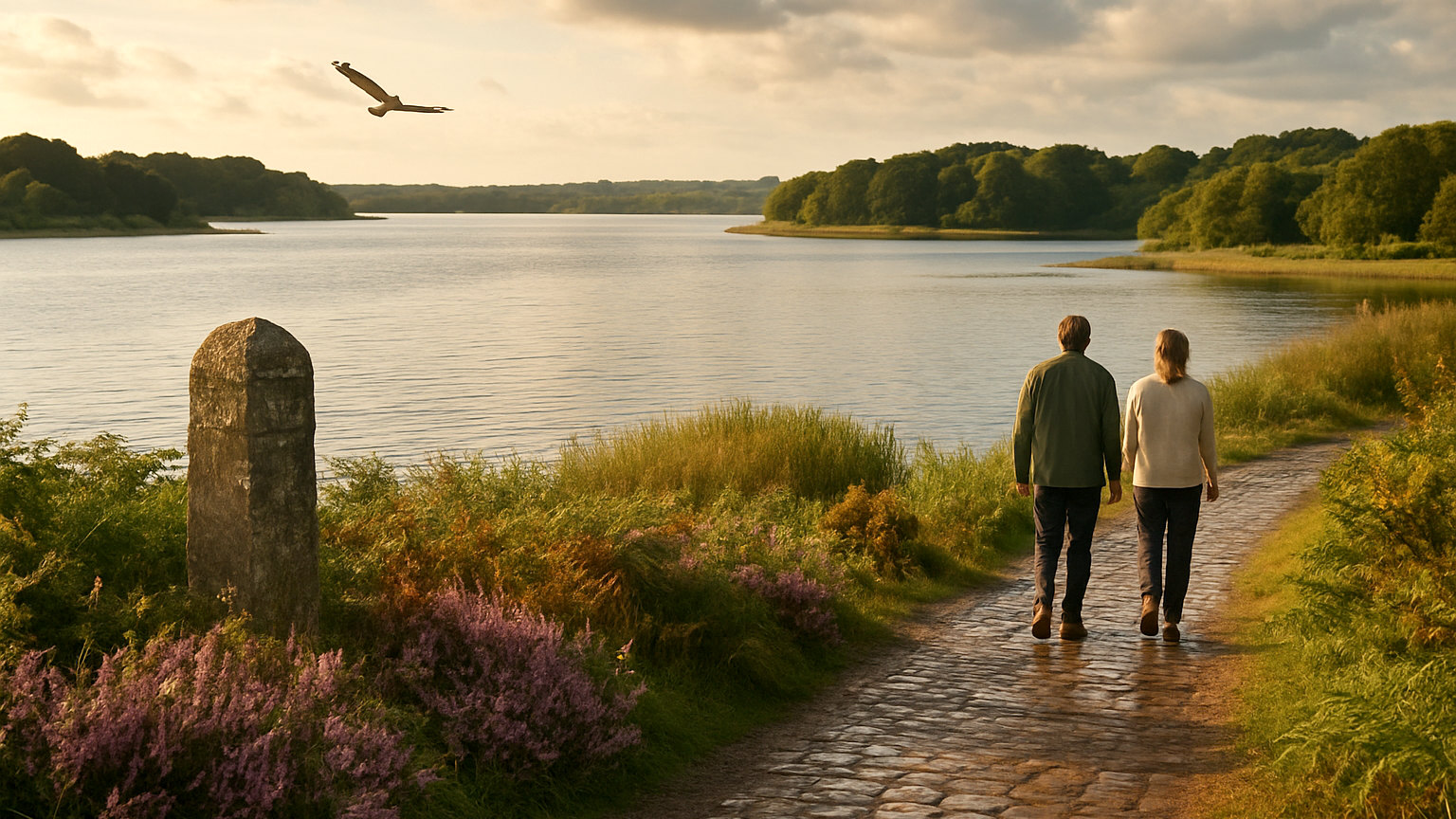
Rutland is the smallest county in England and Rutland Water, created in the 1970s by damming a valley, is among the largest artificial lakes in Europe by surface area. It was designed with a nature reserve at the western end from the outset, which turned out to be an inspired decision.
What is the osprey project?
A translocation scheme begun in 1996 that brought young ospreys from Scotland and released them here, leading to the first breeding pair in England for around a hundred and fifty years.
The population has since expanded and birds from Rutland have colonised sites across England and Wales, which makes it among the most successful reintroductions in Britain.
When can you see them?
From late March to early September, when they are present between migrations to and from West Africa. Nests are watched from hides with live camera feeds.
The Lyndon centre on the south shore is the main viewing point, and volunteers with telescopes will find the birds for you.
What happens in winter?
Very large numbers of wildfowl arrive, regularly in the tens of thousands, making the reservoir internationally important for several species.
Wigeon, teal, gadwall, shoveler and goldeneye in quantity, with smew and other scarce ducks most years, and large gull roosts at dusk.
What is the reserve like?
Around a third of the shoreline is managed as a nature reserve with lagoons, hides and two visitor centres, at Egleton and Lyndon.
Egleton has the greatest concentration of hides and is the better bet in winter; Lyndon is the osprey centre and is better in summer.
What else breeds there?
Common terns on artificial rafts, oystercatchers, lapwings and redshanks on the lagoons, and a substantial heronry.
Otters are present and occasionally seen from the hides, and the surrounding grassland holds brown hares.
Can you cycle round it?
Yes, on a largely traffic free circuit of around twenty three miles, or a shorter seventeen mile loop that cuts across the peninsula.
Cycle hire operates at several points and the route is flat to gently rolling, which makes it among the best family rides in the Midlands.
What is Normanton Church?
A church left standing when the valley was flooded, its lower half packed with rubble and encased to protect it, so that it now appears to sit half submerged at the water's edge.
It is the most photographed thing in the county and holds a small exhibition.
What else is in Rutland?
Oakham with a Norman castle hall holding a collection of ceremonial horseshoes, and Uppingham, a small town built around a public school.
Barnsdale Gardens, laid out as a series of small demonstration gardens for a long running television series, is nearby.
Why is the county so small?
It is a historical accident that has been fiercely defended. Rutland was abolished as an administrative county in 1974 and campaigned successfully for restoration in 1997.
Its motto translates as much in little, and local identity here is unusually strong for such a small place.
How do you get there?
By train to Oakham on the line between Leicester and Peterborough, with buses to the reservoir, or by road from the A1.
A car is helpful for reaching both ends of the water, which are some distance apart by road.
When should you go?
Late spring and summer for ospreys and terns. November to February for wildfowl in enormous numbers and for a quiet reserve.
Autumn brings passage waders, and a birdwatching fair has been held here for many years and draws large crowds in summer.
What equipment do you need?
Binoculars at minimum. A telescope is genuinely useful here, since the water is large and birds sit a long way out, and the visitor centres have some available. Warm windproof clothing well beyond what the temperature suggests, because hides are unheated and watching involves sitting still for long periods.
One final point: the reserve charges an entry fee at both centres, with an annual pass available that pays for itself in two visits. Members of the county wildlife trust enter free, which is worth knowing if you live within reach.