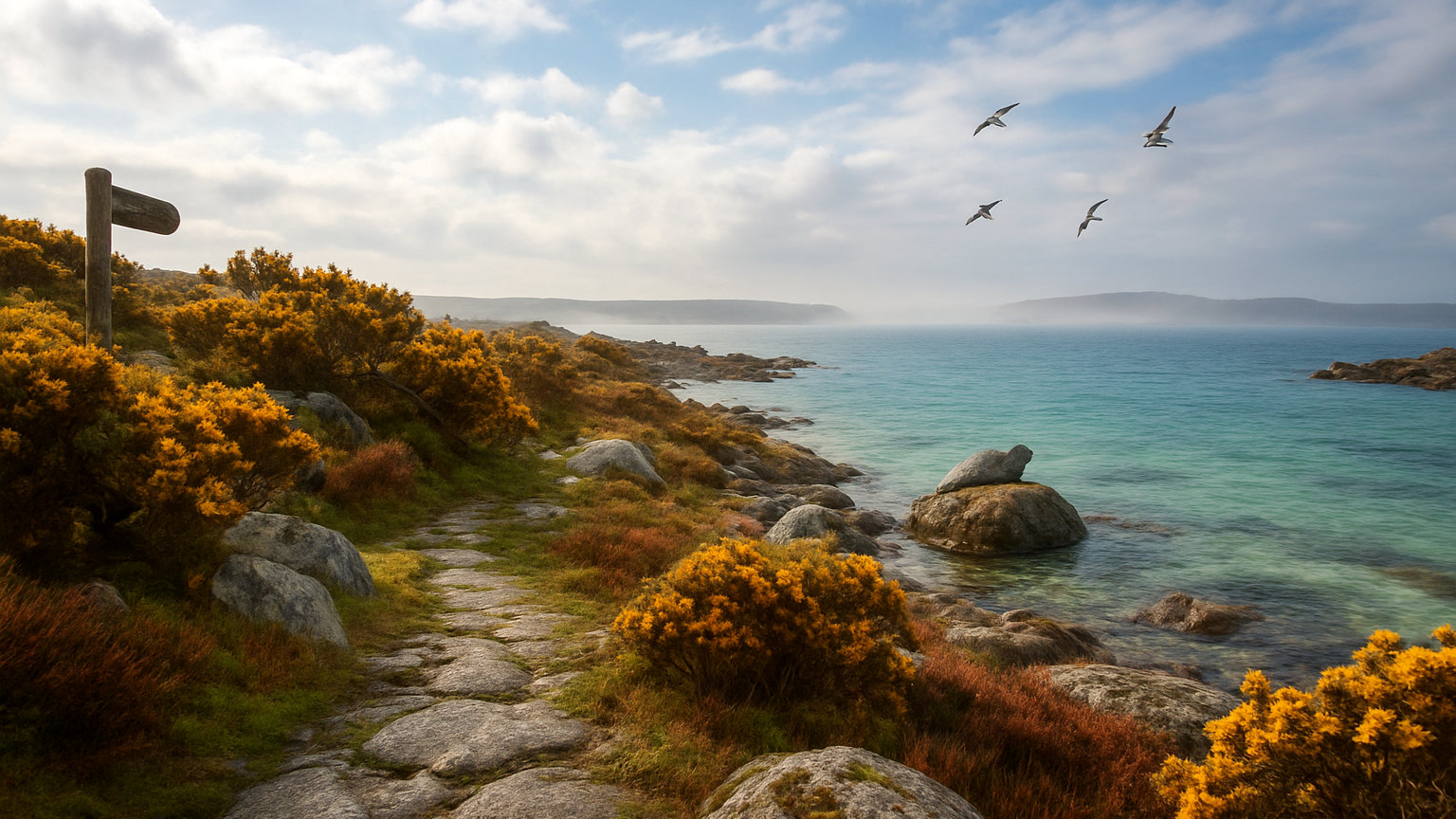
The Isles of Scilly lie around twenty eight miles south west of Land's End, five inhabited islands and many more uninhabited rocks, warmed by the Atlantic and almost frost free. The isolation and the position on a migration route make them among the best wildlife destinations in Britain.
Where do you see seals?
Atlantic grey seals are present year round and are easily seen on boat trips to the Eastern Isles, where they haul out on rocks in substantial numbers.
Pups are born in autumn. Trips run from St Mary's daily in season and the animals are frequently curious about boats and swimmers.
Are there puffins?
Yes, breeding on Annet and a few other uninhabited islands, best seen on dedicated boat trips between April and July before they leave for the open sea.
Manx shearwaters and storm petrels also breed here in internationally important numbers, and evening trips run to see shearwaters gathering on the water.
Why is autumn special for birds?
Because the islands sit at the south western tip of Britain and catch migrants blown off course, including species from North America and Siberia.
October is the peak and the islands fill with birdwatchers. It is among the most reliable places in Europe to see genuine rarities, and the atmosphere during a good arrival is remarkable.
What is the Scilly shrew?
The lesser white toothed shrew, which occurs nowhere else in Britain apart from the Channel Islands, and is common here on beaches and among stone walls.
It has no close relatives on the mainland and its presence is one of the oddities of the islands' natural history.
What is Tresco Abbey Garden?
A garden begun in the 1830s in the shelter of abbey ruins, growing plants from South Africa, Australia, South America and the Mediterranean that cannot survive outdoors anywhere else in Britain.
It holds thousands of species and a collection of ships' figureheads from local wrecks. It is ticketed and is the single most visited attraction on the islands.
What grows wild?
A distinctive flora including species at the northern edge of their range, with agapanthus and other escapes naturalised along the lanes.
The islands supply cut flowers to the mainland, with narcissi picked from December, which is months ahead of anywhere else in the country.
What is in the water?
Basking sharks in early summer, dolphins, and occasionally other cetaceans. The clarity is exceptional by British standards and snorkelling with seals is offered by licensed operators.
The waters are a marine conservation zone with important eelgrass beds supporting seahorses and cuttlefish.
How do you get there?
By ferry from Penzance, taking around two and three quarter hours, which can be a rough crossing and does not run in winter.
Or by aircraft from Land's End, Newquay and Exeter, taking twenty minutes to an hour, subject to fog which closes the airfields regularly.
How do you get between the islands?
By boat. A daily timetable of inter island launches operates from St Mary's, with the schedule set each morning according to the weather and tide.
There is no fixed timetable to plan around in advance, which takes visitors some adjusting to.
When should you go?
May and June for flowers, seabirds and long days. October for migration and rarities. Both are entirely different experiences.
Winter sees the ferry stop, most accommodation close and the islands revert to their residents.
What should you know before booking?
That travel is weather dependent in both directions, that being delayed is normal rather than exceptional, and that you should not plan anything tight for the day after returning.
Accommodation is limited and books far ahead, particularly in October when birdwatchers fill the islands.
What is it like to stay there?
Quiet, small scale and slow. St Mary's has the only significant settlement and the other islands have a handful of businesses each. There are very few cars, no chain shops and limited connectivity in places. Bring anything you cannot do without, since the shops are small and resupply depends on the boat.