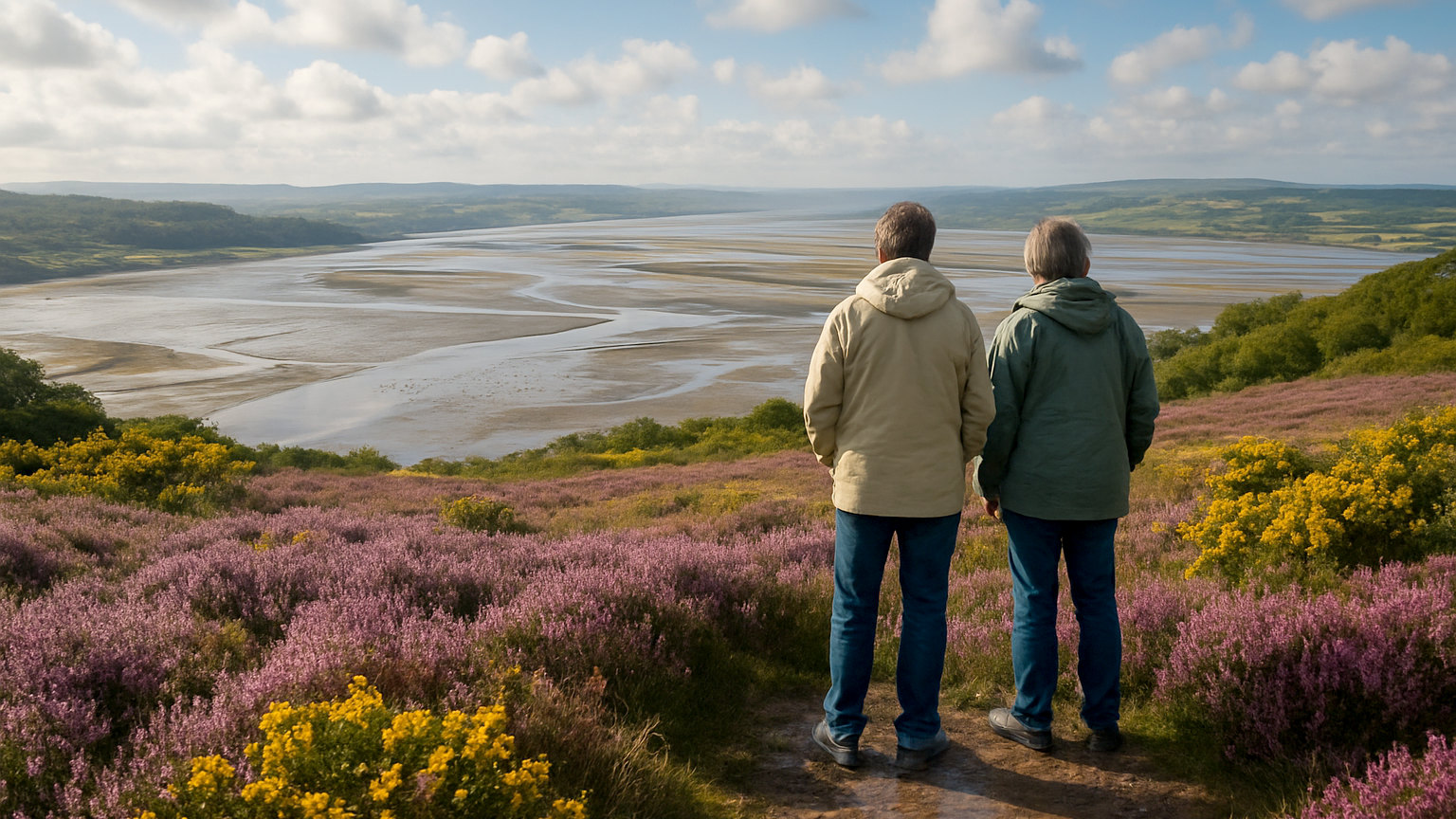
British estuaries are internationally important for wintering birds, holding numbers that arrive from Iceland, Scandinavia, Greenland and Siberia. In the depths of winter, when the rest of the countryside is quiet, an estuary at the right state of tide is the busiest wildlife spectacle in the country.
Why are they so important?
Because mild winters and enormous tidal mudflats provide reliable food when northern breeding grounds are frozen. Britain sits on a major flyway, and several estuaries hold internationally significant proportions of certain species.
The Wash, Morecambe Bay, the Ribble, the Dee, the Solway, the Severn and the Thames are among the most important, along with Strangford Lough in Northern Ireland.
Why does the tide govern everything?
Because birds feed on exposed mud and are pushed off it as the tide rises. At low water they are scattered across enormous flats and often too distant to see; at high water they concentrate into roosts, sometimes in tens of thousands.
The hour or two before high tide is when the birds come to you. Arriving at low water on a big estuary generally means seeing very little.
What is the Snettisham spectacle?
On the highest spring tides at Snettisham on the Wash, tens of thousands of knot are pushed off the mud and swirl in dense clouds before packing onto lagoons. It is among the most extraordinary bird spectacles in Europe.
It only happens on the biggest tides, and the dates are published well in advance. Timing is everything and the whole event lasts under an hour.
Which geese and swans arrive?
Pink footed geese in enormous numbers in Norfolk and Lancashire, flighting at dawn and dusk between roost and feeding fields. Barnacle geese on the Solway from Svalbard, and brent geese on southern and eastern estuaries.
Whooper and Bewick's swans arrive from Iceland and Siberia, and can be watched at close range during floodlit feeds at several wetland centres.
Which waders should you look for?
Knot, dunlin, oystercatcher, curlew, godwits, redshank and grey plover are the mainstays. Numbers rather than rarity are the point, and a flock of several thousand dunlin turning together catches the light like a shoal.
Curlew are of particular conservation concern in Britain, and an estuary in winter is where most people encounter them.
When should you go?
November to February, on a rising tide, ideally with a spring tide for the biggest movements. Early morning and dusk for goose flights, which happen at first and last light.
Cold, still weather concentrates birds and improves viewing. A hard frost inland pushes more birds onto the coast.
What should you take?
A telescope if you have one, since distances on estuaries are large, though binoculars are enough at the roost sites. Warm and windproof clothing well beyond what you would wear inland.
A tide table for the specific site, which is the single most useful item. Reserves publish recommended arrival times relative to high water.
Where should you start?
A reserve with hides positioned for the tide: Snettisham and Titchwell on the Wash, Leighton Moss and Morecambe Bay, Parkgate on the Dee, Caerlaverock on the Solway, Slimbridge on the Severn.
These places have staff who will tell you exactly when to be where, which on an estuary is worth more than any amount of independent effort.
What should you be careful about?
The tide, which comes in fast across flat mud and has drowned people. Never walk out onto mudflats or sandbanks, which also carry a risk of soft mud and quicksand in places.
Also disturbance. Birds pushed off a roost burn energy they need in winter, so stay behind screens and hides and keep dogs on leads or leave them at home.
One final point in favour of estuaries: they are at their best precisely when everywhere else is at its worst. A grey January afternoon that offers nothing inland can deliver twenty thousand birds on a rising tide, which makes estuaries the most reliable winter wildlife destination in Britain.