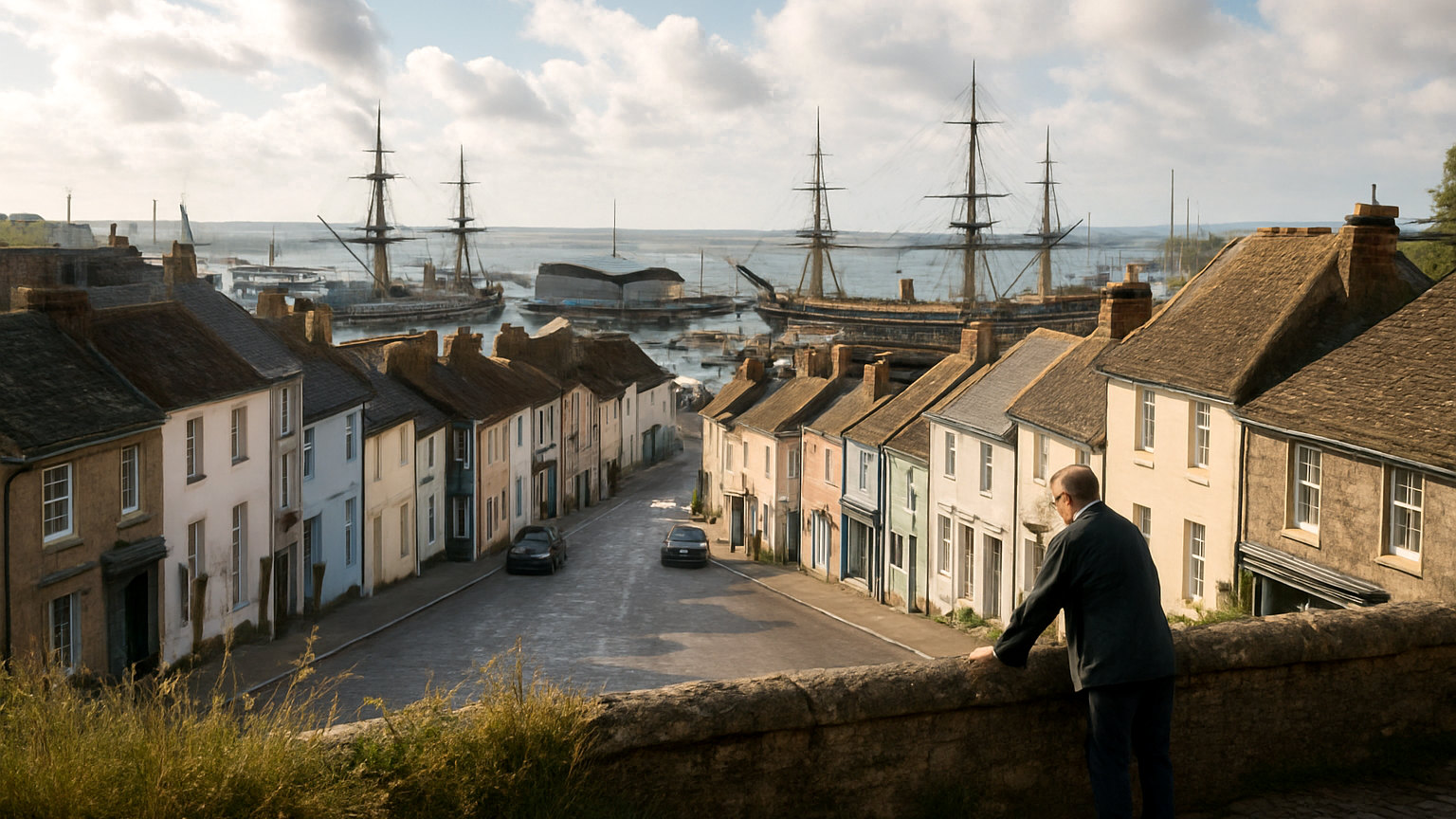
Portsmouth has been the principal home of the Royal Navy for centuries and its historic dockyard holds three warships spanning four hundred years, along with a museum built around a Tudor ship raised from the seabed. It is the finest naval heritage site in the world and it needs a full day at minimum.
What is HMS Victory?
Nelson's flagship at Trafalgar in 1805, launched in 1765, preserved in dry dock and the oldest commissioned warship in the world.
You walk through the gun decks, the officers' quarters and the spot where Nelson was shot. Headroom below decks is low, which is itself instructive about life aboard.
What is the Mary Rose?
A warship of Henry the Eighth that sank in 1545, was rediscovered and raised in 1982, and is now displayed in a purpose built museum alongside thousands of objects recovered with her.
The objects are the remarkable part: shoes, combs, instruments, longbows and the personal possessions of the crew, preserved in the silt. The hull is viewable from three levels.
What is HMS Warrior?
The first iron hulled, armoured warship, launched in 1860, which made every other navy in the world obsolete overnight and was itself obsolete within a decade.
She is restored to her original condition and is the easiest of the three ships to walk around.
How does the ticket work?
A single dockyard ticket covers the ships and the naval museums, generally valid for a year, which is useful since seeing everything in one visit is difficult.
Book ahead in season, arrive at opening and start with the Mary Rose or Victory, which develop the longest queues.
What is the D-Day Story?
A separate museum at Southsea covering the 1944 landings, which were planned and largely launched from this stretch of coast.
It holds the Overlord Embroidery, a hand stitched work over eighty metres long depicting the operation, and a surviving landing craft.
What about Dickens?
He was born in Portsmouth in 1812 and the terraced house is preserved as a small museum, furnished to the period, with the couch on which he died brought from Kent.
It opens on limited days, so check before going.
What is the Spinnaker Tower?
A tower on the harbour front with viewing decks, including a glass floor, giving a view over the dockyard, the Solent and across to the Isle of Wight.
It sits above a shopping and restaurant development at Gunwharf Quays.
What else is in Southsea?
A castle built by Henry the Eighth, a common running along the seafront, a pier and a shingle beach with views of shipping entering the Solent.
The Solent is among the busiest waterways in the world and simply watching it from the shore is a genuine pastime here.
What is Old Portsmouth?
The surviving old town at the harbour mouth, with fortifications, a cathedral, narrow streets and a shingle beach at the Hot Walls where ships pass extremely close.
It is the pleasantest part of the city and is a short walk from the dockyard.
How do you get there?
By train from London Waterloo in around ninety minutes, with the harbour station directly beside the dockyard entrance and the ferry terminal.
Ferries run to the Isle of Wight, and cross Channel services sail from the commercial port.
How long do you need?
A full day for the dockyard and a second for the D-Day museum, Southsea and Old Portsmouth.
Two nights is the sensible minimum, and the annual ticket makes returning worthwhile if you live within reach.
What about the submarine museum?
Across the harbour at Gosport, reached by a short passenger ferry, the Royal Navy Submarine Museum holds a submarine you can walk through end to end, along with a Second World War midget submarine. Nearby is a fort and the Explosion museum of naval firepower. All are quieter than the main dockyard and included on some combined tickets.