Plymouth was among the most heavily bombed cities in Britain and was rebuilt afterwards to a comprehensive modern plan, which is why the centre surprises visitors expecting a historic port. The old city survives in patches around the waterfront, and the museums are unusually good for a city of its size.
What is The Box?
A museum, gallery and archive opened in 2020, combining the city's collections in a substantially rebuilt and extended building, and free to enter.
Ships' figureheads hang suspended in the entrance hall, and the galleries cover natural history, art, the city's naval past and its wartime destruction and rebuilding.
What is at the aquarium?
The National Marine Aquarium on the waterfront, the largest in Britain, with a deep tank holding sharks and rays and a strong focus on marine conservation in British waters.
It is ticketed, takes a couple of hours and is the reliable wet weather option with children.
What is the Barbican?
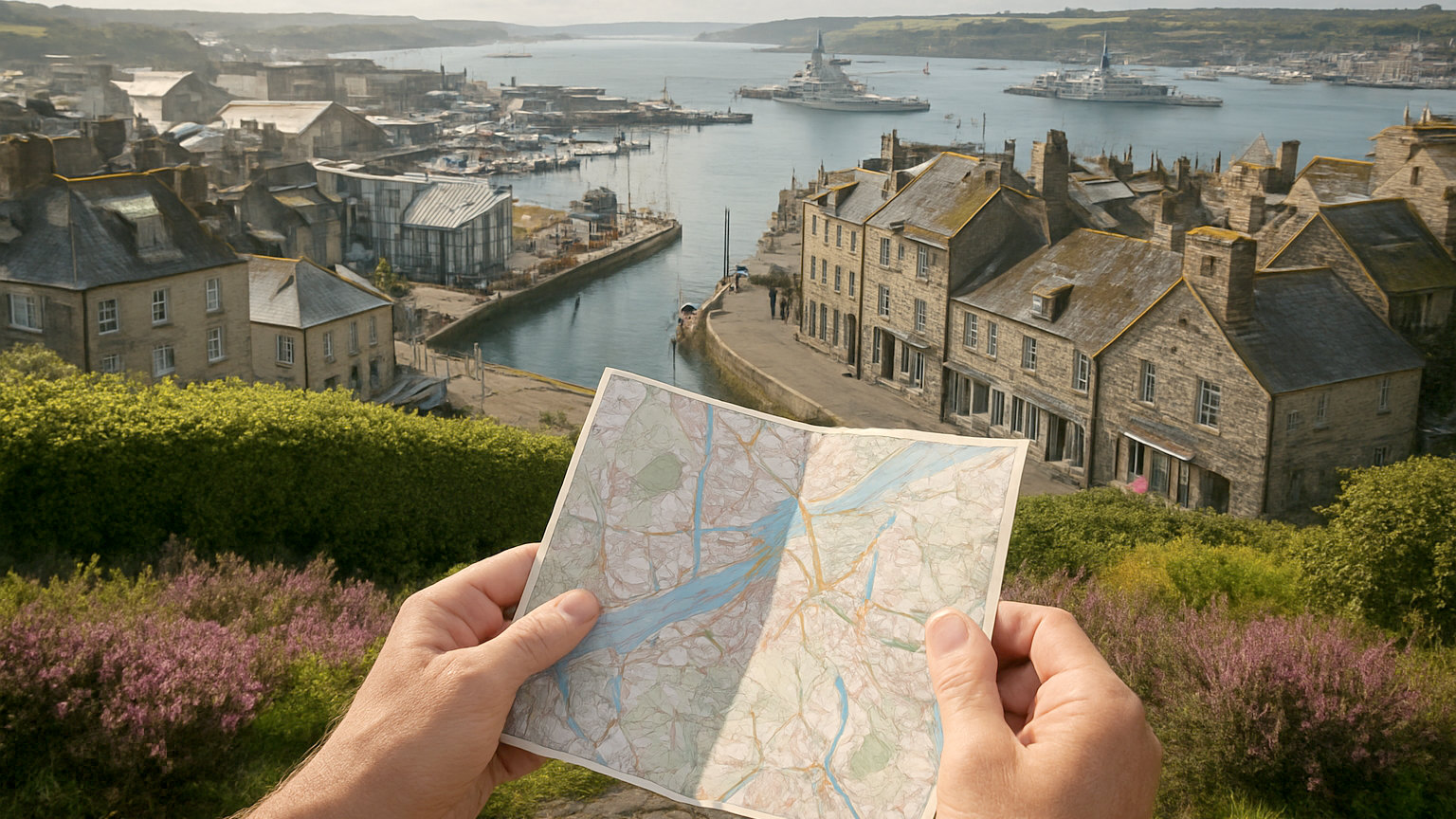
The surviving old town on the harbour, with cobbled streets, Tudor and Jacobean buildings, an Elizabethan house open to visitors and the fish market still working.
It holds most of the city's independent shops and restaurants and is where the pre war Plymouth is still visible.
What are the Mayflower Steps?
A memorial on the Barbican quay marking the approximate point from which the ship sailed for North America in 1620, with the actual site now beneath a building nearby.
The associated interpretation covers the voyage and, importantly, its consequences for the indigenous peoples of the region, which older accounts frequently ignored.
What is on the Hoe?
A grassy headland above the sound with views across to Cornwall, holding Smeaton's Tower, a lighthouse moved here from the Eddystone reef when it was replaced.
You can climb it. Below the Hoe sits Tinside, a restored art deco lido opening in summer, and the Royal Citadel, a seventeenth century fortress still in military use with occasional tours.
What is Royal William Yard?
A vast complex of naval victualling buildings in granite and limestone, built in the 1830s, now converted to restaurants, apartments and galleries.
It is among the largest groups of military buildings of its date in Europe and is reached on foot along the coast or by ferry in season.
What about the gin?
Plymouth Gin has been distilled in the Barbican since 1793 in what is claimed to be the oldest working gin distillery in England, in a building that was formerly a monastery.
Tours run and end in a bar upstairs. It is one of very few British gins with a protected geographical designation.
What is across the water?
Mount Edgcumbe in Cornwall, a house in a country park on the far shore, reached by foot ferry from the Barbican, with formal gardens and coastal walking.
Boat trips also run around the naval dockyard, which is the way to see the warships without joining the navy.
What is nearby?
Dartmoor, whose southern edge begins around twenty minutes from the city, which makes Plymouth a practical base for the moor as well as the coast.
The south Devon and south east Cornwall coasts, with Looe, Polperro and the Yealm and Tamar estuaries close by.
How do you get there?
By train from London in around three and a half hours on the main line to Cornwall, with the station a short walk or bus ride from the centre.
Ferries sail to Roscoff and Santander from the port, which is unusual for a British city.
How long do you need?
Two nights, which covers The Box, the Barbican, the Hoe and Royal William Yard with time for a boat trip.
The free museums make a wet day inexpensive, which matters in a city with this rainfall.
What about the rebuilt centre?
The post war plan by a well known architect and planner produced wide boulevards and a shopping precinct that is now itself listed in parts, and the city has been reassessing it rather than demolishing it. Whether you find it bleak or impressive, it is among the most complete examples of post war reconstruction planning in Britain and is worth walking with that in mind.