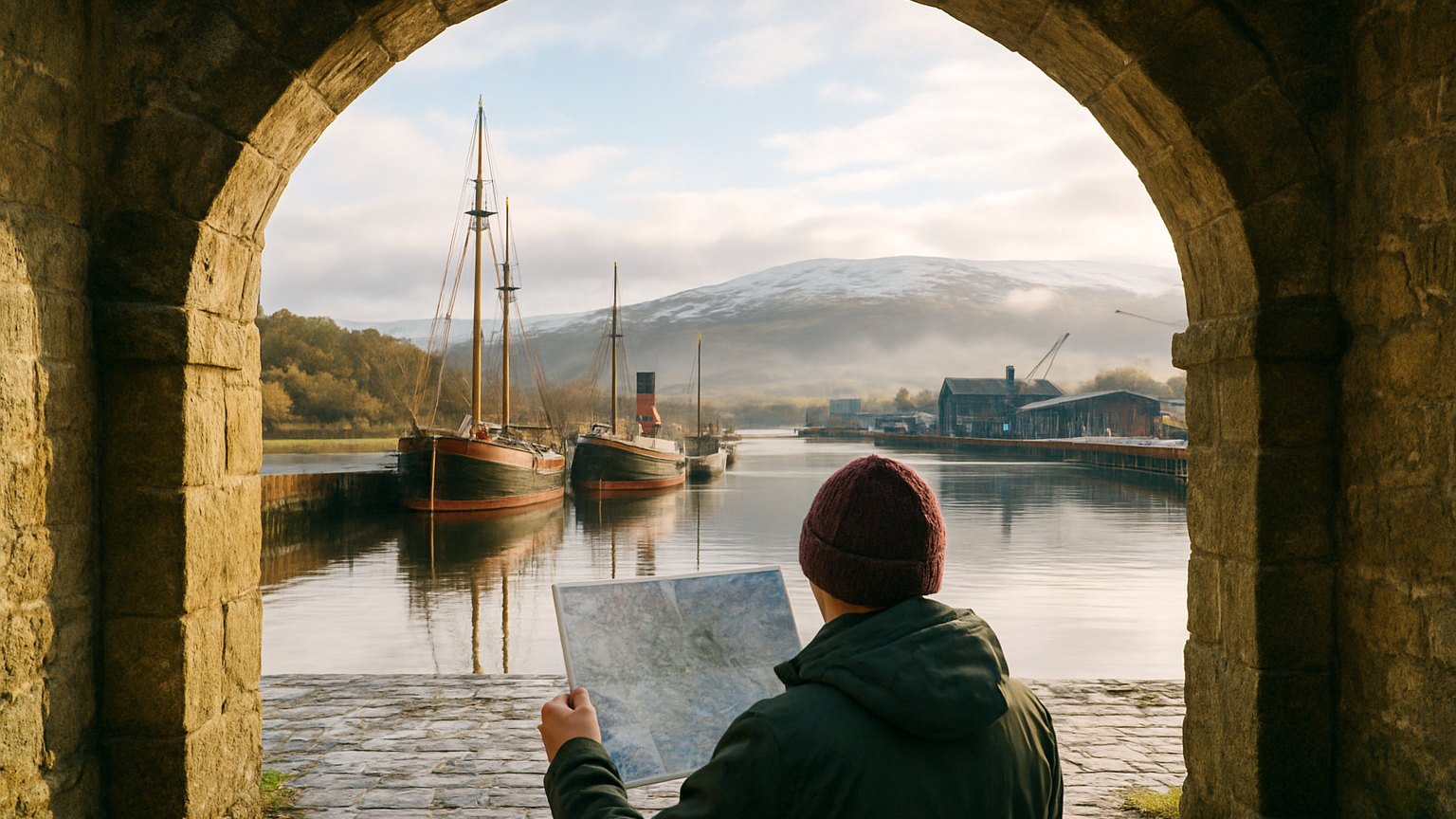
Britain's relationship with the sea produced an enormous quantity of surviving material, and much of it can be visited. Several historic ships are open to walk through, three World Heritage Sites relate to maritime activity, and the collections range from national museums to small harbour rooms run by volunteers.
Where should you start?
Portsmouth Historic Dockyard, which holds more significant ships in one place than anywhere else in Britain. HMS Victory, Nelson's flagship at Trafalgar, is preserved in dry dock and can be walked through.
The Mary Rose, a Tudor warship raised from the Solent after four centuries underwater, is displayed alongside the thousands of objects recovered with her, which together form an extraordinary snapshot of sixteenth century life.
What is at Greenwich?
The National Maritime Museum, free, holding the largest maritime collection in the world, alongside the Cutty Sark, a tea clipper preserved in dry dock and raised so visitors can walk beneath the hull.
The Royal Observatory sits above, with the prime meridian, and the whole area is a World Heritage Site. The museum is free; the ship and observatory charge.
Which other ships can you board?
The SS Great Britain in Bristol, the first iron hulled, screw propelled ocean liner, in the dock where she was built, with the hull viewable from beneath a glass sea.
HMS Belfast on the Thames, a Second World War cruiser. RRS Discovery in Dundee, built for Antarctic exploration. HMS Caroline in Belfast, a survivor of Jutland. HMS Trincomalee at Hartlepool, the oldest British warship still afloat.
What about the dockyards?
Chatham Historic Dockyard in Kent, where warships were built for four centuries, with a ropery still producing rope on a quarter mile floor and three historic vessels including a submarine.
Devonport and Portsmouth remain working naval bases with limited public access, though Portsmouth's historic section is fully open.
Which museums cover trade and migration?
The Merseyside Maritime Museum in Liverpool, free, covering the port that dominated Atlantic trade, with the International Slavery Museum in the same building addressing the city's central role in the transatlantic slave trade.
Titanic Belfast, on the slipway where the ship was built, covering the shipyard and the city that produced it rather than only the sinking.
What about fishing and lifeboats?
Smaller museums around the coast cover fishing communities, whaling, smuggling and lifeboat service, and several are excellent. The lifeboat heritage collections at Chatham and elsewhere cover a service that remains entirely voluntary and charity funded.
Harbour museums in fishing towns are frequently run by volunteers with direct family connection to the industry, which makes them worth an hour.
Which are best for children?
Anything they can board. A ship is a museum you climb through, with ladders, hammocks, gun decks and confined spaces, and it holds attention far better than cases.
Portsmouth in particular fills a full day, and its ticket usually covers multiple attractions and converts to an annual pass.
What should you know before visiting a ship?
Historic vessels involve steep ladders, low headroom and confined spaces, and accessibility is limited by the nature of the structure. Most publish detailed access information.
Wear flat shoes and be prepared to duck repeatedly. HMS Victory in particular was built for shorter people and taller visitors spend a good deal of the tour bent over.
How should you plan a trip?
Portsmouth, Greenwich and Bristol each justify a full day. Combining Portsmouth with the Isle of Wight, or Greenwich with a river trip from central London, makes a stronger day out than the museum alone.
Check whether tickets are single attraction or combined, since the dockyard sites price several vessels together and the multi attraction ticket is usually far better value.
What about smaller coastal collections?
Worth stopping for. Harbour and fishing museums exist in most coastal towns, frequently run by volunteers with direct family connection to the boats on display. They cover wrecks, lifeboats, smuggling and the decline of local fleets, and they hold photographs and objects that no national museum would keep. Entry is usually a couple of pounds or a donation.