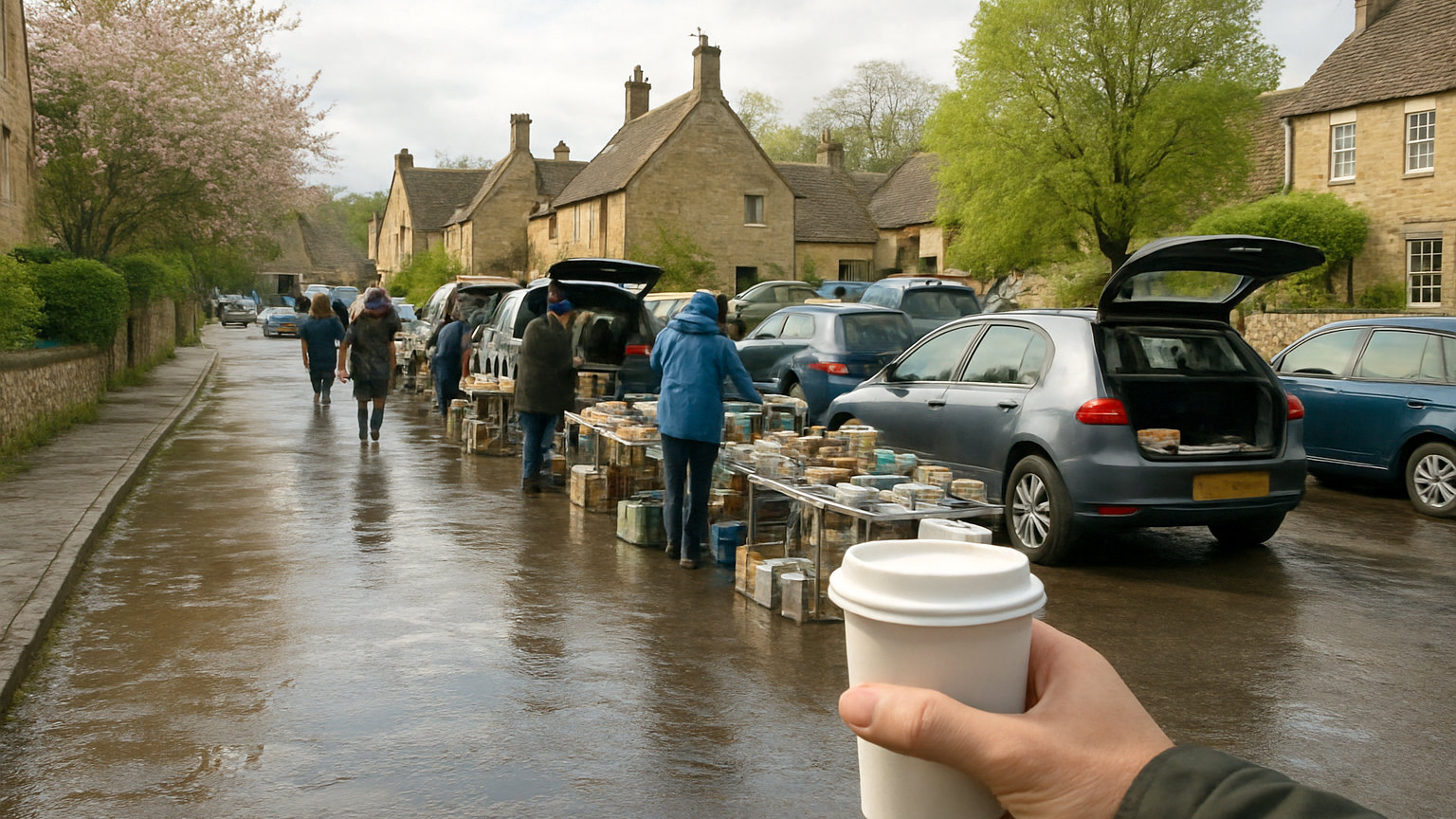
The car boot sale is a peculiarly British form of trading: sellers park in a field or a car park, open the boot and sell whatever they no longer want from a wallpaper table. They are cheap, chaotic and among the more entertaining ways to spend a Sunday morning.
How do they work?
Sellers pay a pitch fee on arrival, usually a modest sum, and set up in a marked space. Buyers either enter free or pay a small admission, particularly for early entry.
Trading is cash, informal and fast. There are no guarantees, no returns and no descriptions beyond what the seller tells you.
When do they happen?
Overwhelmingly on Sunday mornings, with some on Saturdays and bank holidays. Most run from around six or seven in the morning until early afternoon.
The season is broadly April to October, since a field in January is unappealing to everyone involved. A few operate year round on hard standing.
What is the early bird system?
Serious buyers, including dealers, arrive before the advertised opening and pay a higher entry fee for the privilege. They buy the best items straight from cars as sellers unload.
This is where anything genuinely valuable goes, usually within the first thirty minutes. Arriving at ten means looking at what nobody wanted at seven.
What can you find?
Household goods, tools, books, records, children's clothes and toys, garden equipment, kitchenware and an enormous quantity of things nobody needs.
Occasionally something good: furniture, jewellery, ceramics or collectables mixed in with the rest, priced by someone who did not recognise it. This is the appeal and it is genuinely rare.
How should you buy?
With cash in small denominations, since nobody has change for a fifty. Haggle, which is expected: offering somewhat less than the asking price is normal and refusing to negotiate is unusual.
Check items carefully, particularly anything electrical, which cannot be tested and is sold entirely as seen. Assume no recourse whatsoever.
What should you take?
Bags, cash, wellingtons after rain, and a trolley if you intend to buy anything substantial. Something to carry breakables in.
A tape measure if you are buying furniture, and the dimensions of whatever space it is going into, since a field is a poor place to guess.
How do you sell at one?
Arrive early to get a decent pitch, take a table, plenty of change and everything priced or at least sorted. Expect to be surrounded by dealers before you have finished unloading.
Price low, since the objective is not to take it home again. Most sellers make a modest amount and clear a garage, which is the realistic expectation.
What is the etiquette?
Do not rummage through boxes a seller has not yet unpacked without asking. Do not haggle aggressively over trivial sums with someone clearing a house.
Sellers should not misrepresent items, and buyers should accept that a bargain found through knowledge is fair while badgering an elderly person over fifty pence is not.
Where are the big ones?
Several large sales operate near major cities, at stadiums, showgrounds and permanent sites, drawing hundreds of sellers. Smaller village sales in aid of a school or church are more relaxed and often more fun.
Local listings and roadside signs are the usual method of finding one, and they are advertised very locally rather than nationally.
Are they worth going to?
As an experience, yes, and they are unlike anything most visitors will have seen. As a shopping method they are unreliable but occasionally spectacular.
Go early, take cash, expect to buy nothing, and treat anything good as a bonus. The bacon sandwich van is generally the most reliable part of the morning.
Finally, check the weather and the website before setting out. Boot sales are cancelled at short notice when a field is waterlogged, and notice frequently appears only on a social media page the evening before. A wasted Sunday morning drive to a locked gate is the most common complaint about the whole business.