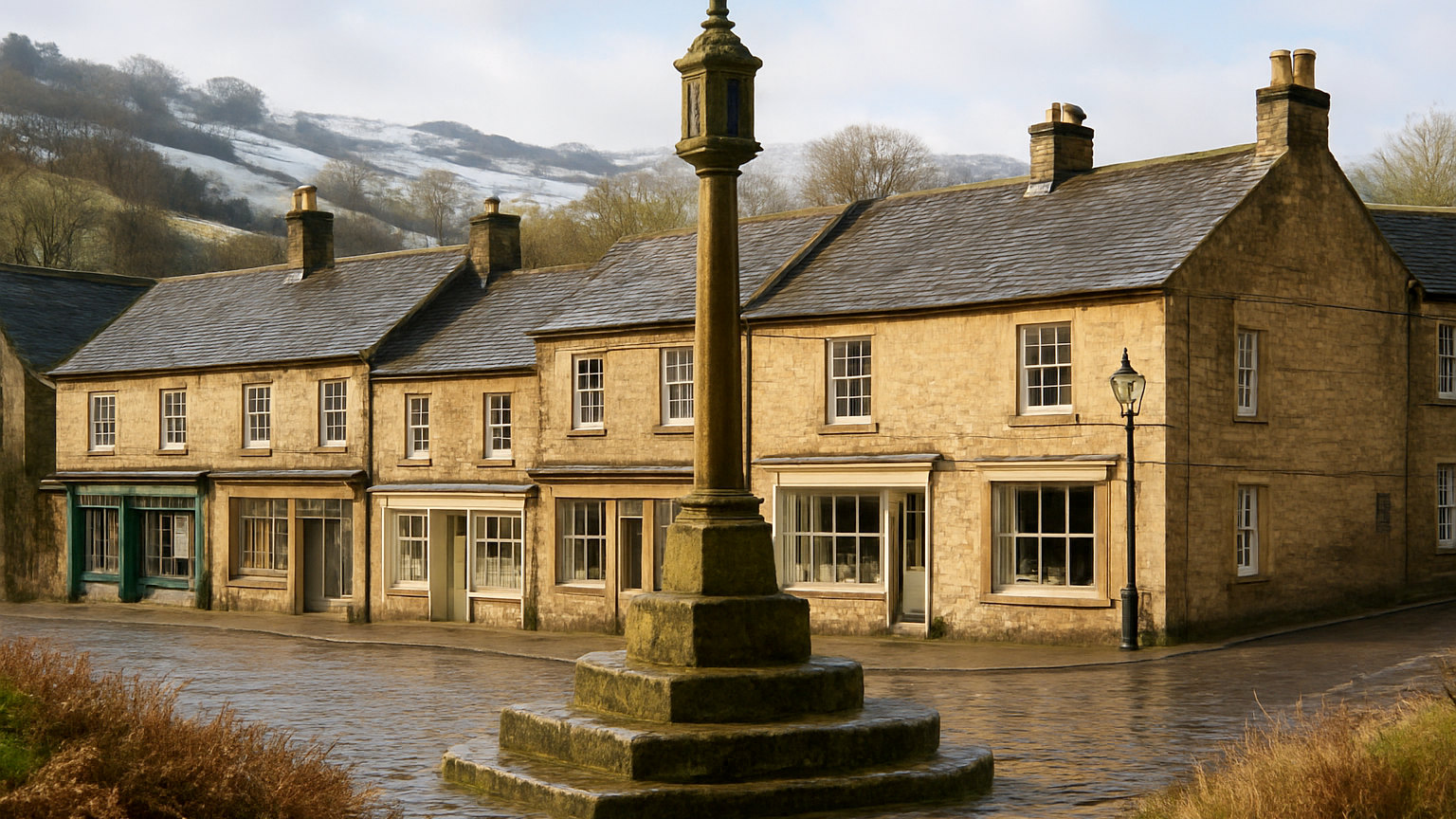
A market town is a settlement granted the right to hold a market, in many cases by a royal charter issued centuries ago, and a surprising number still trade on the same days they were originally licensed for. They are among the most pleasant places to spend a few hours in Britain, and the market day transforms them.
What is a charter market?
A market held under a right granted by the Crown, historically to a lord or a borough, giving the town a monopoly on trading within a defined radius. Many charters date from the twelfth to fourteenth centuries.
Several towns still hold their market on the day named in the charter, which means the pattern of a place has been set for seven or eight hundred years.
Which towns are the best?
Ludlow in Shropshire, with a market beneath the castle walls and a food reputation to match. Skipton in the Yorkshire Dales, with a broad high street market four days a week beneath the castle.
Richmond in North Yorkshire, with a cobbled square. Hexham in Northumberland, Kendal in Cumbria, Bakewell in Derbyshire and Alnwick, all of which combine a working market with a town worth walking round.
Which are best in Wales and Scotland?
Abergavenny and Monmouth in south east Wales, both with strong food traditions and markets in historic halls. Llanidloes and Machynlleth in mid Wales.
In Scotland the pattern differs, with burgh markets rather than charter markets, though Perth, Kelso and Haddington all retain a market square and something of the character.
What has changed?
A great deal. Traditional markets have declined under competition from supermarkets and online retail, and stalls that once sold food now frequently sell phone cases and cheap clothing.
Against that, several towns have revived their markets around food and craft, and a number of newer independent markets have become genuine destinations, particularly in the south west.
Which are the revived markets?
Frome in Somerset holds a large independent market on the first Sunday of the month that takes over the town. Stroud's farmers market is among the most highly regarded in the country.
Several other towns run monthly artisan or farmers markets alongside a traditional weekly one, and these are usually the better of the two for visitors.
How do you find out when the market is?
Town council websites list market days, and they rarely change. As a general pattern, Tuesday and Saturday are the most common days, with many towns holding markets on two or three days.
Monthly farmers and artisan markets usually fall on a fixed Sunday or Saturday of the month, which is worth checking before planning a visit.
Is it worth going on market day?
Yes, and the difference is substantial. A market town on its market day is busy, noisy and full of people from the surrounding countryside; on other days it is a pleasant but quiet high street.
The exception is parking, which on market day is considerably harder, since the square is occupied by stalls and everyone within twenty miles has driven in.
What else do these towns offer?
Usually a church out of proportion to the population, a coaching inn or two, independent butchers and bakers, and a good deal of Georgian and earlier architecture.
Several also have a castle, an abbey or a substantial house nearby, which combined with the market makes a full day.
Which suit an overnight stay?
Ludlow, Skipton, Richmond, Alnwick, Abergavenny and Kendal all have enough accommodation and eating to justify two nights, with countryside on the doorstep in every case.
Staying overnight also lets you see the town before the market sets up, which is a completely different and quieter place at eight in the morning.
Why do they matter?
Because they are the original structure of the British countryside, spaced roughly a day's walk apart so that anyone could reach a market and return in daylight.
That spacing still shapes where towns sit and how roads run, and understanding it makes a good deal of the landscape legible.