Scotland has well over a hundred working distilleries with visitor centres, and touring them has become a substantial part of why people travel to certain parts of the country. The quality of the experience varies from a functional walk round a still house to genuinely excellent guided tastings, and knowing which you are booking makes a difference.
What happens on a tour?
Typically an hour, walking through the process in order: malted barley, mashing, fermentation in washbacks, distillation in copper stills, then the warehouse where casks mature. Most finish with a tasting of one or more expressions.
The best tours explain why each distillery's spirit tastes as it does, which comes down to still shape, cut points, cask type and location. The weaker ones are a corporate video and a shop.
How do the regions differ?
Speyside, the densest concentration, generally producing lighter, sweeter, fruitier whiskies. Islay, famous for heavily peated, smoky, maritime styles. The Highlands, which is large and varied. Lowland, typically lighter. Campbeltown, a small region with a distinctive character.
The regional generalisations are useful and imperfect, since individual distilleries within any region make whisky that contradicts the stereotype.
Which areas are best to visit?
Speyside, where a signed malt whisky trail links several distilleries and a cooperage within a small area, making it possible to visit two or three in a day without long drives.
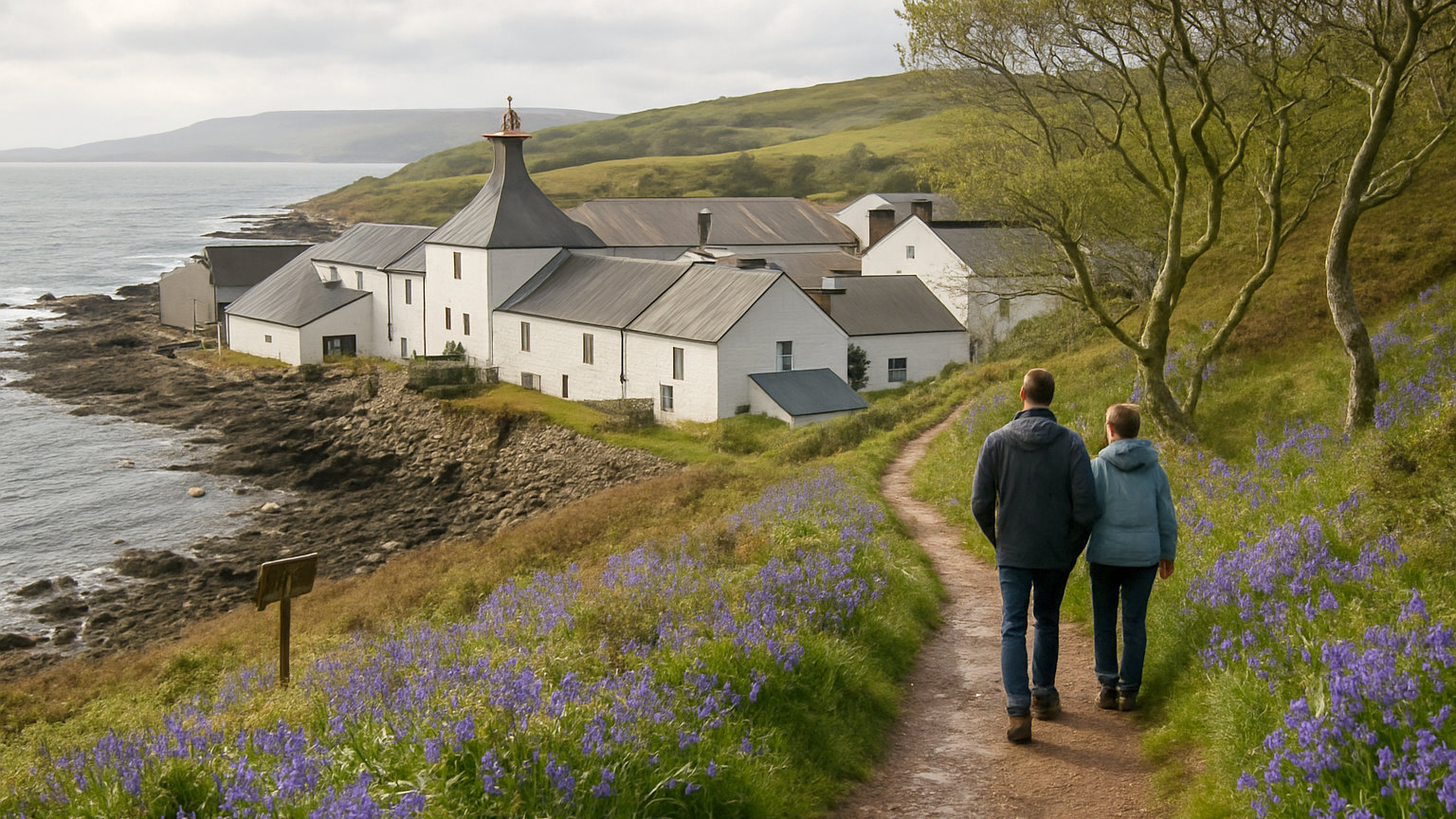
Islay, where nine or so working distilleries sit on a small island and several are within walking or cycling distance of each other, which solves the driving problem neatly.
What if you are driving?
Take the drams away. Almost every distillery provides small bottles so you can take your tasting home rather than declining it, and staff offer this as a matter of routine.
Scotland has a lower drink drive limit than England and Wales, low enough that a single measure can put a driver over it. The sensible approach is a designated driver, a tour bus, or basing yourself somewhere you can walk or cycle between distilleries.
Should you book?
Yes, particularly in summer and at the well known names, where tours sell out days or weeks ahead. Smaller distilleries are more flexible but often run only two or three tours a day.
Some offer premium experiences with warehouse tastings, cask samples and older expressions. These cost considerably more and are worth it for anyone with a serious interest.
Is it just Scotland?
No, and that has changed markedly. English whisky distilleries have opened across the country over the past two decades, Wales has an established producer, and Ireland has seen a substantial revival.
Gin distilleries are now everywhere and generally cheaper and shorter to tour, which suits a spare afternoon better than a whisky day.
What should you look for in a distillery shop?
Distillery exclusive bottlings, which are only sold on site and are frequently the reason enthusiasts visit. Cask strength expressions and single cask releases fall into the same category.
Prices are not always better than a good specialist retailer, so buy for the exclusivity rather than assuming a discount.
What if you do not like whisky?
The tours are still interesting as industrial process and history, and several distilleries sit in outstanding locations. Many now offer soft alternatives and chocolate or food pairings.
Two distilleries in a day is generally the limit for anyone, and three is too many regardless of enthusiasm, since the palate stops distinguishing.
How should you plan a trip?
Pick one region rather than crossing the country. Two or three distilleries across three days, with walks and other things in between, works far better than a schedule of tours.
Book the first and leave the rest flexible, since recommendations from staff at one distillery about which neighbour to visit are usually excellent.
What should you know about tasting?
Add a few drops of water, which opens up the aroma by releasing compounds bound up at higher strength, and is standard practice rather than heresy. Ice is generally discouraged since cold suppresses flavour. Take your time between drams and drink water alongside. Nobody at a distillery is impressed by speed, and the point of a tasting is to notice differences rather than to consume.