The village fete is among the most characteristic British institutions and one of the least documented, because it exists for the community rather than for visitors. Held on summer weekends across the country, on a green or in a field behind the church, it has changed remarkably little in a century.
What actually happens?
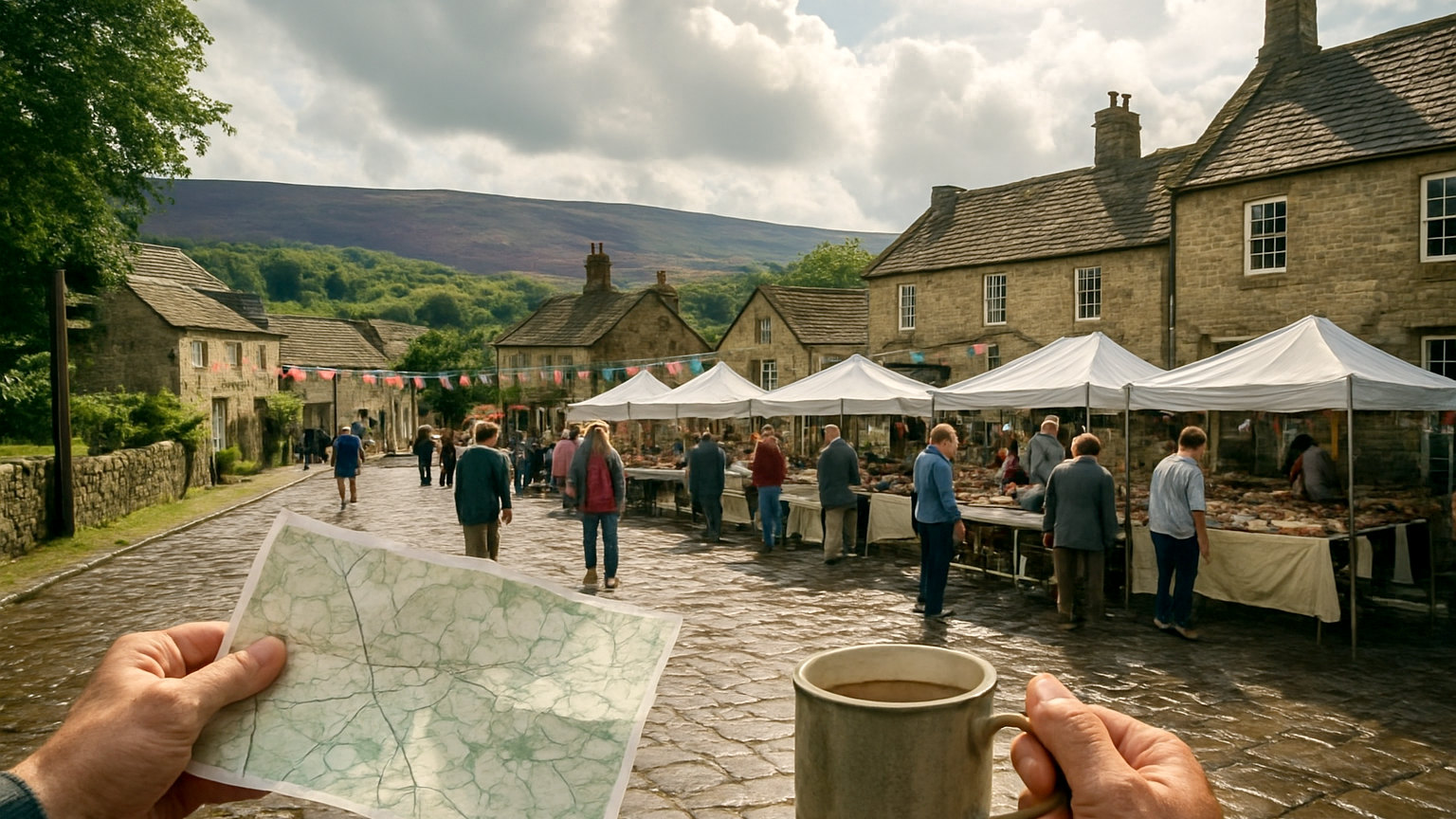
Stalls run by volunteers: cakes, plants, books, bric a brac, a raffle and a tombola. Games including a coconut shy, hoopla, splat the rat and guessing the weight of something.
A produce and craft show, judged in a marquee, with classes for vegetables, jam, baking, flowers, photography and children's art. Tea and cake served by the local church or hall committee.
What is the produce show?
Frequently the most seriously contested part. Classes are specific, sometimes down to the number of items on a plate and their arrangement, and long standing rivalries exist over the longest runner bean and the best Victoria sponge.
Entry is usually open to anyone in the parish and occasionally to visitors. The schedule is published weeks ahead and the rules are followed exactly.
What entertainment is there?
Typically a brass band, a dog show with classes such as waggiest tail, morris dancing, a tug of war between teams from neighbouring villages, and a fancy dress or decorated bicycle parade for children.
Larger events might have a display by a local group, a duck race on the stream, or a classic car and tractor line up.
When are they held?
Between May and September, overwhelmingly on Saturday afternoons, with bank holiday weekends particularly busy. Many villages hold theirs on the same weekend each year.
They are advertised on village noticeboards, in parish magazines and on hand painted signs at the roadside, which is frequently the only warning a passing visitor gets.
Are visitors welcome?
Entirely, and money spent goes to the church roof, the village hall or a local charity. Nobody minds outsiders and several people will talk to you.
It is worth understanding that you are at a community fundraiser rather than an attraction, and behaving accordingly, which mostly means buying a raffle ticket and some cake.
What is carnival week?
A West Country and Welsh variation, where a town holds a week of events culminating in an illuminated procession of carts. The Somerset carnivals in November are enormous, with elaborate lit floats built over a year.
Elsewhere, carnival means a summer parade with a queen, a float competition and a funfair, usually in aid of local causes.
What are scarecrow festivals?
A newer tradition that has spread rapidly. Villages make scarecrows on a theme and display them outside houses for a week, with a trail map sold in aid of charity.
They are a genuinely good family activity, cost almost nothing and take an afternoon to walk. Several hundred villages now hold them, mostly in summer.
Why are they worth stopping for?
Because they show you a part of British life that no organised attraction does. A village fete is unselfconscious, run by people who have known each other for decades, and entirely unchanged by tourism.
They also cost almost nothing, take an hour, and reliably produce good cake.
How do you find one?
Signs at roadsides, which appear a week or two beforehand and are the traditional method. Parish council websites and community Facebook groups list dates.
Or simply drive through villages on a summer Saturday afternoon and look for bunting and a marquee, which is how most people find them.
What should you take?
Cash, in small denominations, since most stalls are run by volunteers with a tin rather than a card reader. Something to carry purchases in, because you will buy plants and cake whether or not you intended to. An appetite for tea. And low expectations about parking, which will be a field with a man in a high visibility jacket directing traffic.
Finally, do not arrive at the end. Fetes run for roughly three hours from early afternoon and the good cake goes first, the raffle is drawn near the close and stallholders start packing up before the advertised finish. Arriving within the first hour gets you the produce show before the crowds and the tea before the queue.