Britain retains an unusual number of local customs that have survived, in several cases continuously, for centuries. Many involve fire, competitive eating or an activity that would not be approved if proposed today, and almost all are free to attend and attended mainly by the community that holds them.
What is cheese rolling?
Held on the late May bank holiday at Cooper's Hill in Gloucestershire, where a wheel of Double Gloucester is rolled down an extremely steep slope and competitors chase it. The cheese reaches considerable speed and is rarely caught.
Injuries are routine and occasionally serious, since the hill is steep enough that most competitors fall rather than run. It is unofficial and unmanaged, and spectating is much the safer option.
What is Shrovetide football?
Played at Ashbourne in Derbyshire over Shrove Tuesday and Ash Wednesday, between two teams determined by which side of a brook you were born, with goals three miles apart and few effective rules.
Shops board up their windows. It is a genuine survival of the medieval mob football from which the modern game descends, and similar versions persist at Hallaton in Leicestershire, where bottle kicking follows a hare pie scramble.
What happens at the Haxey Hood?
In Lincolnshire each January, a leather tube is pushed by an enormous unstructured scrum towards one of four pubs, where it stays until the following year. It has reportedly been held for around seven centuries.
Like Shrovetide football, it has no teams in any conventional sense and moves very slowly through fields and streets over several hours.
What are the fire festivals?
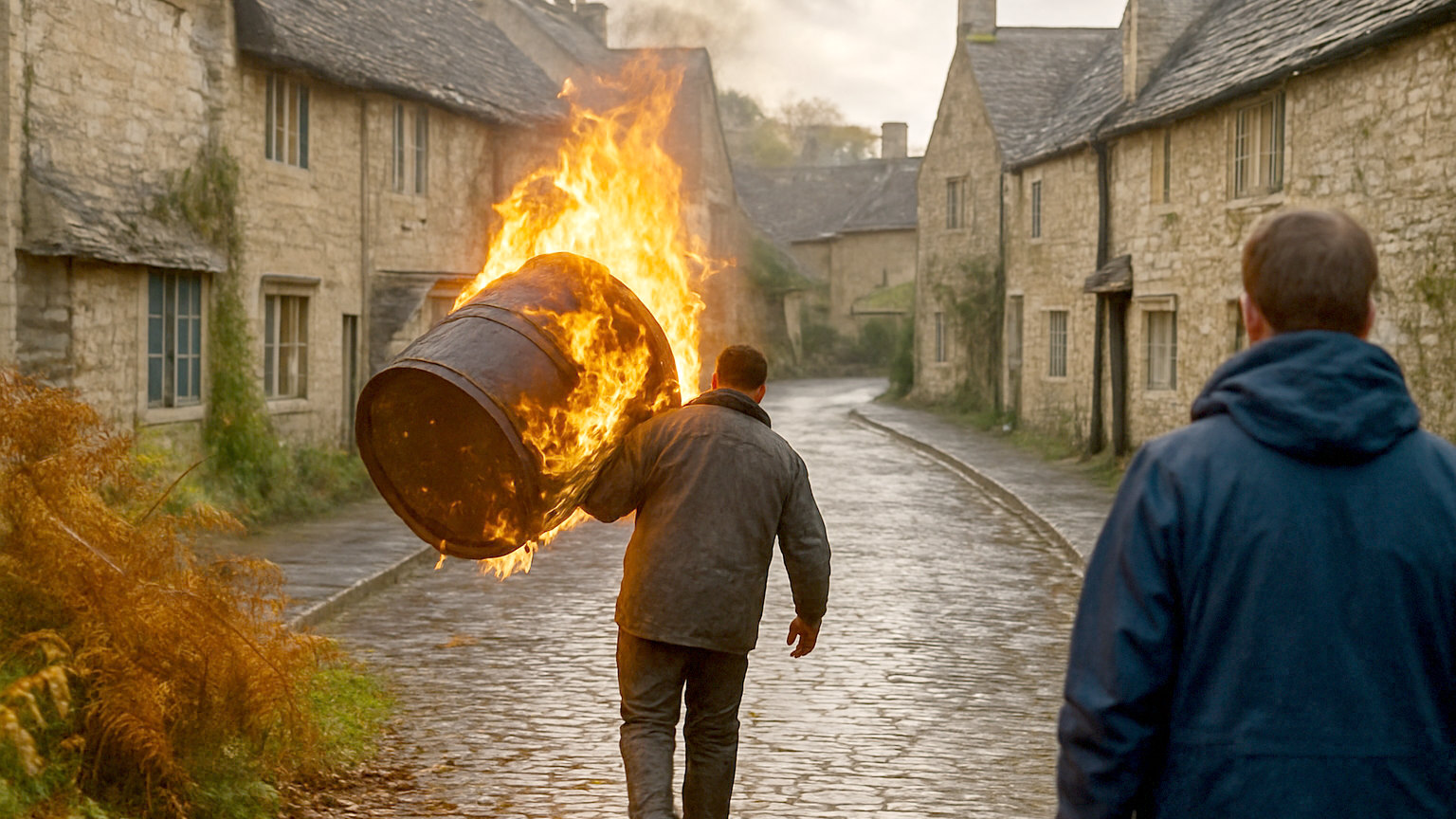
Up Helly Aa in Shetland in January, where a squad in Viking dress parade with torches and burn a replica galley. The Burning of the Clavie at Burghead in Moray, where a burning barrel is carried around the town.
The tar barrels at Ottery St Mary in Devon on Bonfire Night. Beltane on Calton Hill in Edinburgh, a modern revival of a fire festival marking the start of summer.
What is the Obby Oss?
A May Day celebration at Padstow in Cornwall, in which two hobby horses process through the town accompanied by drums, accordion and a song sung continuously for the whole day.
It is one of the oldest surviving customs in Britain and is taken extremely seriously locally. The Helston Furry Dance in May and the Minehead Hobby Horse follow similar patterns in the West Country.
What is well dressing?
A Derbyshire custom, running from May to September in different villages, where wells and springs are decorated with elaborate pictures made entirely from flower petals, seeds and other natural material pressed into clay.
The results are remarkable and last about a week before fading. Tissington and Youlgreave are among the best known, and a trail can be followed through the summer.
What about the sporting oddities?
Bog snorkelling at Llanwrtyd Wells in mid Wales, where competitors swim a trench cut through peat bog using flippers and a snorkel and are forbidden from conventional swimming strokes.
The same town hosts a man versus horse marathon. Elsewhere there is competitive worm charming, gurning, nettle eating and stone skimming, most held annually and most raising money for charity.
Are these things authentic?
Mixed, and worth being honest about. Some are demonstrably centuries old with continuous documentation. Some were revived in the nineteenth or twentieth century after lapsing. A few were invented within living memory.
Bog snorkelling was invented in a pub in the nineteen eighties. That does not make it less enjoyable, and the distinction matters mainly if someone claims ancient origins for something recent.
How should visitors behave?
As guests. These are community events rather than performances, held for the people who live there, and several places have become uncomfortable with the numbers now attending.
Follow local instructions, do not obstruct participants, park where you are told and remember that at several of these events the participants are genuinely at risk of injury.