Harrogate is a Victorian spa town in North Yorkshire that has become a substantial conference and festival destination, holding events that draw international audiences to a town of around eighty thousand people.
What is the crime writing festival?
Held in July and widely regarded as the largest festival of crime fiction in the world, with panels, interviews and a well known award for the best crime novel of the year.
Authors and readers mix informally in the hotel bar where it is based, which is much of its reputation. Tickets and accommodation go early.
Why crime fiction in Harrogate?
Partly because Agatha Christie disappeared for eleven days in 1926 and was found staying at a hotel in the town under an assumed name, an episode never fully explained.
The festival takes place in the same hotel, which is a neat piece of literary geography.
What are the flower shows?
Two each year, in spring and autumn, run by the North of England Horticultural Society and among the largest gardening events in the country.
They combine competitive showing with trade stands and demonstrations, and fill the showground on the edge of town.
What is the Great Yorkshire Show?
Held in July over several days, among the largest agricultural shows in England, with livestock competition, machinery, food and displays.
It is a genuine farming event rather than a country fair, which is why it is worth going to, and it draws well over a hundred thousand people.
What about the music festival?
Harrogate runs an international festivals organisation covering classical music, chamber concerts and other programmes through the year, using venues across the town.
The Royal Hall, an Edwardian theatre restored in recent years, is the principal venue and is worth seeing in its own right.
What are the Turkish baths?
A Victorian Turkish bath suite of 1897, restored and still operating, with tiled walls, arches and a plunge pool, which is among very few of its kind still working in Britain.
Sessions are booked in advance and are single sex at some times and mixed at others. It is the best thing in the town.
What is the Stray?
Two hundred acres of open common land running through the middle of the town, protected by an act of parliament, which prevents building and keeps the centre green.
It is crossed by paths and used constantly by residents, and it is why Harrogate feels less built up than its size suggests.
What is at Harlow Carr?
A large garden on the edge of town run by the Royal Horticultural Society, with a stream side planting, woodland, a kitchen garden and an alpine house.
It is ticketed, free to society members, and at its best from late spring through autumn.
What else is in the town?
The Valley Gardens, a Victorian park with the largest concentration of mineral springs anywhere. The Pump Room museum covering the spa era.
A well known tea room chain founded in the town, where queues form throughout the day.
What is nearby?
Knaresborough, four miles away, with a castle above a gorge, a viaduct and a petrifying well. Fountains Abbey and Studley Royal, a World Heritage Site, half an hour north.
The Yorkshire Dales begin within half an hour to the west and York is forty minutes east.
How do you get there?
By train from Leeds or York in around thirty five minutes, with connections from London via either.
The station is central and the town is comfortably walkable, apart from Harlow Carr and the showground.
What is the town like otherwise?
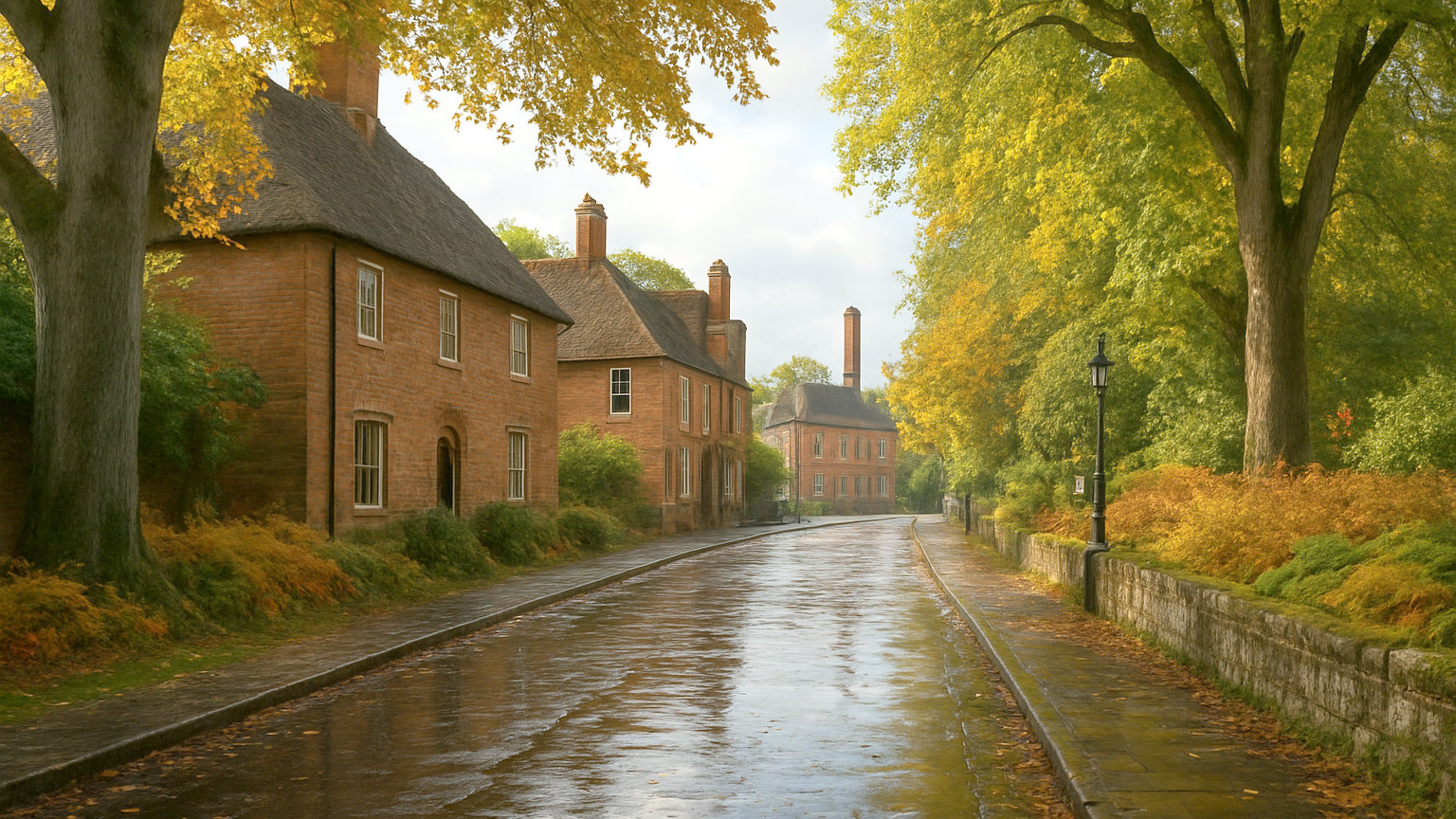
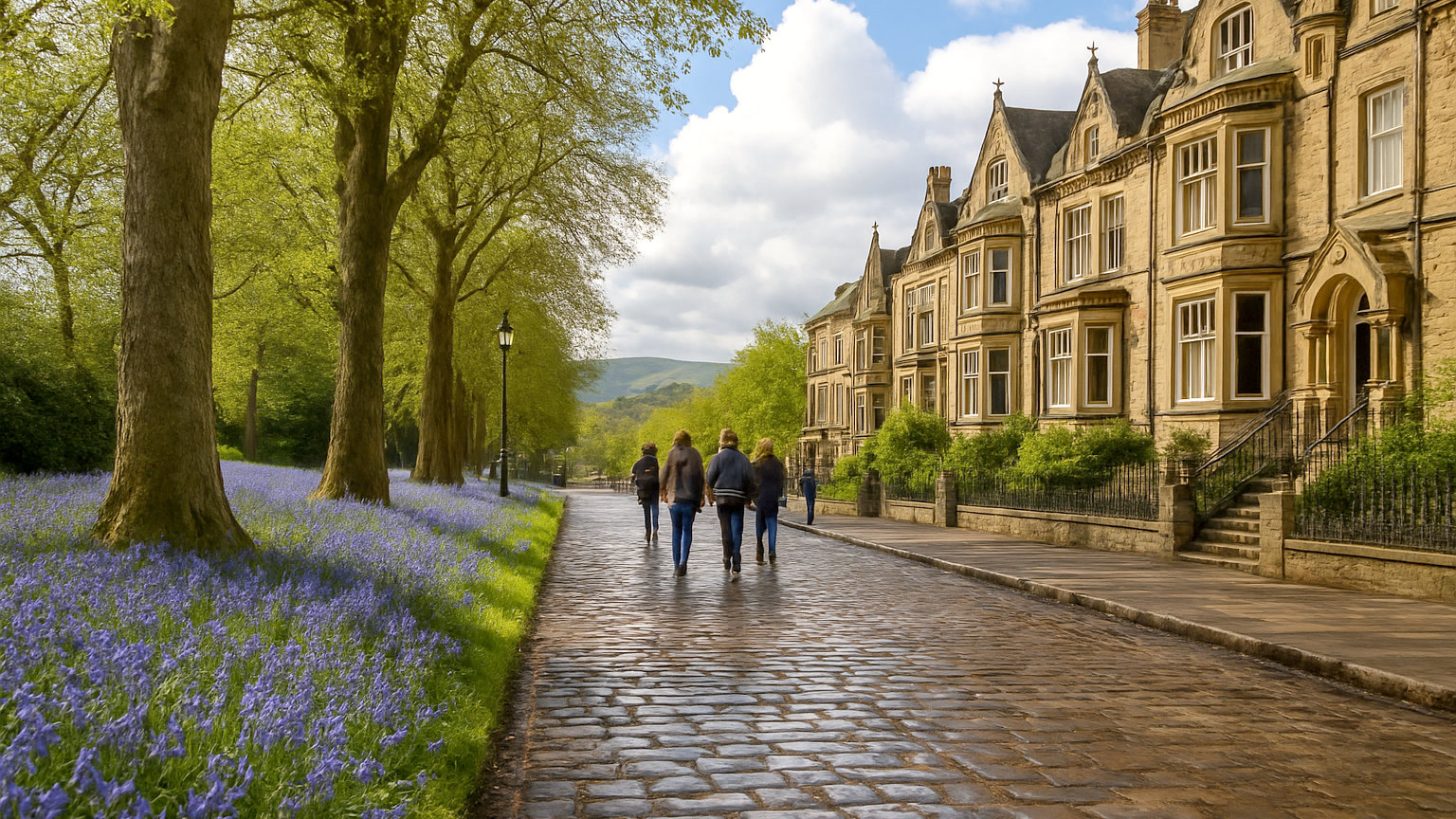
Prosperous, green and unusually well kept, with wide streets, Victorian and Edwardian architecture and a large amount of open space. It functions as a conference town, which means good hotels and restaurants for its size, and it is comfortably walkable. Prices are higher than elsewhere in Yorkshire.
One last practicality: festival weeks fill the hotels across the town and prices rise substantially, particularly during the crime festival and the agricultural show. Leeds and York are both under forty minutes by train and considerably cheaper as a base.