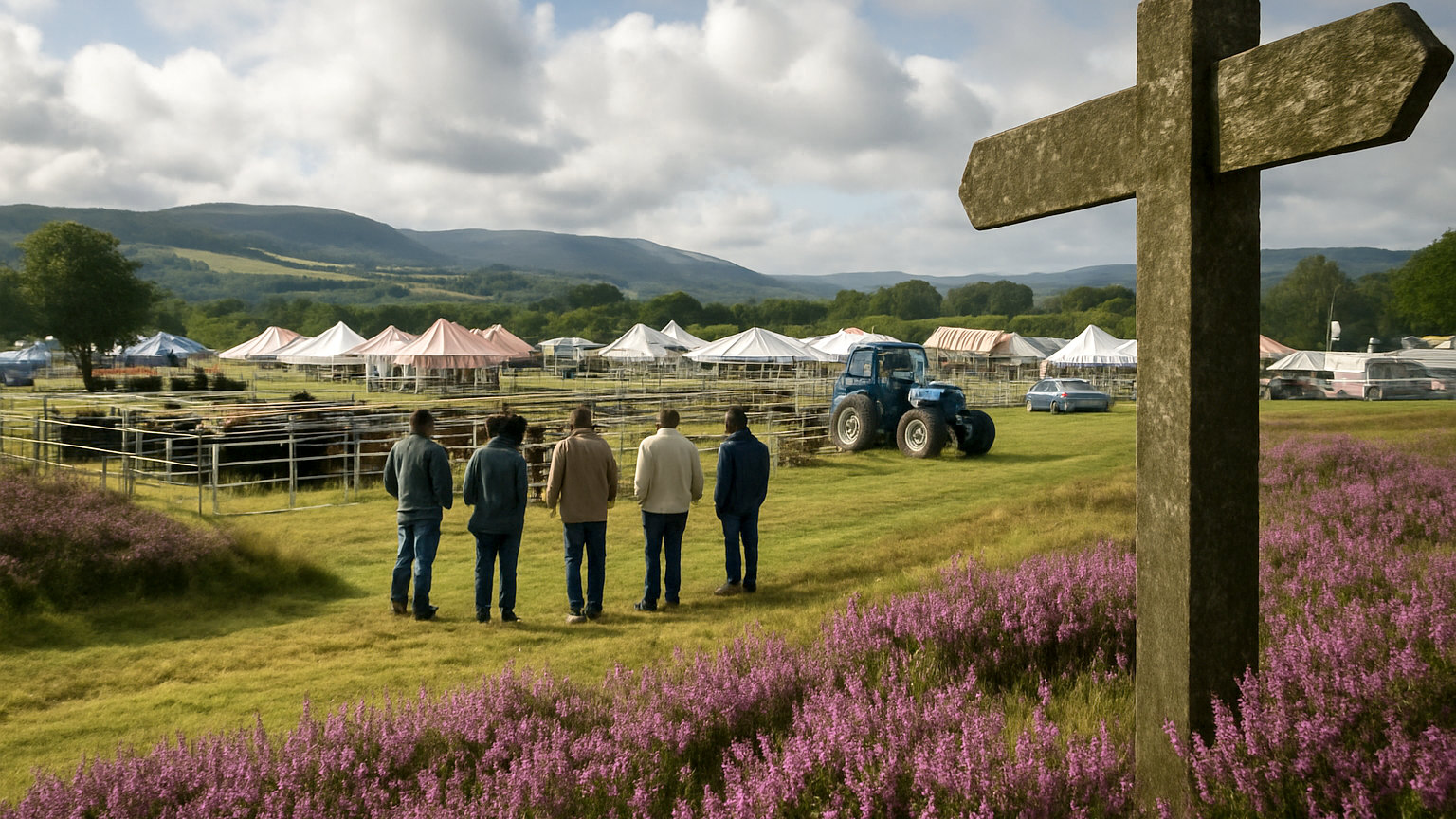
Agricultural shows are among the largest and least publicised events in the British calendar. The biggest draw crowds comparable to a major music festival, they run for several days, and they are attended overwhelmingly by people from the region rather than tourists, which is much of their appeal.
What actually happens at one?
At the centre, livestock judging: cattle, sheep, pigs, goats and horses shown in classes and judged in rings throughout the day. Around it, show jumping and equestrian events in the main arena.
Then food halls, craft marquees, machinery displays, forestry and countryside sections, dog shows, falconry, vintage tractors, and a programme of arena entertainment that usually includes something involving motorcycles.
Which are the biggest?
The Royal Highland Show near Edinburgh in June, the Great Yorkshire Show at Harrogate in July and the Royal Welsh Show at Builth Wells in July are the three largest, each running several days and drawing well over a hundred thousand people.
The Royal Cornwall, the Bath and West, the Suffolk Show and the Balmoral Show in Northern Ireland are all substantial regional events.
When do they run?
From late spring to early autumn, concentrated in June and July. Almost every county holds one, along with a great many smaller agricultural and horticultural shows at town and village level.
Dates are fixed and published a year ahead, and the same show is generally held on the same days each year.
Are they interesting if you know nothing about farming?
Yes, and that is the surprise. The food halls alone justify a visit, showcasing regional producers with tastings, and the craft and countryside sections cover everything from dry stone walling to sheepdog handling.
Watching livestock judging without understanding it is also oddly compelling, and exhibitors are usually happy to explain what the judge is looking for if asked politely.
Are they good for children?
Among the best family days out available in Britain, and considerably cheaper than a theme park. Animals at close range, tractors, arena displays, and space to run.
Take ear defenders for young children if there is a motorcycle or military display, and be aware that the ground is a field and the walking distances are substantial.
What does it cost?
A day ticket for a family is a moderate outlay, usually cheaper booked in advance online than at the gate. Parking is generally included or inexpensive.
Spending inside adds up, since the food halls are designed to sell and the craft marquees are full of things you did not intend to buy.
What should you take?
Footwear for a field, which after rain becomes genuinely muddy. Waterproofs and sun cream, since showgrounds have no shelter and the weather does not stop the show.
Cash for smaller stalls, a bag for purchases, and water. Bring less than you think you can carry, since you will be walking for six hours.
How should you plan the day?
Get a programme on arrival and mark the arena events you want to see, since those are timed and everything else is not. Do the livestock in the morning while the judging is happening.
Arrive early. Parking at the largest shows involves a queue on the approach roads, and the car parks are fields some distance from the gate.
Why are they worth going to?
Because they are one of the few large British events not aimed at visitors. A county show is the rural community putting on its own display for itself, and attending one gives an insight into a part of the country that tourism rarely reaches.
They are also, for the money, among the best value days out in the calendar.
How do they differ across Britain?
Scottish and Welsh shows place more emphasis on hill breeds, sheepdog work and forestry, reflecting the farming around them. English shows in arable counties feature more machinery and crop competitions. Northern Ireland's principal show has a strong dairy and equestrian focus. In every case the show reflects what the surrounding land actually produces, which is why attending one tells you a great deal about a region.