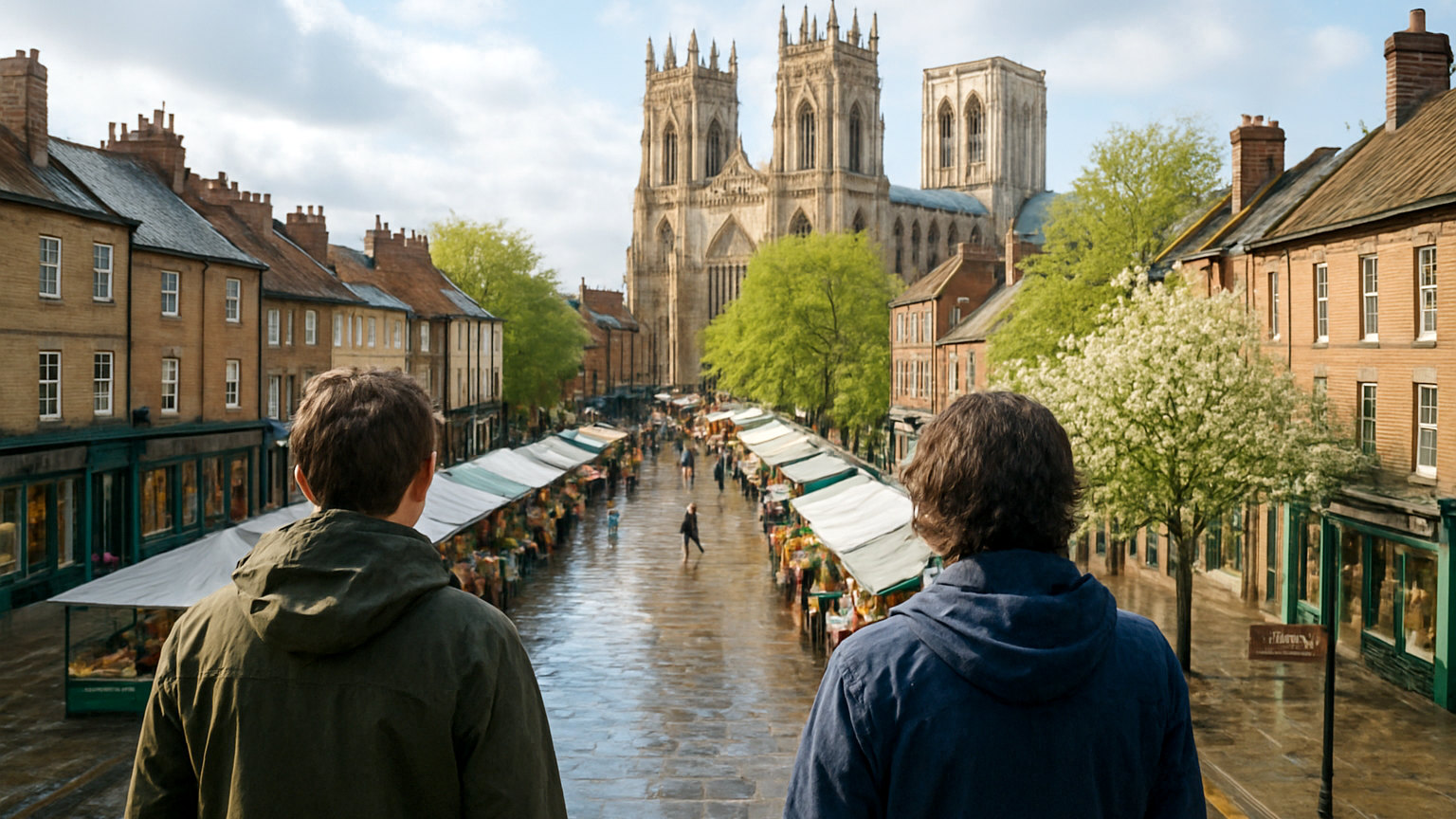
York Minster is the largest Gothic cathedral in northern Europe and the single most important building in England for medieval stained glass, holding roughly half of everything that survives in the country. It took around two and a half centuries to build, from 1220 to 1472.
What is the Great East Window?
A window roughly the size of a tennis court, glazed between 1405 and 1408 by a single master glazier working to contract, depicting the beginning and the end of the world.
It is the largest expanse of medieval stained glass in one window anywhere. It was fully conserved and reinstalled after a long programme of work.
What are the Five Sisters?
Five tall lancets in the north transept, glazed in grisaille, a grey and green geometric patterning rather than pictures, dating from around 1260.
They are the largest surviving grisaille windows in the world and are a complete contrast to the coloured glass elsewhere in the building.
What is the chapter house?
An octagonal room off the north transept with no central supporting column, which was structurally daring and is the largest of its type.
The carved heads and foliage around the stalls are of exceptional quality and repay close attention with binoculars.
Can you climb the tower?
Yes, the central tower, by a spiral stair of around two hundred and seventy five steps, with a view over the medieval city and its walls.
It is booked in advance, has a minimum age, closes in high wind and is not suitable for anyone uneasy in confined spaces.
What is the undercroft?
A space beneath the crossing created when the foundations were underpinned in the late 1960s and early 1970s, after the central tower was found to be at risk of collapse.
The excavation revealed the Roman fortress and the Norman cathedral beneath, and it is now a museum showing every layer of the site.
What happened in 1984?
A fire, probably caused by lightning, destroyed the roof of the south transept. The vault was rebuilt within a few years.
Several of the new roof bosses were designed by children through a national television competition, which is an unusual thing to find in a medieval building.
What else should you look for?
The rose window in the south transept, which survived the fire with its glass cracked into thousands of pieces and was painstakingly conserved.
The Astronomical Clock, the fifteenth century quire screen with its kings of England, and the Semaphore Saints sculpture outside.
Does it charge?
Yes, for sightseeing, with a ticket that generally converts to a year's admission if you ask. York residents are admitted free on production of proof of address.
Entry for worship is free, as at every cathedral.
What about the stoneyard?
The minster employs its own masons and glaziers and runs a stoneyard on site, since the building requires continuous replacement of decayed stone.
Some of the work is visible, and the exhibition explains the scale of it.
How busy does it get?
Very, from mid morning through the afternoon in season, since York is among the most visited cities in England.
Arriving at opening transforms it. Winter weekdays are quiet and the light through the east window is best in the morning.
How long do you need?
Two hours for the church, three with the undercroft and longer with a tower climb. It is considerably larger inside than visitors expect.
What is the quire screen?
A fifteenth century stone screen across the entrance to the quire, carrying statues of fifteen kings of England from William the Conqueror to Henry the Sixth. It is among the finest pieces of medieval sculpture in the building and most visitors walk straight through it without looking up at the figures.
What about the wider precinct?
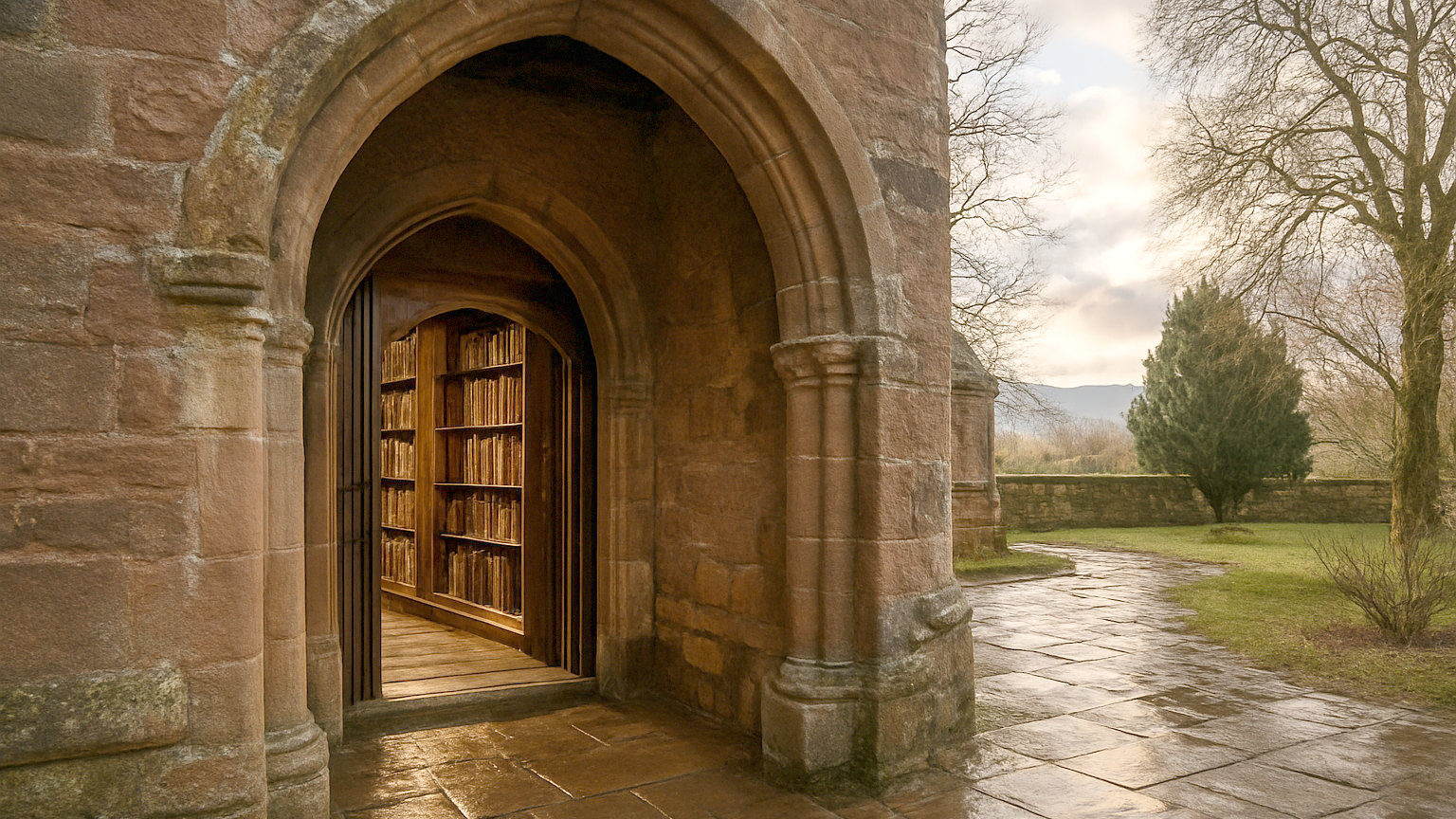
The minster sits in its own close with the Treasurer's House, St William's College and the Minster Library nearby, and the medieval city walls run close by. Walking the walls gives the best exterior views of the building, particularly the section approaching Bootham Bar, and costs nothing.