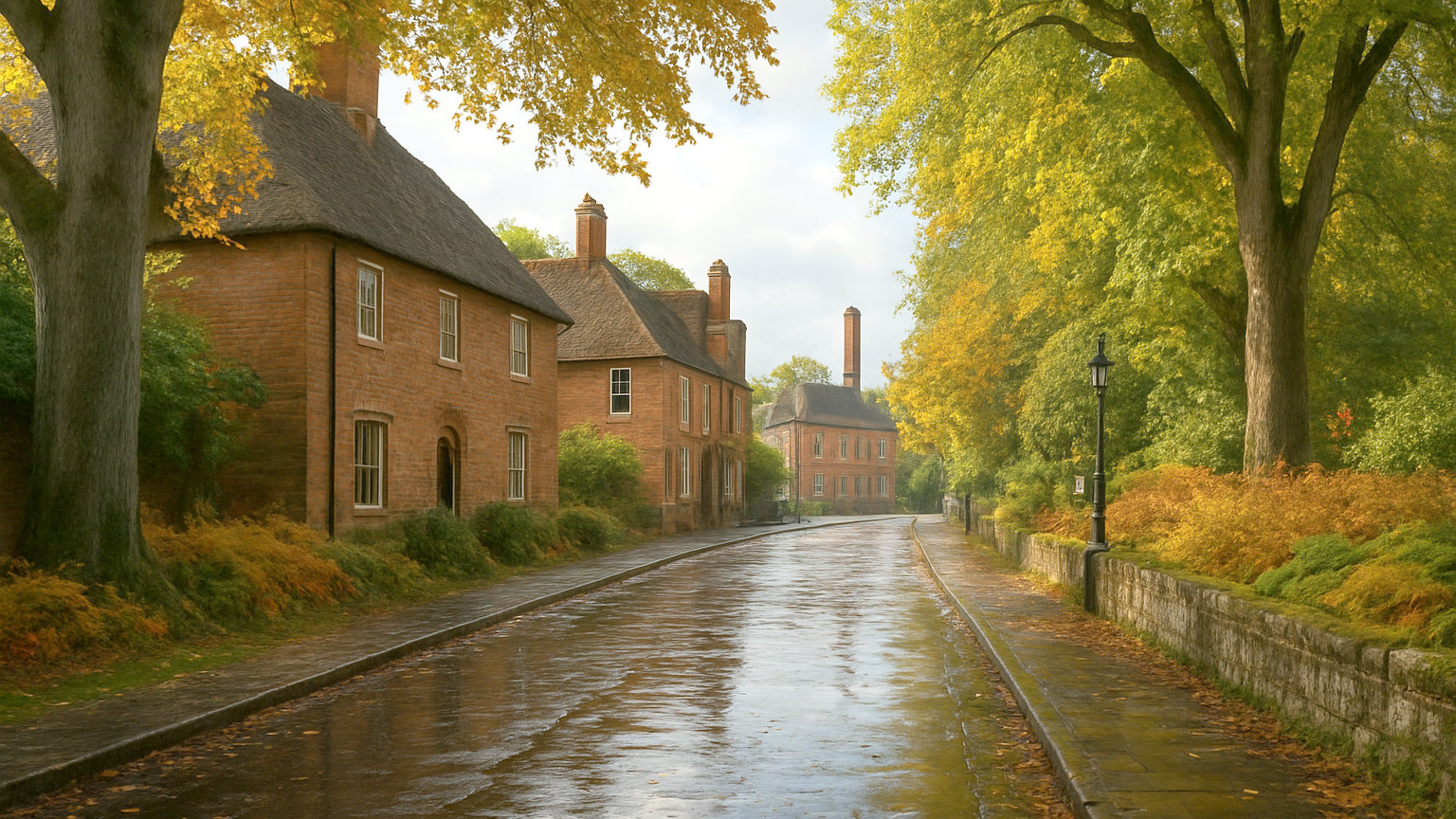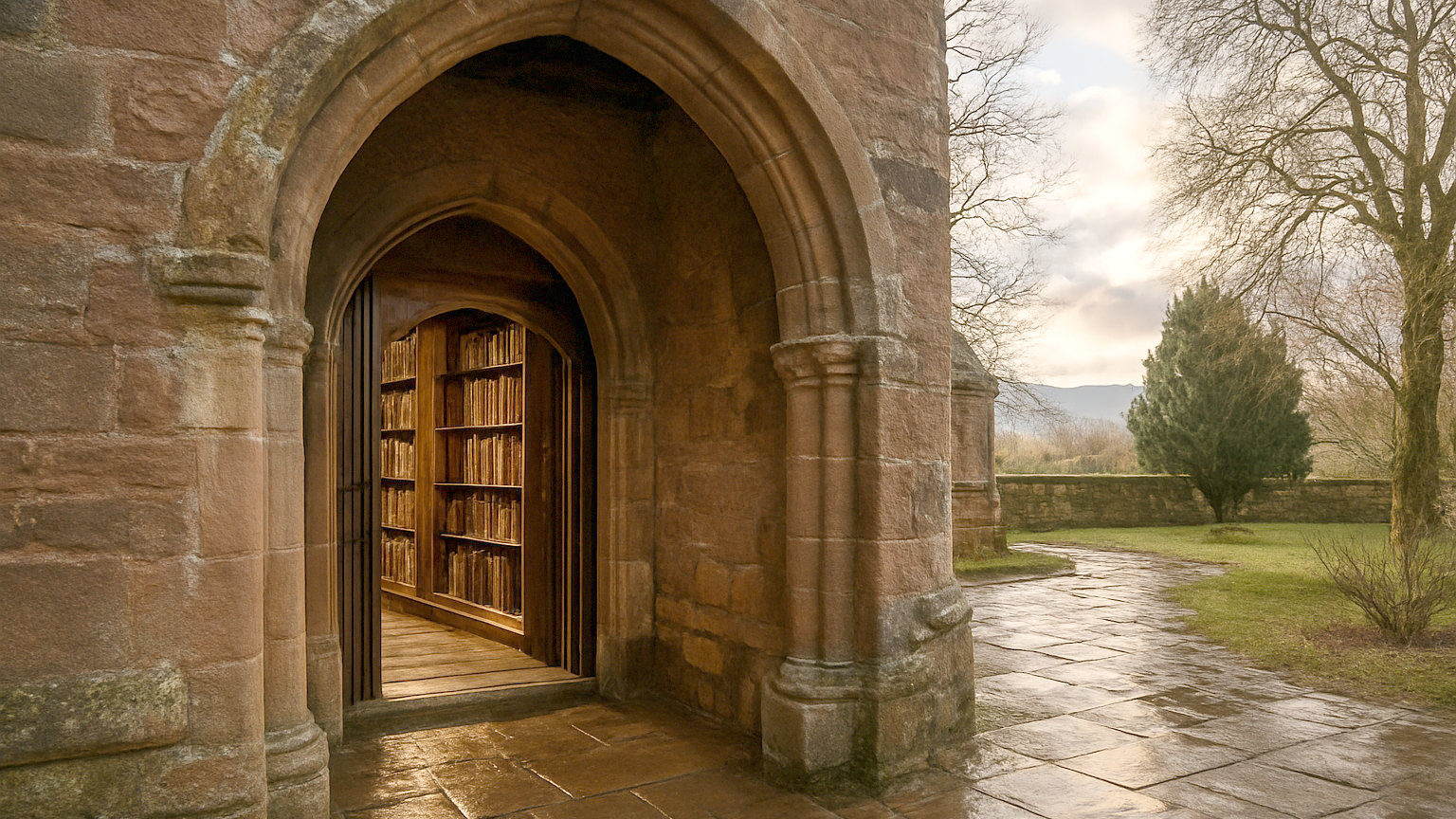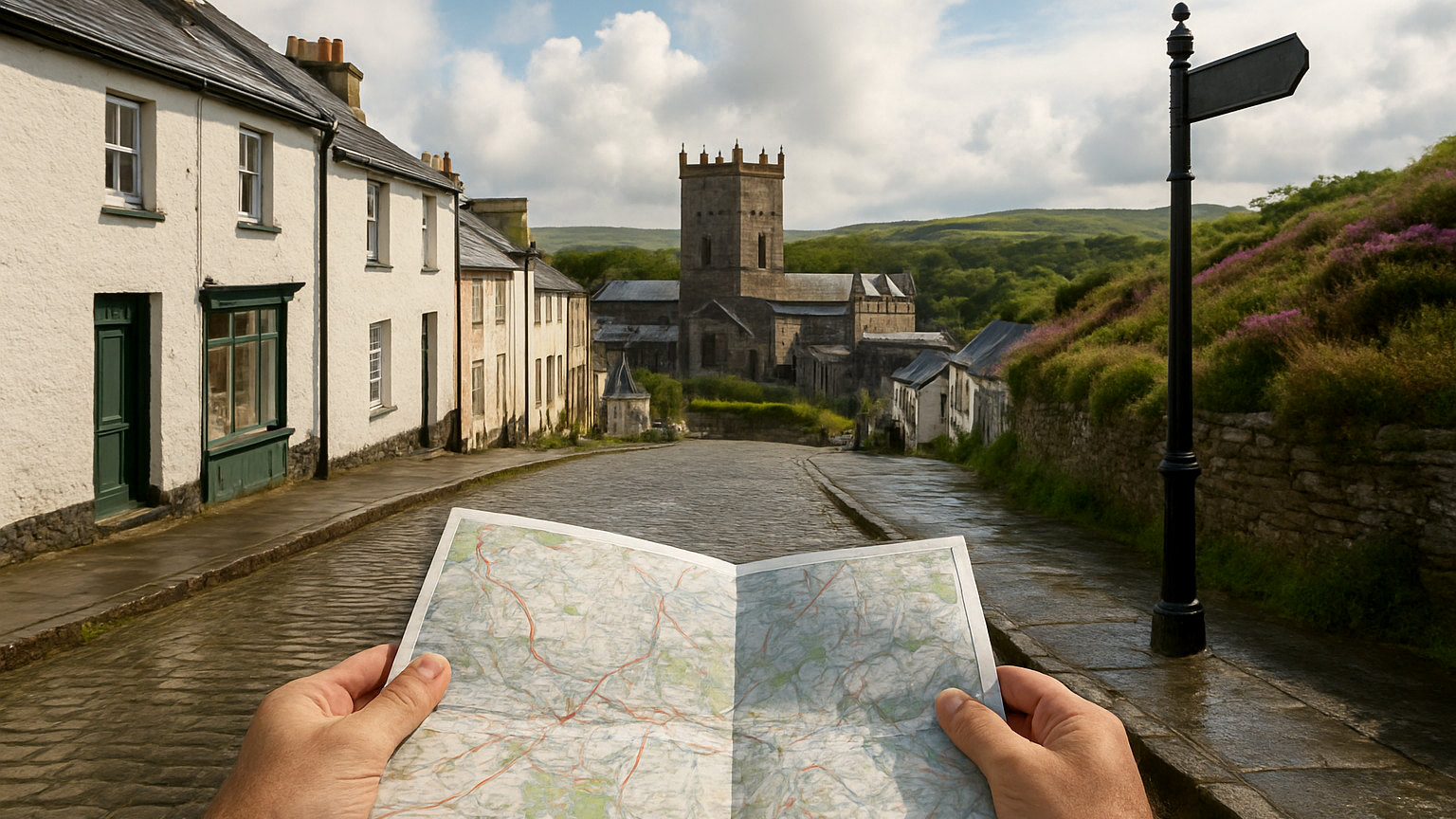
St Davids Cathedral stands in a hollow in the smallest city in Britain, at the western tip of Wales. It was deliberately built below the skyline so that it could not be seen from the sea, since this coast was raided repeatedly, and you come upon it suddenly by descending a flight of steps.
Who was David?
The patron saint of Wales, a sixth century monk and bishop who founded a monastic community on this site, known for an austere rule.
His feast day on the first of March is marked across Wales, and the shrine in the cathedral was restored and reopened in 2012.
Why was it a pilgrimage site?
Because two pilgrimages to St Davids were traditionally reckoned equal to one to Rome, which brought very large numbers here through the middle ages.
That is why a cathedral of this scale sits in a settlement of fewer than two thousand people at the end of a peninsula.
What is odd about the floor?
It slopes. The nave floor rises noticeably from west to east, by around four metres over its length, which you can see plainly by standing at the west end and looking along it.
The piers also lean outward, having settled over centuries on unstable ground beside a stream.
What is the ceiling?
An Irish oak ceiling over the nave, carved in the early sixteenth century, with pendants and intricate detail, which is among the finest of its kind in Britain.
It replaced an earlier roof and was installed as a substantial engineering solution to the building's instability.
What else is inside?
The tomb of Edmund Tudor, father of Henry the Seventh, moved here after the dissolution of the friary where he was originally buried.
Misericords in the choir stalls, medieval floor tiles, and a bishop's throne of unusual height.
What is the Bishop's Palace?
A substantial ruin immediately beside the cathedral, built in the fourteenth century by a bishop who wanted to entertain on a grand scale.
Its distinctive arcaded parapets run round the whole building and are unlike anything else in Wales. It is in the care of the Welsh heritage body and is ticketed separately.
Does the cathedral charge?
A donation is requested rather than an admission fee. Tower tours run on limited days and are ticketed.
The palace next door charges separately, and combined arrangements are sometimes available.
What happens at the festival?
A classical music festival is held in the cathedral each summer, using the building's acoustic, and there is a substantial programme of concerts through the year.
Evensong is sung during term and the cathedral has a choir school.
What is the city like?
Very small, a single crossroads with a few streets, galleries, cafes and an arts centre, and the cathedral hidden below it.
It received city status because of the cathedral rather than its size, which is how Wells and a few others qualify too.
What is nearby?
The Pembrokeshire Coast National Park, with the coast path running past the city and some of the finest cliff walking in Britain.
Whitesands Bay for surfing, St Non's chapel and holy well on the cliff at the traditional birthplace of the saint, and boat trips to Ramsey Island for seabirds and seals.
How do you get there?
By road, since there is no railway, with the nearest station at Haverfordwest around forty minutes away and buses onward.
The remoteness is part of the point, and the approach across Pembrokeshire is worth doing in daylight.
What is St Non's?
A ruined chapel and holy well on the clifftop a mile south, at the traditional birthplace of St David, named for his mother. It is free, reached on foot from the city, and the setting above the sea is the reason to go. A modern chapel and retreat house stand beside it.
One last practicality: the descent to the cathedral is by a flight of steps known as the Thirty Nine Articles, and there is a road route round for anyone who cannot manage them.