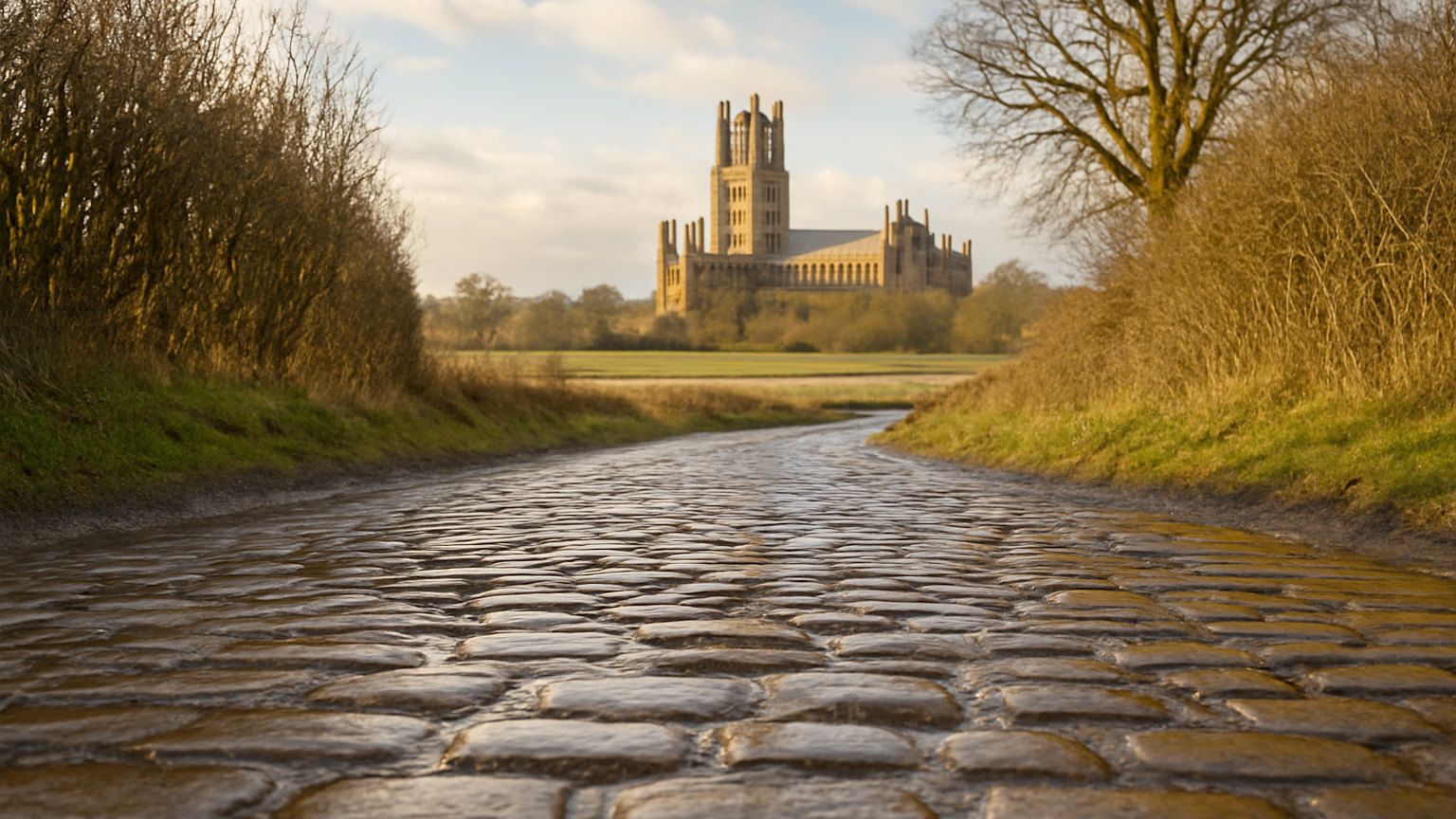
Ely Cathedral rises out of flat fen country and is visible for many miles, which is why it is called the ship of the fens. It was founded as a monastery in 673 and the present building was begun in 1083, and it contains one structure that exists nowhere else in the world.
What is the octagon?
In 1322 the Norman central tower collapsed. Rather than rebuild it, the sacrist designed an octagonal space capped by a timber lantern, which floods the crossing with light from above.
It required eight oaks of exceptional size for the corner posts and remains an extraordinary feat of medieval carpentry and engineering. Nothing else like it was ever built.
Can you go up it?
Yes, on a guided tour that climbs into the lantern itself and out onto a walkway, showing the timber structure from inside.
It is booked in advance, involves a substantial spiral stair and is among the best tower tours in England.
What is the Lady Chapel?
The largest attached to any English cathedral, a separate building of great delicacy with the widest medieval vault in the country.
Its carvings were systematically defaced at the reformation, with heads struck from hundreds of figures. The damage is deliberate and visible and makes the chapel a powerful record of the period as well as a beautiful room.
What is the nave like?
Norman, very long, with twelve bays of round arches and a painted ceiling added in the nineteenth century by two amateur artists.
The length and the rhythm of the arches are the point, and the octagon at the far end draws the eye down the whole building.
What is the Prior's Door?
A Norman doorway from the cloister into the nave, carved around 1135 with Christ in Majesty supported by angels, surrounded by foliage and figures.
It is among the finest pieces of Romanesque sculpture in England and is easy to miss.
What is the stained glass museum?
A national collection housed in the triforium, reached by a stair, holding panels rescued from buildings across the country and spanning eight centuries.
It is ticketed separately and is the only museum of its kind in Britain. Seeing glass at eye level rather than fifty feet up is a completely different experience.
Who was Etheldreda?
An Anglo Saxon queen who founded the monastery here in 673 and became its abbess, and whose shrine made Ely a major pilgrimage destination.
The shrine was destroyed at the reformation and the site is marked near the high altar.
What happened to the monastery?
It was dissolved in 1539 and refounded as a cathedral with a dean and chapter, which saved the building. Substantial monastic remains survive around the precinct.
Several are now used by the King's School, which traces its foundation to the monastic school.
Does it charge?
Yes, for sightseeing, with the octagon tour and the glass museum ticketed separately. Entry for worship is free.
Check current arrangements before travelling, since they change.
What else is in the city?
Oliver Cromwell's house, where he lived for around a decade before the civil war, preserved and open, and a riverside with moorings and pubs.
Wicken Fen, a surviving fragment of undrained fen, is a few miles south and shows what the whole region once looked like.
When should you go?
On a clear day, so that you see the cathedral from a distance across the flat land first, which is the proper introduction to it.
It is fifteen minutes from Cambridge by train and about an hour and a quarter from London, which makes it an easy day out.
What is the west tower?
A Norman tower at the west end with a later octagonal top stage, which originally had transepts on both sides. The northern one collapsed at some point in the fifteenth century and was never rebuilt, which is why the west front is conspicuously asymmetrical when you look at it directly.