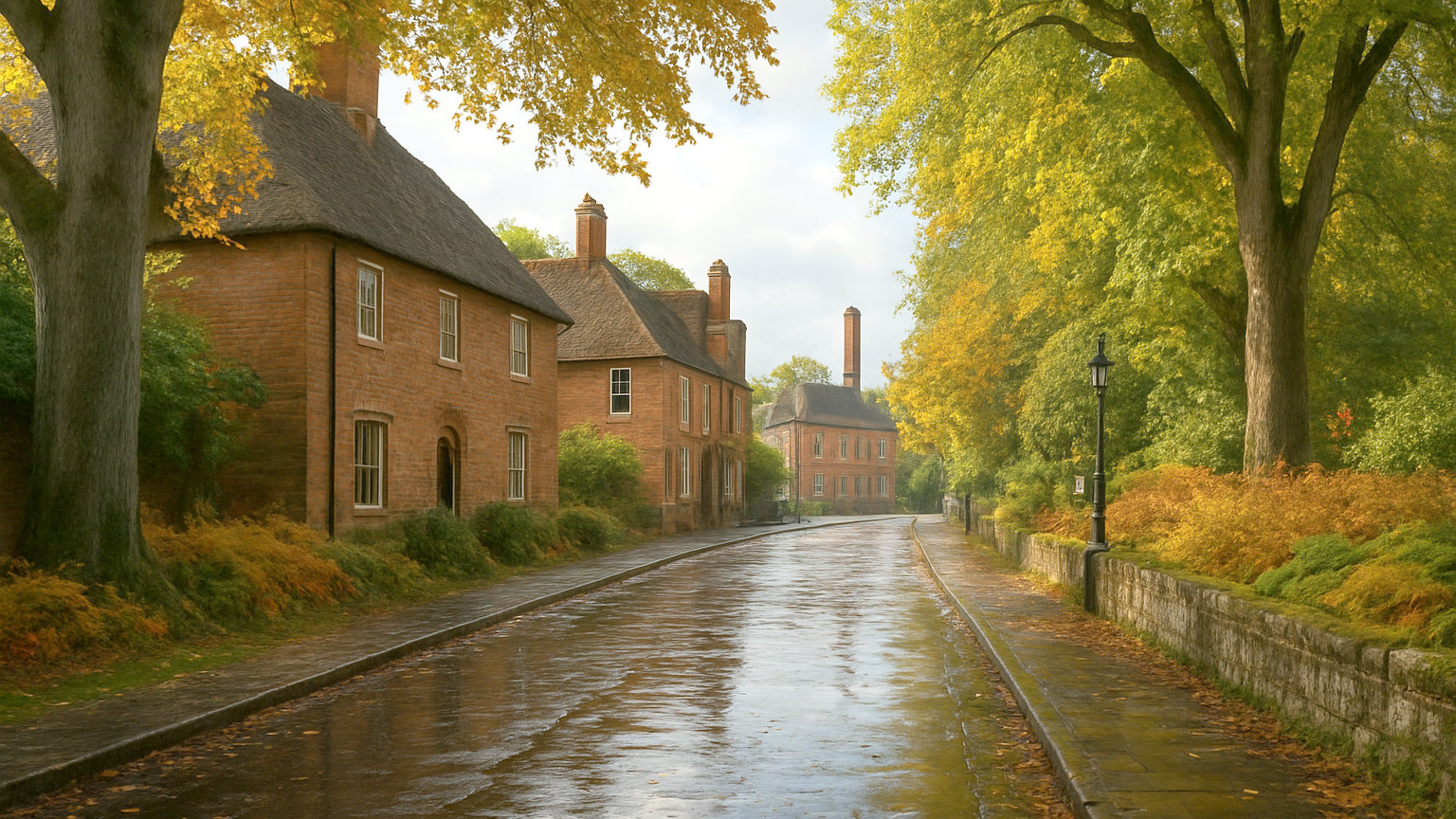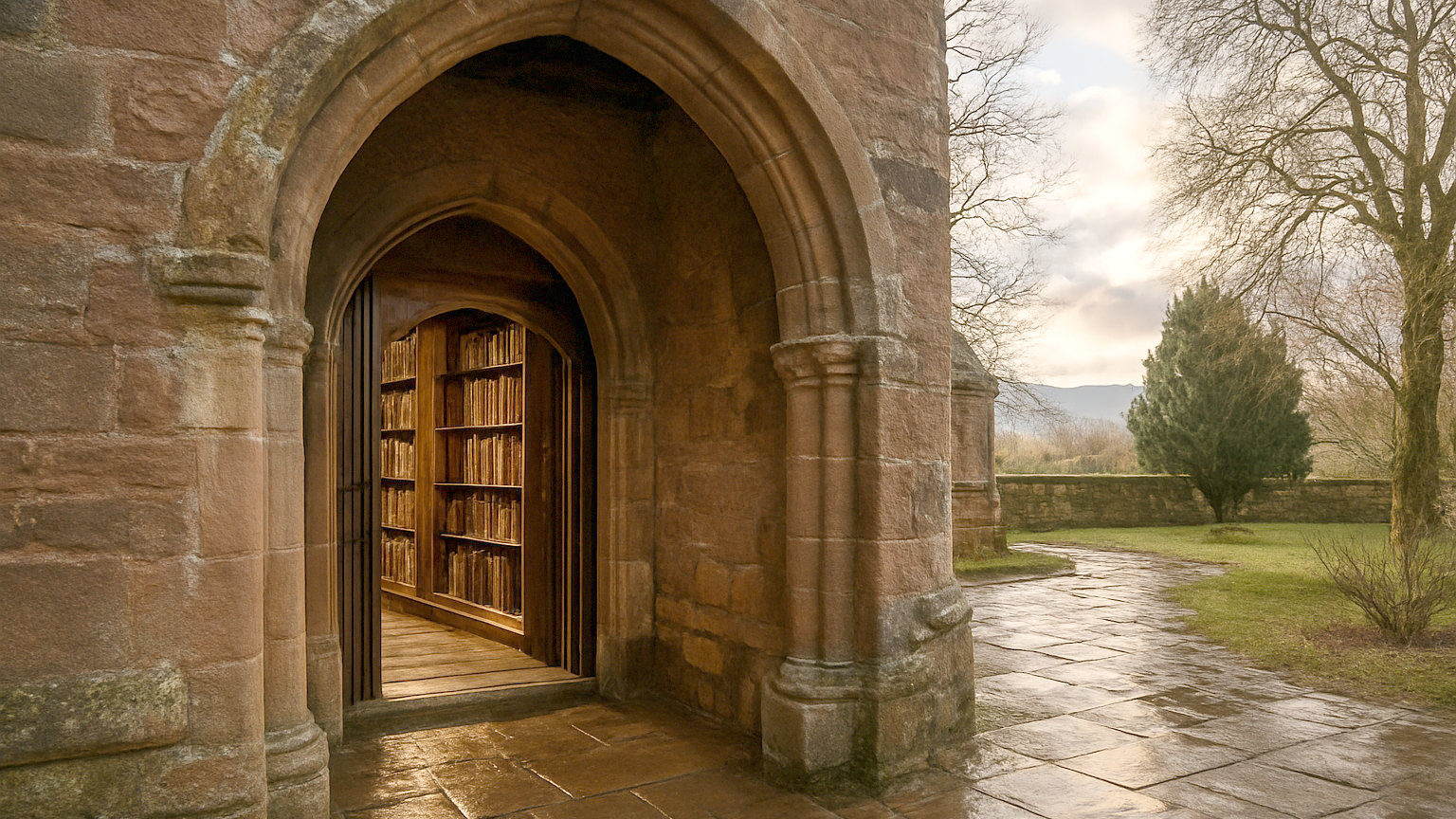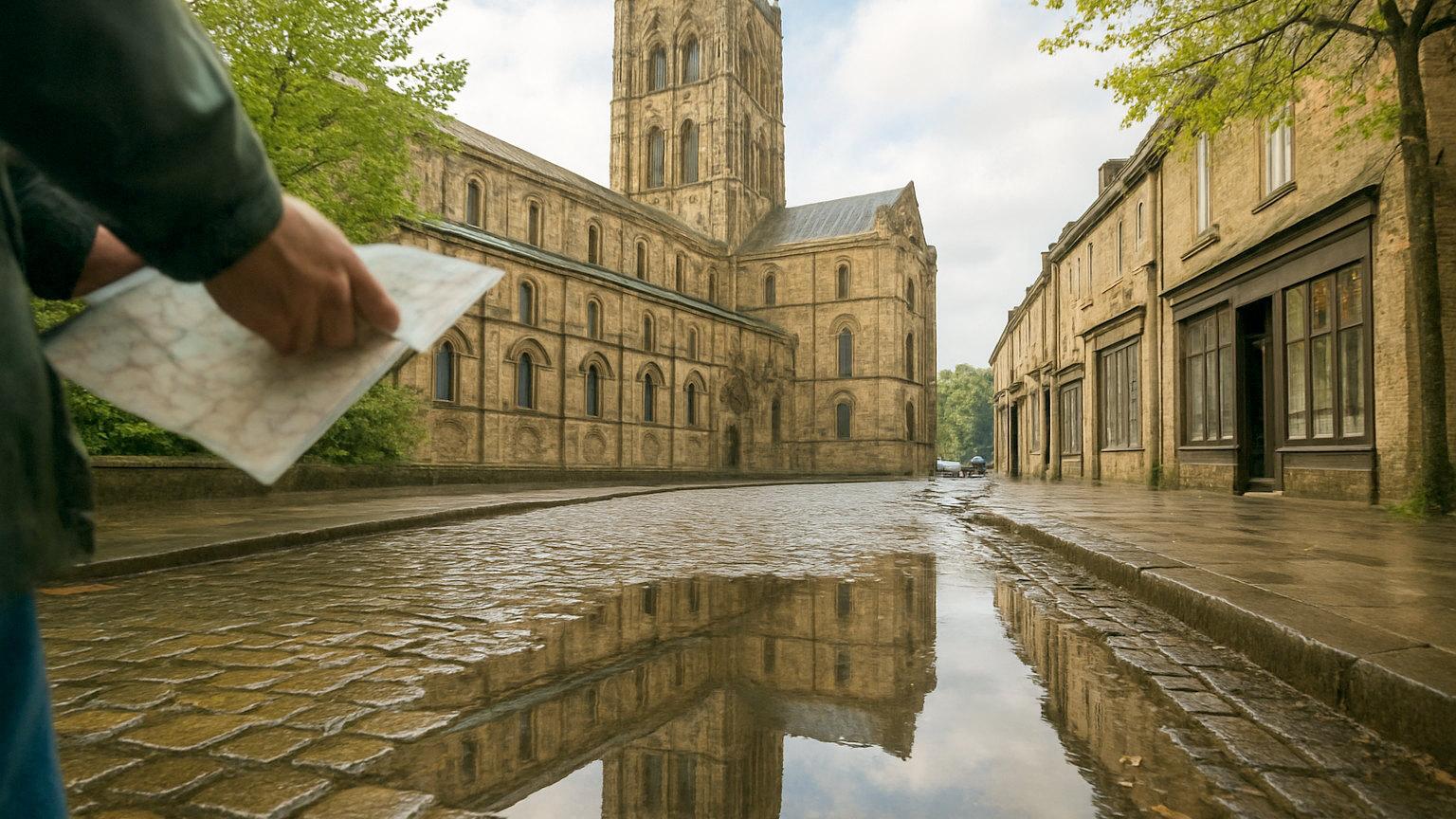
Durham Cathedral was begun in 1093 and largely finished within forty years, which is why it is so architecturally consistent and why it is generally regarded as the finest Norman building in Europe. It stands with the castle on a rock almost encircled by the river, and the two form a World Heritage Site.
Why does the architecture matter?
Because of the vaulting. Durham contains the earliest large scale use of the pointed ribbed vault, a technique that made Gothic architecture possible and appeared here a generation before it did in France.
Anyone interested in how buildings developed should stand in the nave and look up, since this is where the change begins.
What are the columns like?
Massive cylindrical piers incised with deep geometric patterns, chevrons, lozenges and spirals, alternating with compound piers down the length of the nave.
The scale is deliberate. The cathedral was built by a Norman bishop in a recently conquered and rebellious region, and it was meant to intimidate as well as to inspire.
Who was Cuthbert?
A seventh century monk and bishop of Lindisfarne whose community carried his body for over a century after Viking raids drove them from Holy Island, eventually settling here.
The cathedral was built over his shrine, which sits behind the high altar and remains a place of pilgrimage. The shrine was despoiled at the reformation and the grave remains.
Who else is buried there?
Bede, the eighth century scholar whose history of the English church is the principal source for the period, in the Galilee Chapel at the west end.
The Galilee is a beautiful late Norman space with slender columns, quite unlike the massive architecture of the nave.
What is the sanctuary knocker?
A bronze knocker on the north door, which fugitives seeking sanctuary would grasp to claim the cathedral's protection, a right that operated until the seventeenth century.
The one on the door is a replica; the twelfth century original is displayed inside.
What is Open Treasure?
An exhibition in the monastic buildings, including the fourteenth century monks' dormitory with its enormous timber roof, displaying the cathedral's treasures.
The relics of Cuthbert are shown, including fragments of his wooden coffin, a pectoral cross and a portable altar, which are among the most important Anglo Saxon objects to survive.
What survives of the monastery?
An unusual amount. The cloister, the dormitory, the great kitchen with its remarkable vaulted ceiling, and the prior's lodging, now part of the university.
Durham was a monastic cathedral and the layout of the whole precinct is still legible.
Can you climb the tower?
Yes, by around three hundred and twenty five steps, giving a view over the peninsula, the river loop, the castle and the county.
It is booked separately, has a minimum age and closes in poor weather.
Does it charge?
Entry to the cathedral itself is free with a donation invited. The tower and the Open Treasure exhibition are ticketed separately.
That makes it among the best value of the great English cathedrals.
What about the prince bishops?
The bishops of Durham held secular power over the surrounding county, raising armies and minting coins, because the region was a buffer against Scotland.
That is why the castle and the cathedral share the same rock, and the arrangement lasted until the nineteenth century.
When should you go?
Early, and out of term if you want quiet, since the city has a large student population. The riverbank walk beneath the cathedral gives the classic view and takes an hour.
What is it like from outside?
Best seen from the riverbanks below, where a wooded path runs round the peninsula beneath the cathedral and crosses two medieval bridges. The walk takes about an hour and gives the classic view of the towers rising above the trees, which is the image most people know. Prebends Bridge is the traditional viewpoint.
One final note: photography is permitted in most of the cathedral but restricted in some areas, and the building closes sections at short notice for services and university ceremonies, which are frequent given its role in the city.