Britain has an unusual concentration of substantial monastic ruins, and the reason is a single policy decision. Between 1536 and 1541 the monasteries were dissolved, their communities dispersed and their buildings stripped of anything valuable, leaving roofless shells that have stood in the landscape ever since.
Why are they always in beautiful places?
Because the Cistercians in particular sought remote valleys away from towns, choosing sites with running water and good land. Nine hundred years later those valleys are still remote and still beautiful, which is why abbey ruins so often sit in outstanding settings.
The isolation that made them spiritually attractive also made them agriculturally productive, and several became extremely wealthy, which is part of why they were dissolved.
Which is the finest?
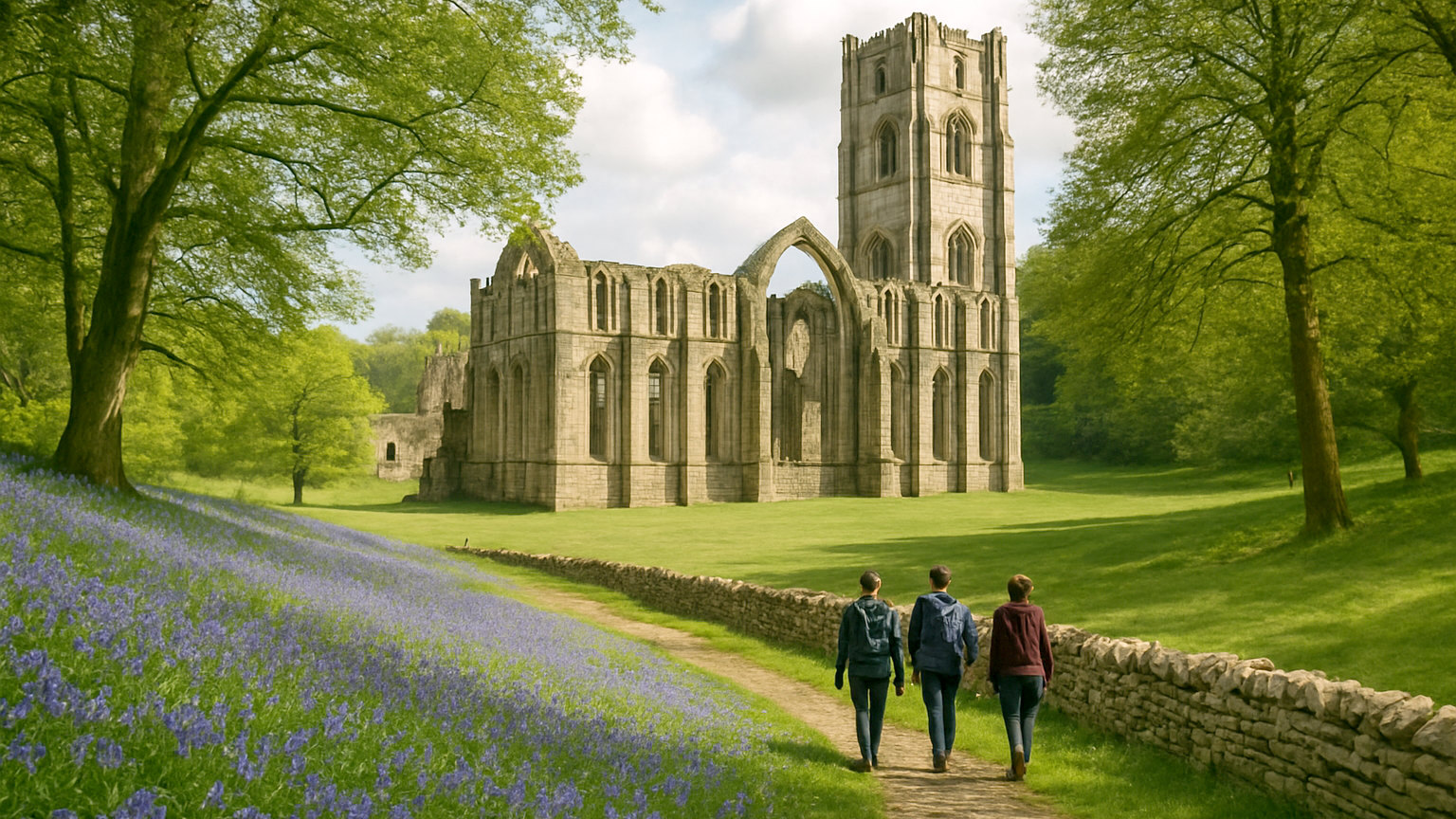
Fountains Abbey in Yorkshire, by most assessments. It is the largest monastic ruin in the country, remarkably complete, and sits within Studley Royal water garden, an eighteenth century landscape designed around the ruins. Together they are a World Heritage Site.
It needs half a day at minimum. The combination of a vast abbey and a designed landscape is not matched anywhere else in Britain.
What else is in Yorkshire?
An extraordinary concentration. Rievaulx, in a wooded valley with a terrace above it. Byland, with a great rose window and medieval floor tiles. Jervaulx, privately owned and delightfully overgrown. Bolton Abbey beside the Wharfe. Whitby, on the cliff above the harbour.
Yorkshire alone would justify a week of abbey visiting, and the sites are close enough to combine two in a day.
Which are best elsewhere?
Tintern in the Wye Valley, which inspired Wordsworth and remains among the most complete abbey churches in Britain. Glastonbury, wrapped in legend and set in parkland.
Furness in Cumbria, built of red sandstone. Lindisfarne on Holy Island. Melrose, Dryburgh and Jedburgh in the Scottish Borders, all within a short distance of each other and all substantial.
What should you look for on site?
The layout, which is remarkably consistent. The church runs east to west along the north side, with the cloister to the south, the chapter house off the east range and the refectory on the south.
Once you recognise that plan you can read almost any monastic ruin. Look also for the lay brothers' range, the drains and water channels, which were sophisticated, and the night stairs where monks descended for services in the dark.
Why do the walls stop where they do?
Lead was the valuable material and it was stripped from the roofs first, after which the buildings decayed rapidly. Cut stone was frequently robbed for local building, which is why abbey stone turns up in nearby farms and cottages.
Where a tower or a wall survives unusually high, it is often because it was too difficult to dismantle or was retained for another use.
When should you visit?
Early morning or late afternoon, and ideally in winter or early spring when the light is low and the trees are bare. Mist suits them particularly well.
Several stage evening events and illuminations, and a floodlit abbey on a winter evening is worth planning around.
Are they free?
Some are and some are not. The major sites are managed by heritage bodies and charge, while a number of smaller ruins in local authority or church care are freely accessible.
Several of the most atmospheric, including some Scottish and Welsh sites, are unstaffed and open at any reasonable hour, which allows early morning visits that the ticketed sites do not.
How much time do they need?
An hour for most, half a day for Fountains and the larger sites with grounds. They reward slow walking and reading rather than a circuit of the perimeter.
Taking ten minutes to understand the plan before walking round makes the difference between a field of walls and a legible building.
Are the Scottish and Welsh ruins different?
Somewhat. The Scottish border abbeys at Melrose, Dryburgh, Jedburgh and Kelso were repeatedly destroyed in warfare before the reformation finished them, so their ruin has a different cause and a rougher character. Welsh houses such as Tintern, Valle Crucis and Strata Florida were Cistercian foundations in remote valleys and share the English pattern closely. All are managed by their national bodies rather than English Heritage, which matters for membership.