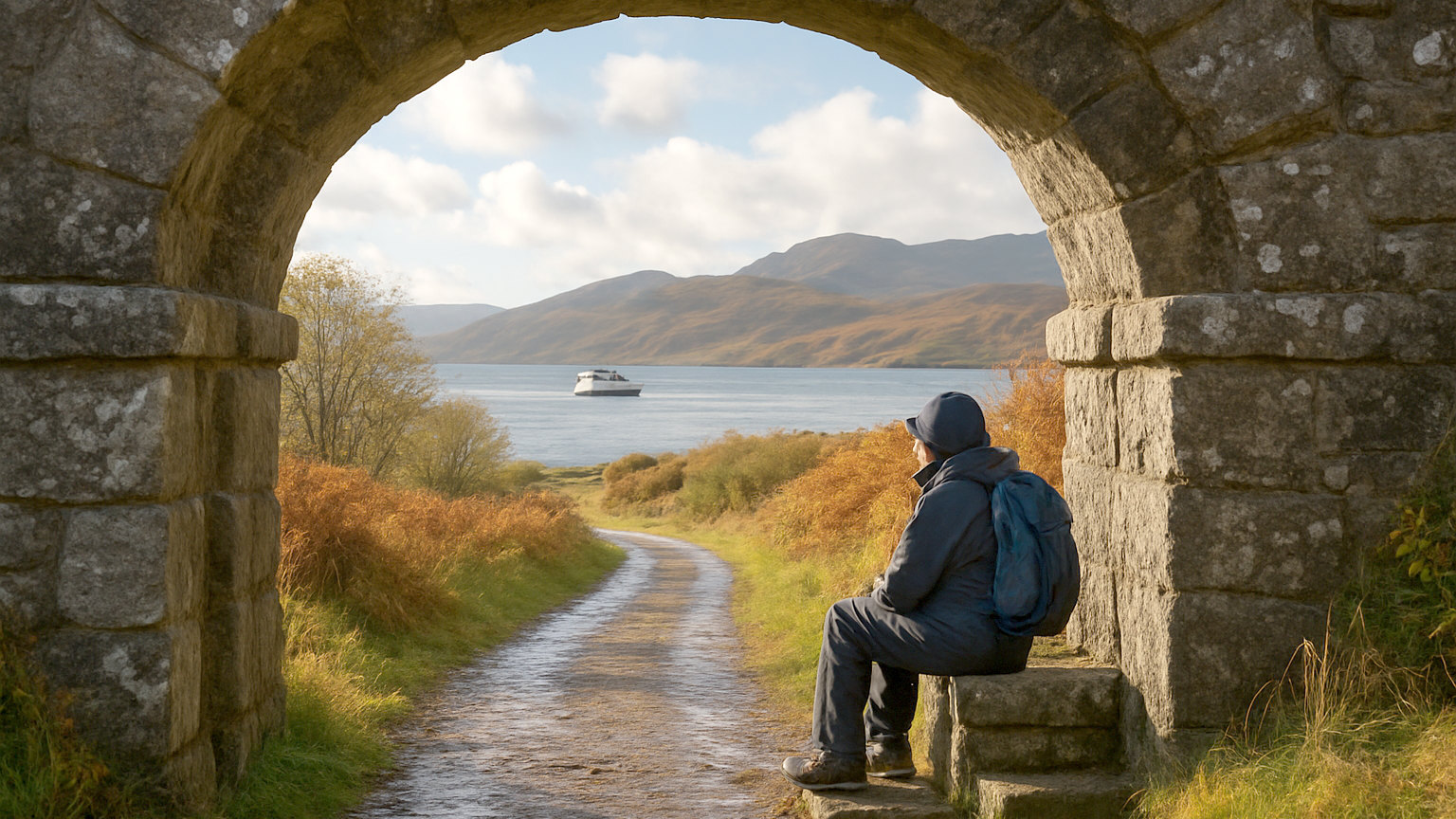
Surrey is the most wooded county in England and among the most expensive, sitting directly south west of London with fast trains into Waterloo. It works as a base for the capital and as a destination for walking, and the two rarely overlap in the same village.
Where are the main bases?
Guildford, the county town, with a castle, a steep cobbled high street and a modern cathedral on a hill, thirty five minutes from Waterloo.
Farnham for a Georgian town with a castle and a strong craft tradition, Dorking for the Surrey Hills, and Godalming or Haslemere for smaller and quieter options.
What are the Surrey Hills?
A protected landscape covering the greensand and chalk ridges across the middle of the county, with beech woods, heath and viewpoints.
Box Hill above Dorking is the best known, with a zig zag road up it and a view across the Weald. Leith Hill nearby is the highest point in south east England, with a tower on top.
What is the Devil's Punch Bowl?
A large natural amphitheatre of heath and woodland at Hindhead, formed by springs eroding the hillside, now quiet since the main road was put into a tunnel beneath it.
The road removal transformed the site and it is among the better walks in the county.
What gardens are there?
Wisley, the flagship garden of the Royal Horticultural Society, extensive and busy, with glasshouses and trial grounds.
Painshill, an eighteenth century landscape garden restored from dereliction with follies, a grotto and a lake, and Winkworth Arboretum for autumn colour.
What historic houses can you visit?
Polesden Lacey, an Edwardian house on the Downs used for entertaining on a grand scale, with parkland and long views.
Clandon, Hatchlands and Loseley, and the Watts Gallery at Compton with an extraordinary decorated chapel nearby.
Is it a good base for London?
Yes, for anyone wanting countryside as well. Guildford, Woking and Epsom all have fast services, and Woking in particular is under half an hour.
Accommodation is not cheap, since this is a prosperous commuter county, so the saving over central London is smaller than it looks.
What about Hampton Court?
On the boundary at the northern edge, a Tudor and baroque palace with enormous gardens and a maze, reached by train from Waterloo in around thirty five minutes.
It is among the best days out in the London area and needs the best part of a day.
What is the walking like?
Excellent and unexpectedly extensive. The North Downs Way runs the length of the county, and the Greensand Way parallels it further south.
Stations along both lines allow linear walks with trains at either end, which is the best way to use the hills.
Where should walkers stay?
Dorking, Shere, Peaslake or Guildford for the central hills, and Haslemere for the greensand country in the south west.
Several villages have good pubs with rooms, which is the pleasantest arrangement for a walking weekend.
What should you know about prices?
Surrey is among the most expensive counties in England for accommodation and eating, reflecting its position and its residents.
Weekday rates are frequently much lower than weekend ones, since a good deal of the trade is business rather than leisure.
When should you go?
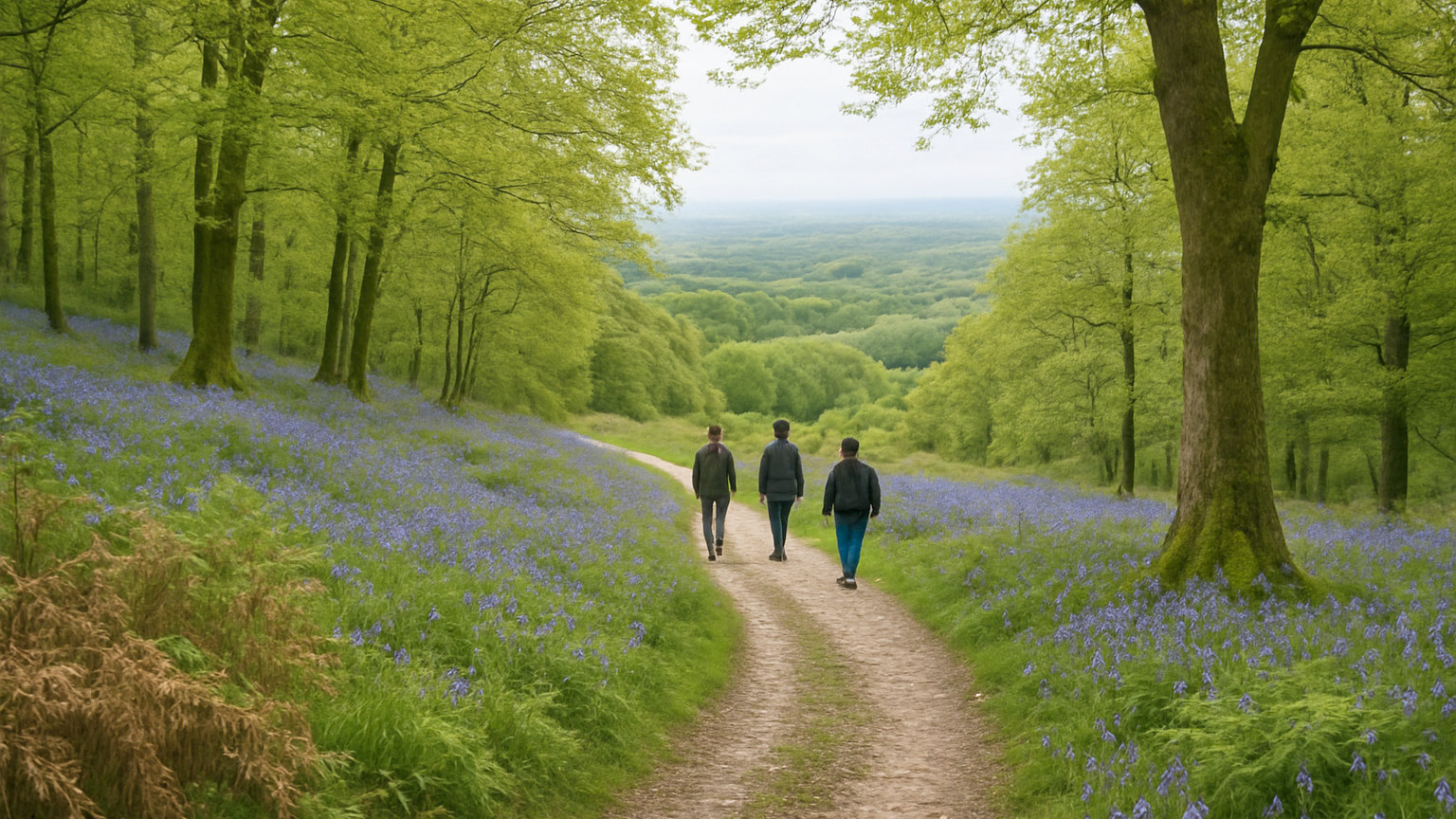
Late April and May for bluebells in the beech woods, which are exceptional here, and October for colour at Winkworth and across the hills.
Summer weekends bring heavy day traffic from London to Box Hill and the popular villages, so go early or midweek.
What about the towns near the border?
Richmond, Kingston and Epsom sit on the edge of London and function as both Surrey towns and outer suburbs, with Richmond Park, Hampton Court and the Thames between them. They are expensive and extremely well connected, and for anyone wanting parkland and a short journey into town they are among the best options anywhere.
One further practicality: many Surrey stations sit some way from the villages they serve, so check the walk from platform to accommodation before booking somewhere that looks conveniently placed on a rail map.