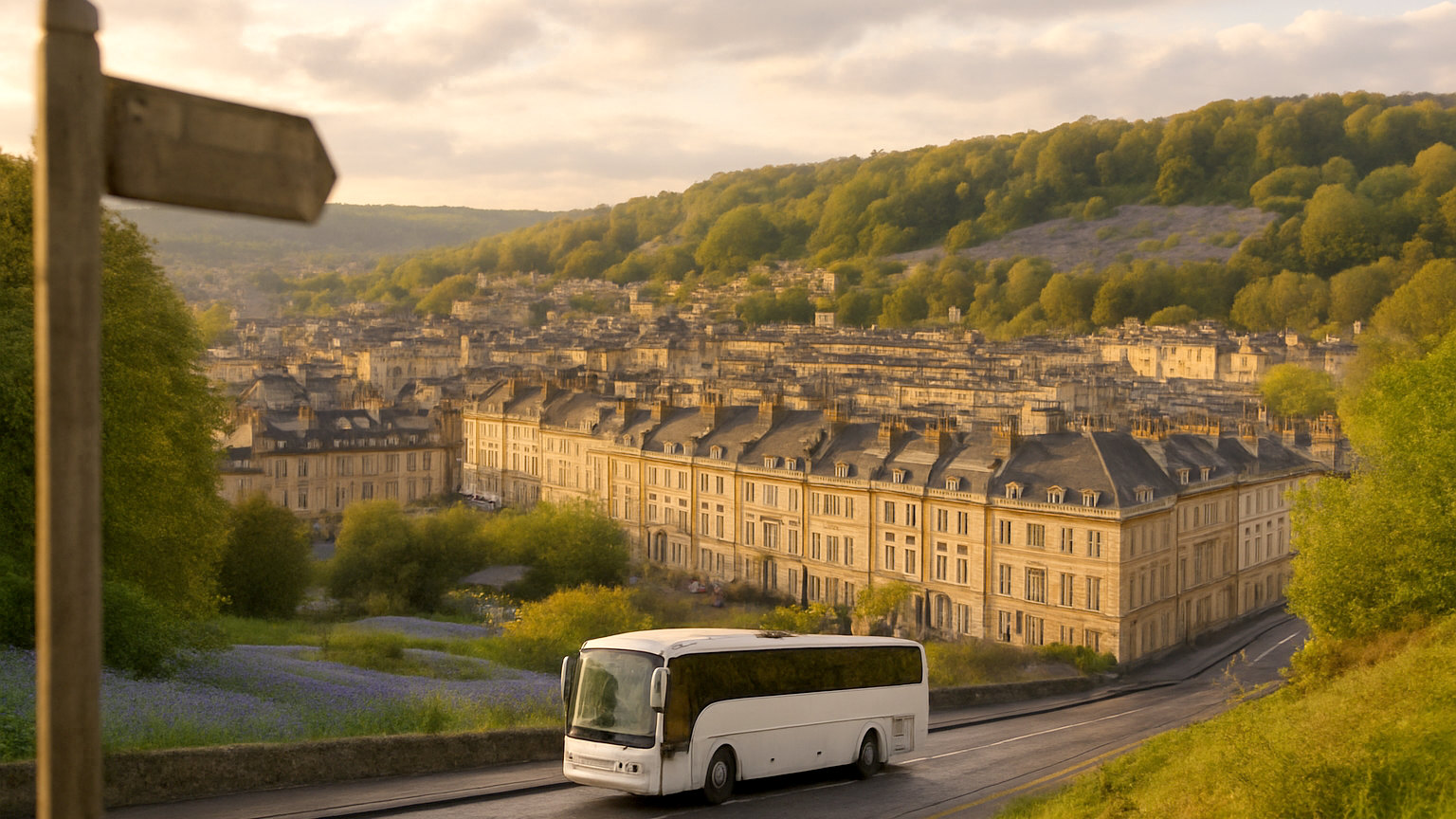
Long distance coach travel in Britain is substantially cheaper than rail and substantially slower. For anyone with more time than money it is a genuine alternative, and on some routes it is the only direct public transport available.
How much cheaper are they?
Considerably, particularly when booked ahead. Fares on the main operators for long journeys are frequently a fraction of the equivalent walk up rail fare, and promotional fares on some routes are very low indeed.
The gap narrows against advance rail tickets booked early, which on some routes are competitive.
How much longer do they take?
Typically half as long again or more. A journey taking two and a half hours by train might take four by coach, since coaches use motorways, stop at intermediate points and are subject to traffic.
They are also less predictable, since congestion affects them and there is no equivalent of a delay repay scheme in most cases.
Who operates them?
Two main national operators run most long distance services, alongside a growing number of international operators serving cross border routes. Scotland has its own principal operator and Northern Ireland is served by the regional public transport body.
Local bus services are separate and run by dozens of regional companies with varying fares and coverage.
What is the network like?
Focused on the motorway corridors and major towns, with London as the principal hub. Some places without a railway station are served by coach, which makes it the only option for parts of the country.
Coaches also serve airports extensively and frequently more cheaply than rail, particularly for journeys not passing through a city centre.
What are they like to travel on?
Modern coaches have reclining seats, power sockets, wireless internet of variable reliability and a lavatory. Legroom is comparable with a train and the seats are narrower.
Comfort breaks are taken on long routes at motorway services. Luggage goes in the hold with a limit on the number and size of items, unlike trains.
Who do they suit?
Students, young travellers and anyone on a tight budget. Anyone travelling to a town not served by rail. Anyone with a lot of time and a strong preference for a low fare.
They suit poorly anyone prone to travel sickness, anyone who needs to work en route, and anyone with a tight connection at the other end.
What about coach cards?
The main operators sell discount cards for young people, older passengers and disabled travellers, working on a similar basis to railcards, and these reduce already low fares further.
Promotional fares are released regularly and booking early produces the lowest prices, exactly as with rail.
What happens if a coach is delayed?
Compensation arrangements are less developed than on rail. Operators have their own conditions and passenger rights regulations apply to longer journeys, but there is no equivalent of a universal delay repay scheme.
Building in a generous margin before any onward connection is therefore more important than on the railway.
Are there scenic coach routes?
Some, particularly in the Highlands and the islands, where bus services run along coasts and through glens that no railway reaches. Several postbus and community services cover extraordinary country.
Open top and seasonal visitor services operate in national parks and coastal areas in summer and are designed for the view rather than the journey.
What is the honest comparison?
Rail is faster, more comfortable and better protected when things go wrong. Coach is cheaper, sometimes dramatically so, and reaches places rail does not.
For a long journey booked well in advance, compare both. For a last minute long journey, the coach is frequently a third of the price of a walk up rail fare.
What about airport coaches?
One of the strongest cases for coach travel. Direct services connect airports to city centres and to towns across a wide area, frequently more cheaply than rail and without the changes a train journey would require. For a journey between two regional towns via an airport, the coach is often the only direct option and considerably faster than the rail alternative.