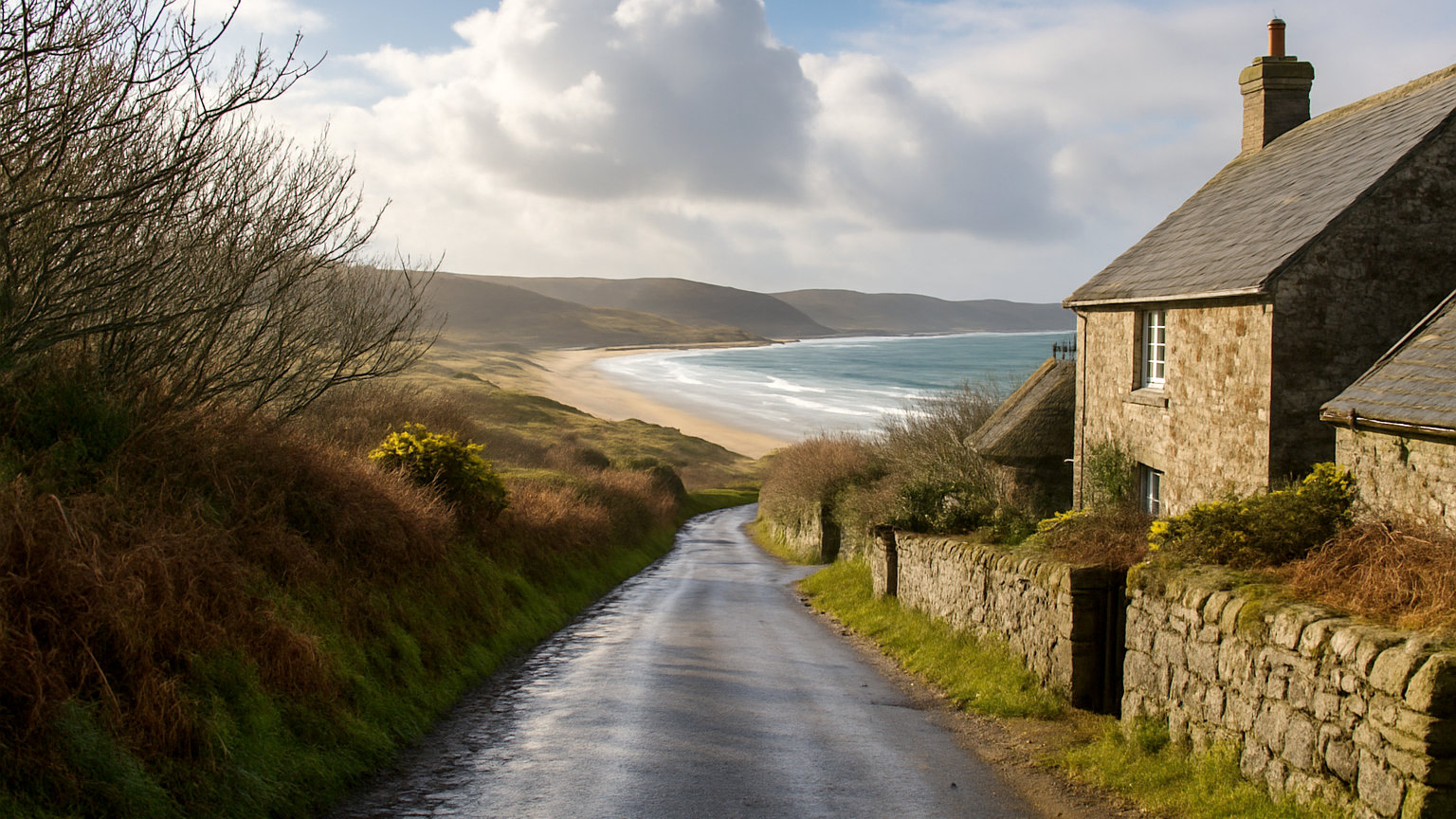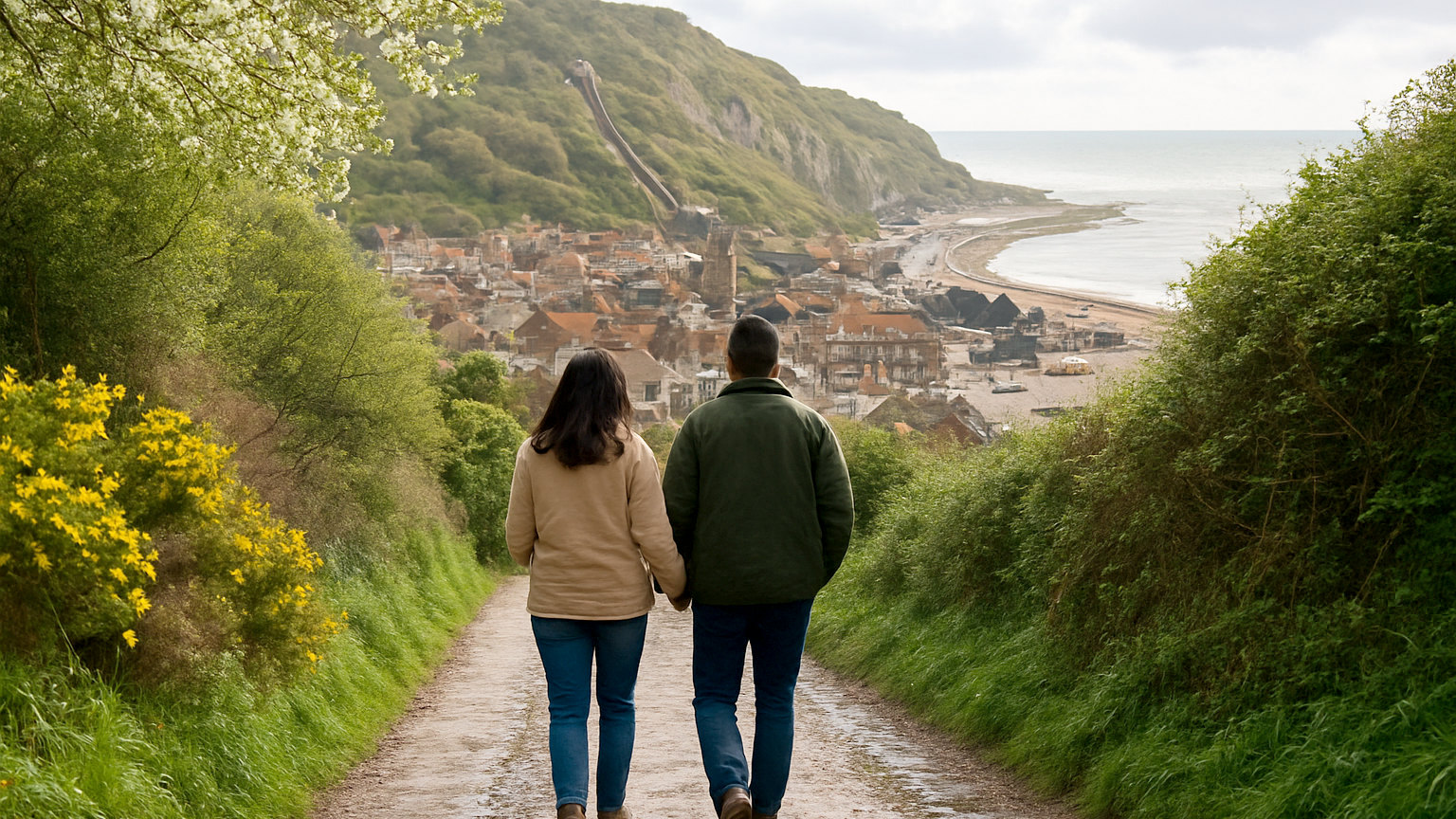
Hastings is an old fishing town that became a Victorian resort and has kept both identities. It still has the largest beach launched fishing fleet in Europe, working from the shingle because there is no harbour, and an old town of narrow streets that feels nothing like a seaside resort.
What are the net shops?
Tall black weatherboarded huts on the beach, some three storeys high, built for drying and storing nets when ground rent was charged by area rather than volume.
They are unique to Hastings, date from the sixteenth century onwards and are still used by the fishermen. There is no comparable structure anywhere else.
How does the fishing work?
Boats are winched up the shingle beach because there is no harbour, launched the same way, and the catch is sold from huts on the Stade directly behind.
Buying fish here means buying it from the people who caught it that morning, which is increasingly rare in England.
What are the cliff railways?
Two funiculars climbing the hills on either side of the old town. The East Hill lift is the steepest funicular in Britain and reaches open clifftop country.
The West Hill lift runs through a tunnel to the castle ruins. Both are short, cheap and worth taking.
What is on East Hill?
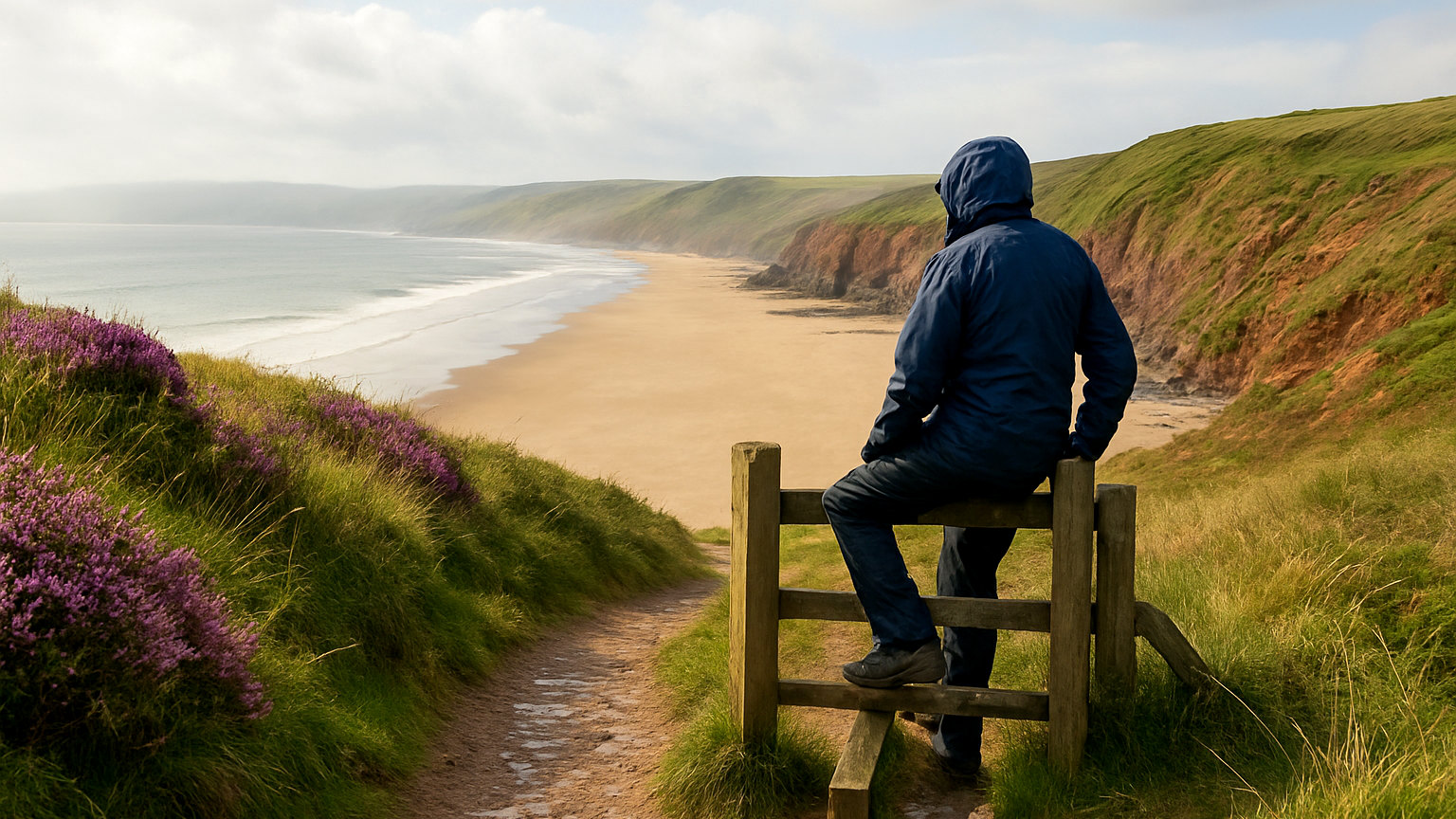
Open clifftop grassland running east into Hastings Country Park, with glens, sandstone cliffs and several miles of walking along the coast towards Fairlight.
It is free, immediately accessible from the town and among the best clifftop walking in Sussex.
What is the pier like?
Rebuilt after a fire in 2010 and reopened as a deliberately open deck rather than a traditional amusement pier, winning a major architecture prize in 2017.
It divides local opinion sharply, since some wanted the old attractions back, and it is free to walk.
What is the Old Town?
Two parallel streets in a valley between the hills, with timber framed buildings, twittens running between them, antique shops, pubs and a small museum.
It is the best part of the town and holds most of the good eating and drinking.
Where was the battle actually fought?
Not in Hastings. The battle of 1066 took place around six miles inland at what is now the town of Battle, where an abbey was founded on the site.
The abbey ruins and the battlefield are open, with the traditional site of Harold's death marked, and it is a substantial visit in its own right.
What is at the castle?
The fragmentary remains of one of the first Norman castles in England, on the cliff above the town, with part having fallen into the sea over the centuries.
It is reached by the West Hill lift or a steep walk and the view along the coast is the main reward.
What about St Leonards?
An adjoining planned Regency town to the west, with a seafront of stuccoed terraces, an art deco block and a growing number of independent businesses.
It is quieter than Hastings and has become the fashionable end, with prices to match.
How do you get there?
By train from London Charing Cross and Victoria in around ninety minutes, and along the coast from Brighton and Ashford.
The station is a short walk from the seafront and the town is walkable, though hilly at both ends.
Does it work as a weekend?
Well. Two nights covers the old town, both lifts, the clifftop, the pier and a day at Battle, with good food throughout.
Like several south coast towns it has areas of real deprivation alongside the regenerated parts, which is worth knowing rather than being surprised by.
What about the caves?
A network of sandstone caverns beneath West Hill, enlarged over centuries and used for smuggling and later as wartime shelters, open as an attraction with a guided route. They are cool, damp and genuinely atmospheric, and they make a reliable option on a wet afternoon.
One last suggestion: buy fish from the huts on the Stade in the morning. It was landed a few hours earlier by the boats winched up the shingle in front of you, which is about as direct as the supply chain gets in England.