The aurora borealis is visible from Britain considerably more often than most people assume, particularly from Scotland and the northern isles. It requires darkness, clear skies and solar activity at the same time, which is why sightings are unpredictable rather than rare.
Where is the best place to look?
As far north as possible with a clear horizon to the north and no light pollution. Shetland and Orkney are the most likely locations in Britain, followed by Caithness, Sutherland and the Outer Hebrides.
Displays are also seen from Skye, Aberdeenshire, the Cairngorms, Galloway and, during strong geomagnetic storms, from northern England, Wales and occasionally much further south.
When is the season?
Roughly September to March, because the nights need to be genuinely dark. In midsummer the northern sky never darkens sufficiently, so the aurora may be present and invisible.
The equinoxes in late September and late March are statistically among the more active periods, and the middle of the night is generally the best time.
What conditions do you need?
Three at once: solar activity producing the aurora, clear skies where you are standing, and darkness. Any one missing and there is nothing to see.
Cloud is the most common obstacle in Britain, which is why the drier eastern side of the country frequently has better odds than the west despite being slightly further south.
How do you check the forecast?
Aurora forecasting services publish activity levels, and several apps issue alerts when conditions are favourable. The commonly cited index measures geomagnetic disturbance, with higher values meaning visibility further south.
Forecasts are reliable only a day or two ahead, and short notice alerts are frequently the best warning available.
What does it actually look like?
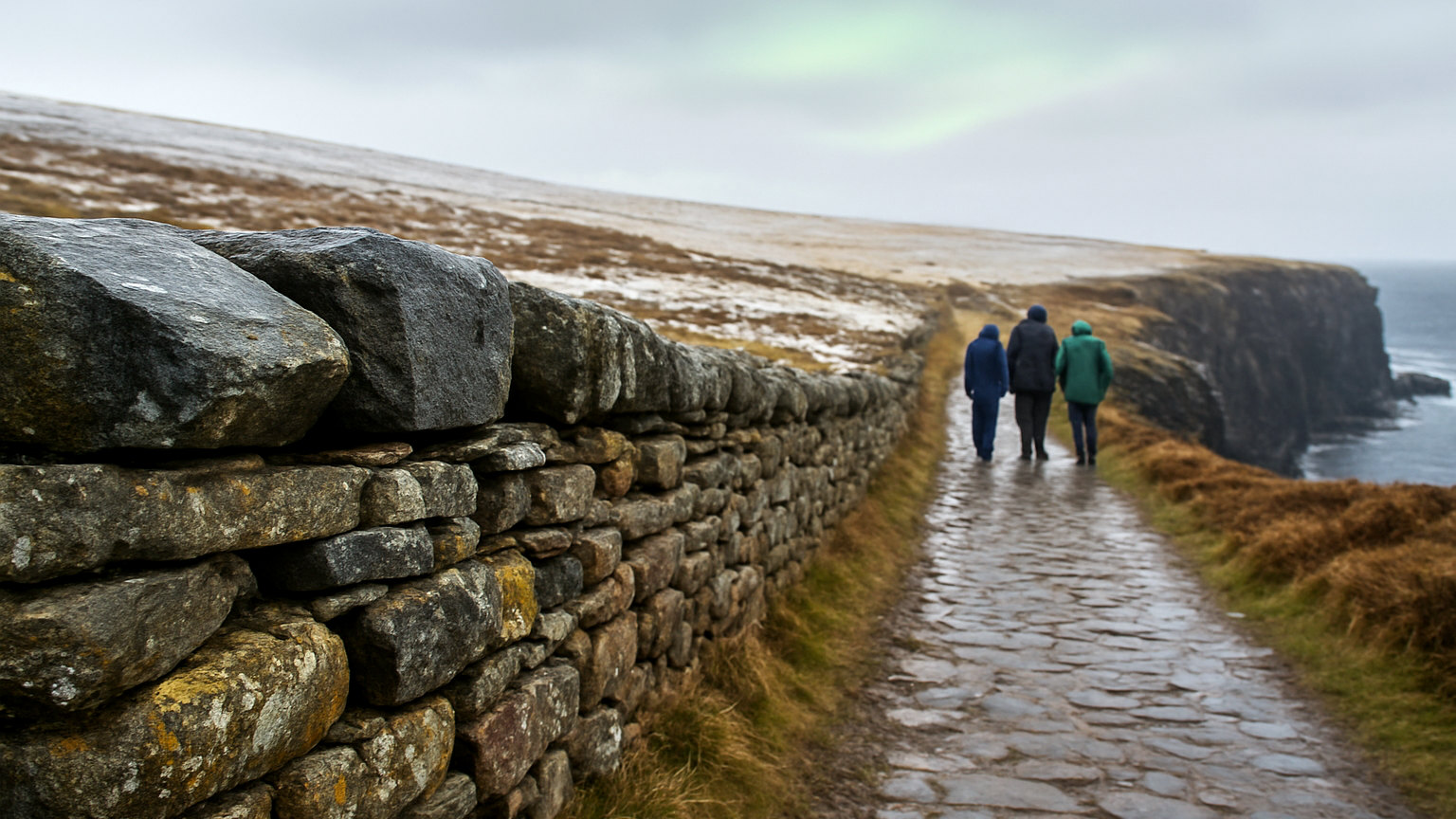
Frequently less dramatic to the eye than in photographs. A faint greenish glow or a pale arc low on the northern horizon is the common British experience.
Cameras are far more sensitive than human vision and record colour the eye cannot detect, which is why photographs and reality differ. Strong displays with visible movement and colour do occur and are unforgettable.
How should you photograph it?
A camera capable of long exposures on a tripod, with a wide lens, a high sensitivity setting and manual focus set to infinity. Modern phones with night modes also perform surprisingly well.
Take a test shot of the northern sky even when you see nothing, since a faint display invisible to the eye will register.
What should you take?
Considerably more warm clothing than the temperature suggests, since you will be standing still outdoors at night in winter. A flask, a chair and patience.
A red torch to preserve night vision, which takes twenty to thirty minutes to develop fully and is destroyed instantly by a phone screen.
Can you plan a trip around it?
Not reliably, and anyone travelling specifically to see it should treat a sighting as a bonus rather than the purpose. Several nights in the far north in winter improve the odds considerably.
Build the trip around somewhere you want to be anyway, with dark skies, and check the forecast each evening.
Where else can you see dark skies?
Britain has a growing number of designated dark sky parks and reserves, including in Northumberland, Galloway, Exmoor, the Brecon Beacons and several Scottish areas.
Even without aurora, these give the Milky Way, meteor showers and a night sky most people have never seen properly, which is worth the trip on its own.
What is the realistic expectation?
That you may see a faint glow on a clear winter night in northern Scotland, that you will more likely see nothing, and that occasionally a strong display arrives with little warning.
Following an alert service and being prepared to go outside at short notice is how most people in Britain actually see it.
What else is in the winter sky?
A great deal that is more reliable than the aurora. The Milky Way is visible from any genuinely dark site between autumn and spring, meteor showers occur on predictable dates each year, and the winter constellations are the brightest of the year. Anyone travelling for the aurora should treat these as the certainty and the aurora as the possibility.