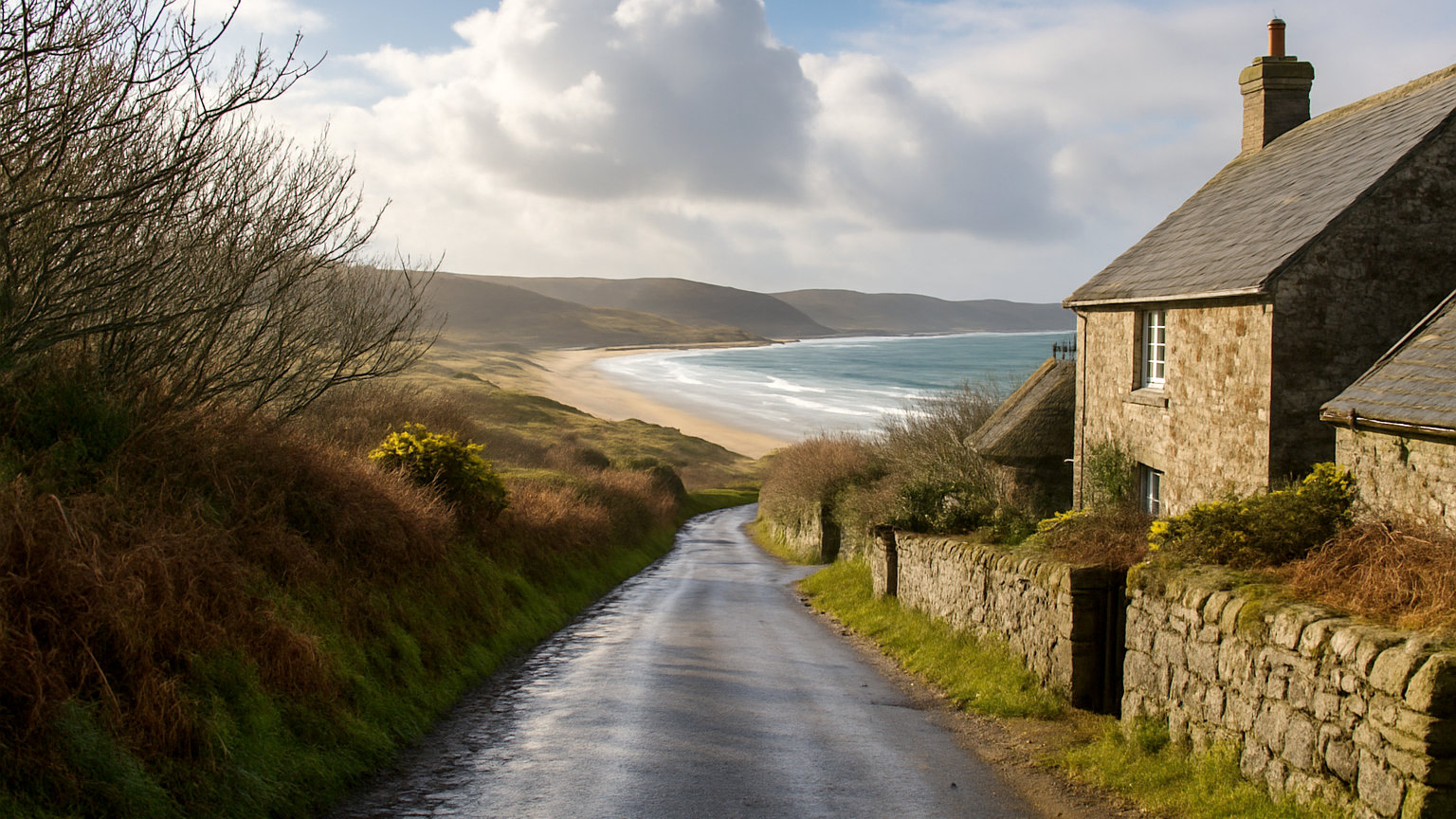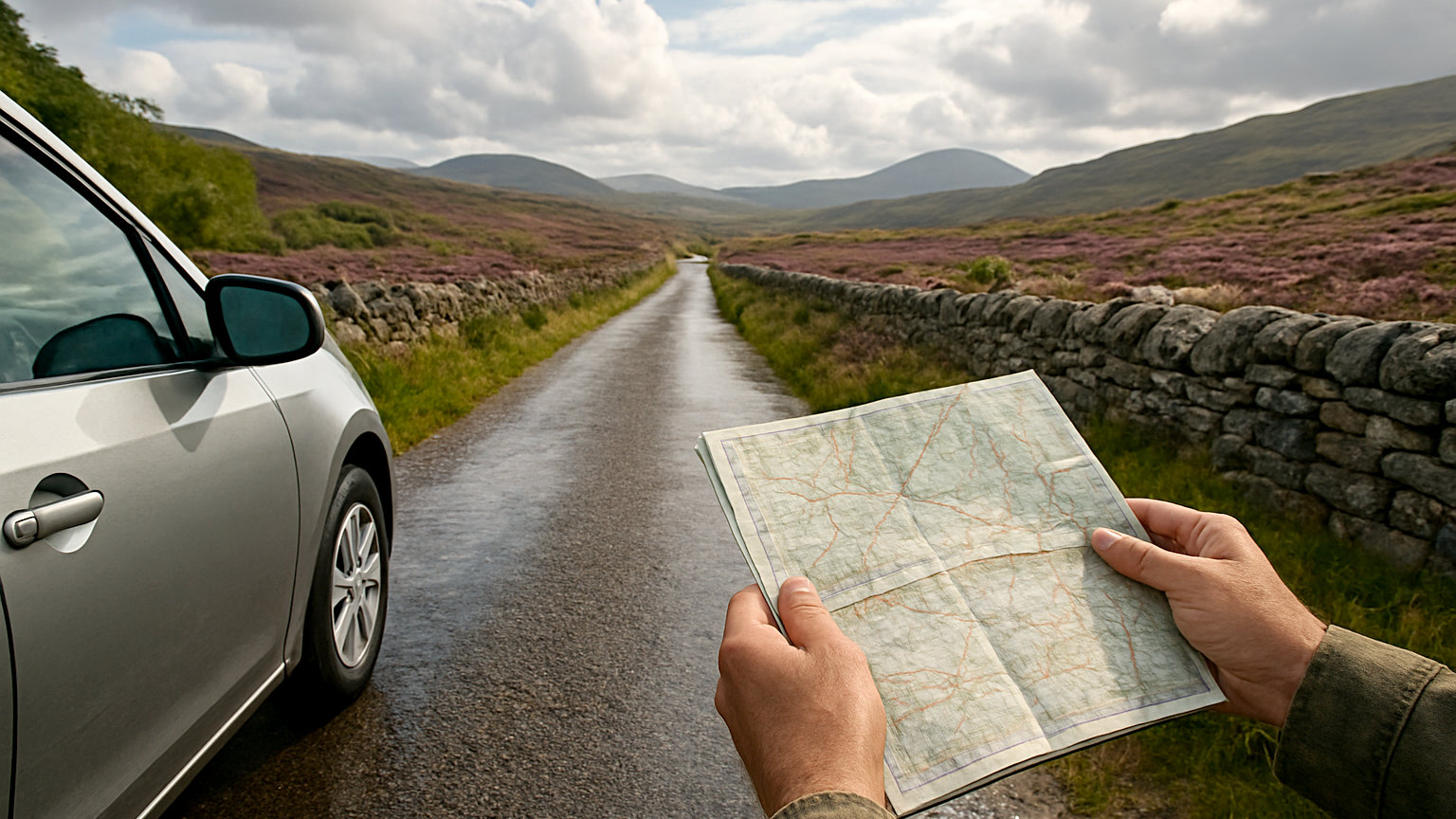
Large parts of the Scottish Highlands, the islands, mid Wales and the West Country are served by single track roads with passing places. They work perfectly well and they operate on conventions that are obvious to residents and entirely invisible to visitors, which is the source of most difficulty.
How does a passing place work?
If the passing place is on your left, pull into it. If it is on your right, stop opposite it and let the oncoming vehicle use it.
You do not cross to the right hand side to use a passing place. That single point causes more confusion than anything else.
Who reverses?
Whoever is nearer to a passing place, regardless of who arrived first or which vehicle is larger. On these roads reversing a short distance is entirely normal and expected.
Anyone unwilling or unable to reverse should be honest about it early rather than sitting still, since the other driver will simply do it.
What about faster traffic behind?
Pull into a passing place and let it past. Local drivers use these roads daily, frequently for work, and being held up behind a slow visitor for several miles is a genuine irritation.
A raised hand of thanks when someone waits for you is standard and universally used, and its absence is noticed.
Can you park in a passing place?
No, ever. Passing places are not laybys and parking in one blocks the road for everybody, including emergency vehicles and farm traffic.
This is the single most resented thing visitors do on single track roads, and it is signed as prohibited on many of them.
What about blind summits and bends?
Common, and the reason to keep speed down. On a blind summit you cannot see whether anything is coming, and the road may be single track on the far side.
Approach at a speed that allows stopping within the distance you can see, which on many of these roads is not far.
What livestock will you meet?
Sheep, which lie on warm tarmac and move unpredictably, particularly lambs which run to the opposite side from the ewe. Cattle, deer and, in the New Forest and on Dartmoor, ponies.
Slow right down, do not sound the horn, and be prepared to stop entirely. Livestock collisions are common and there is a legal duty to report some of them.
What are cattle grids for?
To stop animals crossing while allowing vehicles through. Cross them slowly and squarely, since taking one at speed is uncomfortable and can damage a vehicle.
Gates across roads also occur and must be left as you found them, which usually means closed.
What about the road surface?
Frequently poor. Potholes, loose gravel at the edges, grass growing down the middle and soft verges that will not take a vehicle's weight are all normal.
Keep away from the extreme edge, since dropping a wheel into a soft verge or a ditch on a remote road is a recovery job.
How long do journeys take?
Far longer than the distance suggests. Average speeds on single track roads are low, and satellite navigation estimates are consistently optimistic.
Add at least half again to any estimated time, and more in summer when the roads are busy.
What is the underlying principle?
Courtesy, and the recognition that these are working roads for the people who live along them rather than scenic driving routes.
Drivers who pull in early, reverse without fuss, wave thanks and never park in a passing place are welcome anywhere. Those who do not are the reason some communities have become weary of visitors.
What about at night?
Headlights are useful for seeing oncoming vehicles long before they appear, since the beam shows over hedges and round bends. Dip early for approaching traffic. Livestock on unfenced roads is the main hazard after dark, particularly sheep, which lie on the warm road surface and are almost invisible until close.