The Chilterns run for around forty miles north east from the Thames, a chalk escarpment covered in beech woods and cut by dry valleys, and they begin around forty minutes from central London. The driving is entirely on minor roads and the appeal is the woodland rather than the drama.
What are the best roads?
The lanes between Henley, Stokenchurch, Turville and Fingest, which wind through beech woods and small valleys with almost no straight sections.
The road over Whiteleaf and the lanes around Christmas Common and Ibstone, all narrow, all wooded and all extremely quiet on a weekday.
Where are the viewpoints?
Coombe Hill above Wendover, the highest point of the escarpment with a monument and a view across the Vale of Aylesbury.
Whiteleaf Cross above Princes Risborough, and Ivinghoe Beacon at the northern end, where the Ridgeway begins.
What about the red kites?
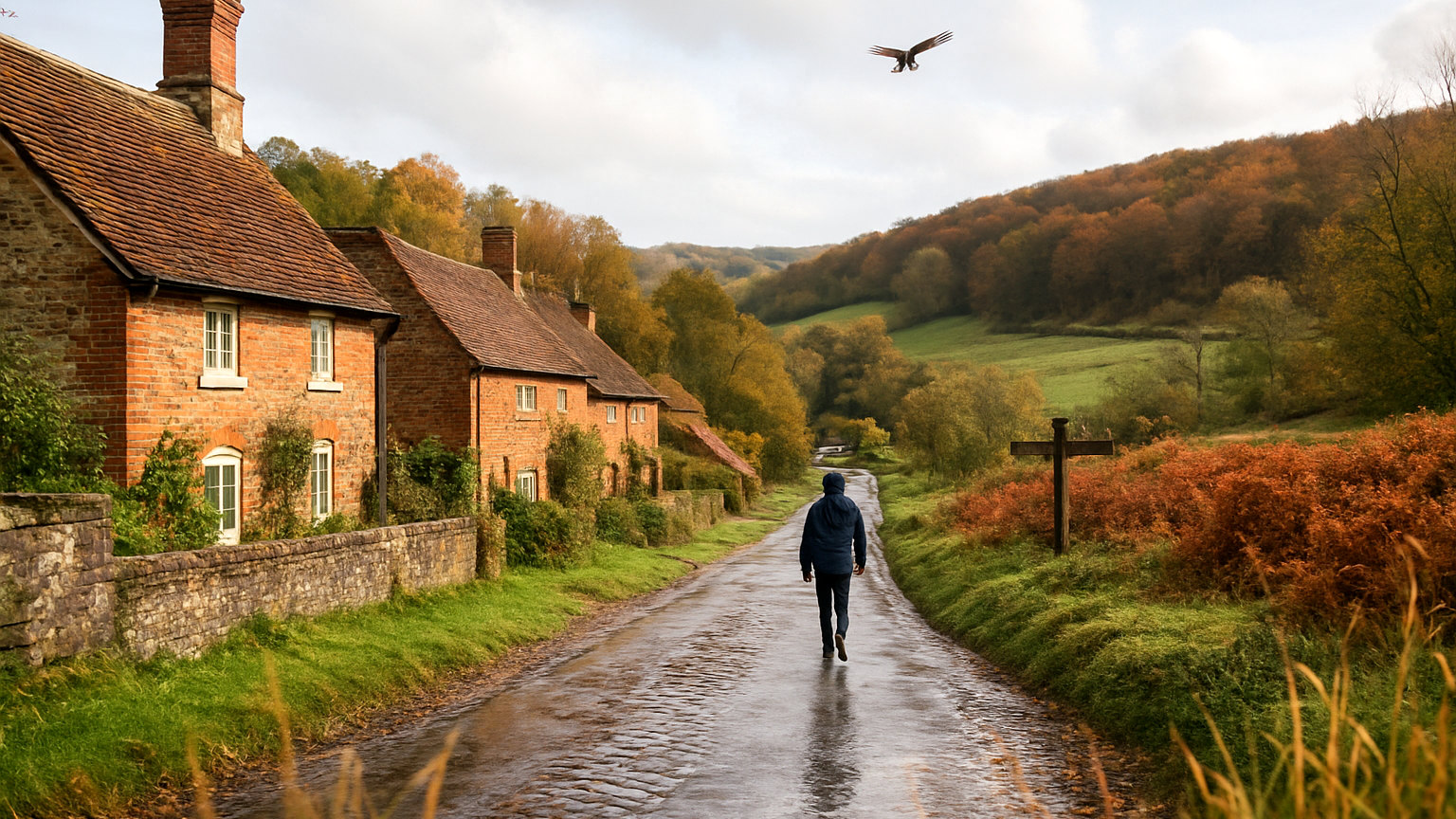
Reintroduced to the Chilterns from Spain between 1989 and 1994 after being effectively extinct in England, and now abundant to the point of being unremarkable locally.
They are enormous, forked tailed and constantly overhead along the M40 corridor. It is among the most successful reintroductions carried out anywhere in Europe.
Which villages should you stop in?
Turville, a small brick and flint village in a valley with a windmill on the hill above, which appears constantly in filming.
Hambleden with its estate cottages and a mill on the Thames, Fingest with an unusual twin gabled Norman tower, and Aldbury in the north.
What is at West Wycombe?
A village owned almost entirely by a conservation charity, with a Palladian house above it, a hilltop church topped by a golden ball you can sit inside, and a mausoleum.
Beneath the hill are caves excavated in the eighteenth century by a landowner whose club acquired a lurid reputation, open as an attraction.
What is the Ridgeway?
A national trail following a route claimed as the oldest road in Britain, running from Ivinghoe Beacon across the Chilterns, over the Thames and along the Berkshire Downs.
Sections cross the roads at several points and make good short walks from a parking place.
When is the best time?
Late October and early November for the beech, which turns copper and gold and is the single best reason to drive here.
Late April and May for bluebells, which carpet the beech woods in enormous numbers, and any clear winter day for views from the escarpment.
What should you know about the lanes?
They are narrow, high hedged and frequently single track with passing places, carrying more traffic than they were built for because of the proximity to London.
Weekends are busy with cyclists and motorcyclists. Wet leaves in autumn make the wooded sections genuinely slippery.
Where should you eat?
The Chilterns have an unusually high concentration of good pubs, several with rooms, in villages a few miles apart.
Booking is sensible at weekends, since these places draw people out from London specifically for lunch.
Can you get there by train?
Yes, unusually well. Lines run from London Marylebone through the hills with stations at Wendover, Great Missenden and Princes Risborough among others.
Several excellent walks run between stations, which removes the need for a car entirely.
What else is worth seeing?
The Chiltern Open Air Museum, holding buildings rescued from across the region and re erected, and Waddesdon Manor, a French style chateau to the north.
Chenies, Hughenden and a number of gardens open under charity schemes through the summer.
What about the London pressure?
The Chilterns sit close enough to the capital that weekend traffic is heavy, village parking is limited and the popular pubs fill. Several villages have introduced restrictions. Going on a weekday transforms the area entirely, and the woods and lanes are almost empty on a Tuesday in October.
One final thought: the Chilterns reward stopping rather than driving through. The best of the area is a beech wood in late October reached from a layby, which no amount of covering ground will deliver.