Britain has an unusually strong tradition of writing about nature and landscape, running from eighteenth century parish natural history to a contemporary revival. Almost all of it is tied to specific ground, and most of that ground can be walked.
Where did it begin?
Arguably at Selborne in Hampshire, where a curate spent decades observing a single parish and published his observations as letters, producing one of the most reprinted books in English.
His house and garden are open, the village is unchanged in outline, and the beech hanger behind it can be climbed by the zigzag path he built.
What is the Cairngorm connection?
A short book written in the nineteen forties about the Cairngorm plateau, unpublished for over thirty years and now regarded as one of the finest pieces of British nature writing.
It is not about climbing summits but about being in the mountain, and reading it before walking on the plateau changes the experience substantially.
What about the eastern marshes?
The Essex coast produced a celebrated account of following peregrines through a single winter, written in intense and unusual prose, in a landscape of estuaries and flat farmland.
The coast is still there, largely unvisited, and remains an excellent place to watch wintering birds and raptors.
Which other landscapes recur?
The chalk downs of southern England, written about repeatedly since the nineteenth century. The Welsh hills. The fens. The Pennine moors, particularly the Calder Valley.
The islands, especially the Hebrides and the northern isles, which have produced a substantial literature of remoteness and weather.
What is the contemporary revival about?
A wave of writing since the turn of the century combining natural history with memoir, landscape history and, increasingly, loss. It has become one of the strongest strands in British non fiction.
Much of it concerns particular places walked repeatedly, and several have become minor destinations as a result.
Where should you walk?
Selborne for the beginning of the tradition, the Cairngorm plateau for the most demanding of the landscapes, and any estuary in winter for the birds that so much of it describes.
Old ways and holloways, drove roads and coastal paths recur throughout the writing and are walkable across the country.
What about writing on trees and woods?
A substantial subgenre, from ancient woodland history to individual studies of single woods. Britain's remaining ancient woodland is small in extent and disproportionately written about.
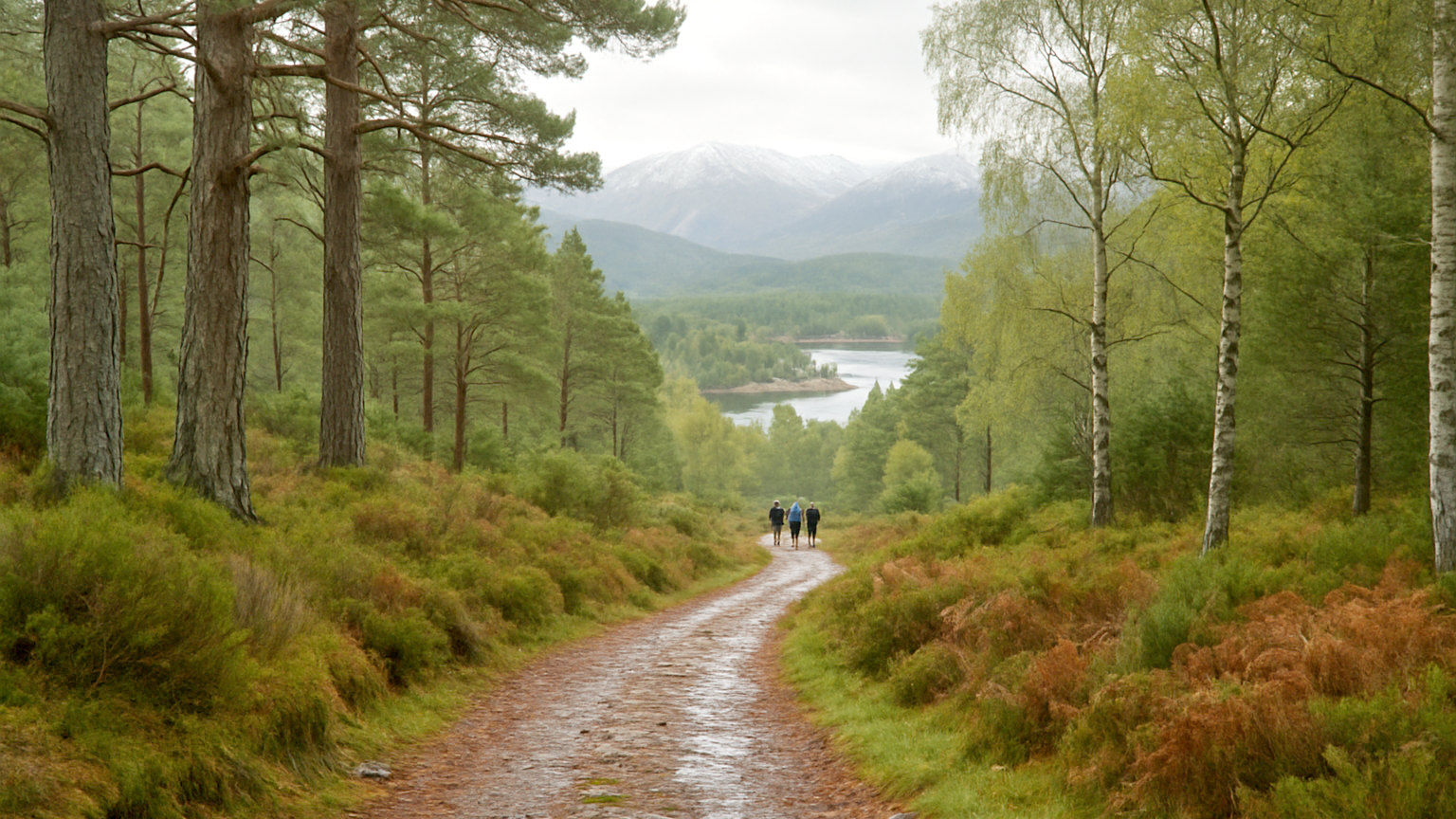
The Wye Valley, the Weald, Wistman's Wood on Dartmoor and the Caledonian pine remnants at Glen Affric and Rothiemurchus all feature repeatedly.
Does the writing change how you see a place?
Considerably, and that is its purpose. Reading about a habitat before visiting it produces a different quality of attention, and most of these books are explicitly teaching a way of looking.
Several are short enough to read on the journey there.
Where can you hear it discussed?
Nature writing festivals and events run at several literary festivals and at nature reserves, and wildlife trusts frequently host author talks.
Guided walks led by writers and naturalists are widely available and are the most direct way of learning to see a landscape properly.
What should you read first?
The Selborne letters for the foundation, the Cairngorm book for the mountains, and something contemporary about a landscape you already know.
The last of those is the most useful test, since good nature writing should make familiar ground unfamiliar again.
What about writing on farming and land use?
A growing strand, written from inside agriculture rather than about it, addressing hill farming, upland economics and the tension between food production and nature recovery. It is frequently at odds with the conservation writing published alongside it, and reading both gives a considerably more honest picture of the British countryside than either alone.
Finally, keep a notebook. Almost every writer in this tradition began by recording what they saw in a particular place over a long period, and the practice sharpens attention more than any amount of reading does.