Jane Austen's Britain is unusually easy to visit, because the places she lived are close together, largely unchanged in their essentials and mostly open to the public. A weekend covers the main ones comfortably.
Where did she live?
Born at Steventon in Hampshire, where her father was rector, though the rectory itself no longer stands. The family later moved to Bath, then Southampton, and finally to Chawton in Hampshire.
Chawton is the essential stop. The house in which she spent her last eight years is a museum, and it was there that she revised the earlier novels and wrote the later ones.
What is at Chawton?
The house itself, modest and domestic, including the small table at which she is believed to have written. Personal possessions, letters and family material.
Chawton House nearby, the manor once owned by her brother, is separately open and holds a library of early women's writing, which is worth combining with the cottage.
What about Bath?
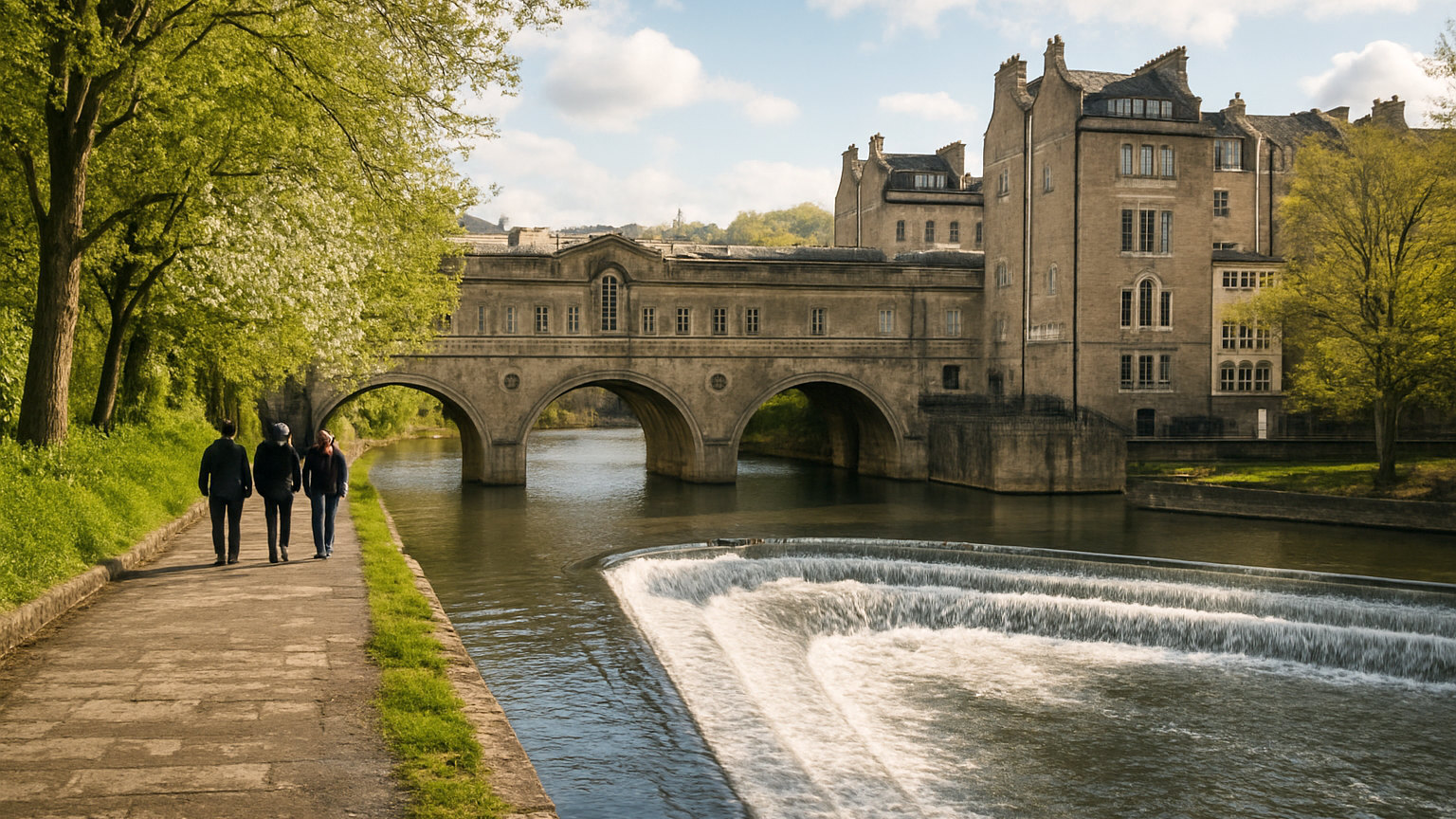
She lived there for several years and set substantial parts of two novels in it. The Georgian city she knew survives largely intact, which makes it the most atmospheric of the Austen locations.
The Royal Crescent, the Circus, the Assembly Rooms and the Pump Room are all walkable within an hour, and a dedicated centre in the city covers her time there.
Did she like Bath?
The evidence suggests not especially. The family's years there followed her father's retirement and coincided with a period in which she seems to have written little, and her letters are not warm about it.
The novels treat the city with a good deal of irony, which is worth bearing in mind while admiring it.
What is at Lyme Regis?
The Cobb, the curving stone harbour wall that features in a famous scene in one of the novels, and which is still there and still slippery in the wet.
The town is small, steep and largely unchanged in outline, and it sits on the Jurassic Coast, which makes for a good day beyond the literary connection.
Where is she buried?
In Winchester Cathedral, where she died in 1817, having moved to the city for medical treatment. The house in College Street where she spent her final weeks is marked though not open.
The ledger stone in the cathedral floor is notable for not mentioning that she wrote novels, which the later brass plaque corrects.
What about the country houses?
The novels' great houses are composites rather than specific places, though several have been used in adaptations and are open to visitors on their own merits.
Visiting a Georgian country house of the right period gives a better sense of the world of the books than pursuing any claimed original.
What survives of the wider world?
A great deal, since Georgian England is well preserved in Bath, Winchester, Salisbury and across Hampshire. Assembly rooms, parish churches, turnpike roads and rectories are all still there.
The landscape of southern England, with its estates, villages and gentry houses, is the setting of the novels and remains legible.
When should you go?
Spring and autumn for Chawton and Bath, both of which are busy in summer. Several Austen related events take place through the year, including a festival in Bath with period dress.
Check opening at Chawton in particular, which has a limited winter season.
What is the best short itinerary?
Two nights in Bath, a day at Chawton and Winchester, and a run down to Lyme Regis if time allows. All are within reach of each other and none requires a long drive.
Reading one of the novels set in Bath beforehand makes walking the same streets considerably more rewarding.
What about the wider Regency world?
Georgian assembly rooms, pump rooms and crescents survive across southern England, and several country houses of the period are open with interiors much as they were. Visiting one gives a better sense of the social machinery the novels describe, particularly the business of visiting, dancing and marriage settlements, than any single Austen property can on its own.