Brontë country is a small area of West Yorkshire on the edge of the Pennine moors, centred on the village of Haworth. It is unusual among literary landscapes in that both the house and the country behind it survive substantially as they were, and the relationship between them is immediately obvious.
What is at Haworth?
The parsonage where Patrick Brontë was curate and where his children grew up, now a museum holding manuscripts, furniture, clothing and personal possessions.
The house sits directly above the churchyard, with the moor rising behind. That position, between the graves and the open hill, is the single most informative thing about the family.
What does the museum hold?
Rooms furnished as they were, including the dining room where the sisters wrote and walked around the table in the evenings, and Branwell's studio.
The collection includes the miniature hand made books the children produced as juvenilia, written in minute script, which are among the most extraordinary literary objects in Britain.
What is the village like?
A steep cobbled main street of stone houses, busy with visitors in season and considerably quieter early and late. It has a heritage railway running from the valley below.
It is a working village rather than a preserved one, and it retains a plainness that suits the subject better than prettiness would.
What is on the moor?
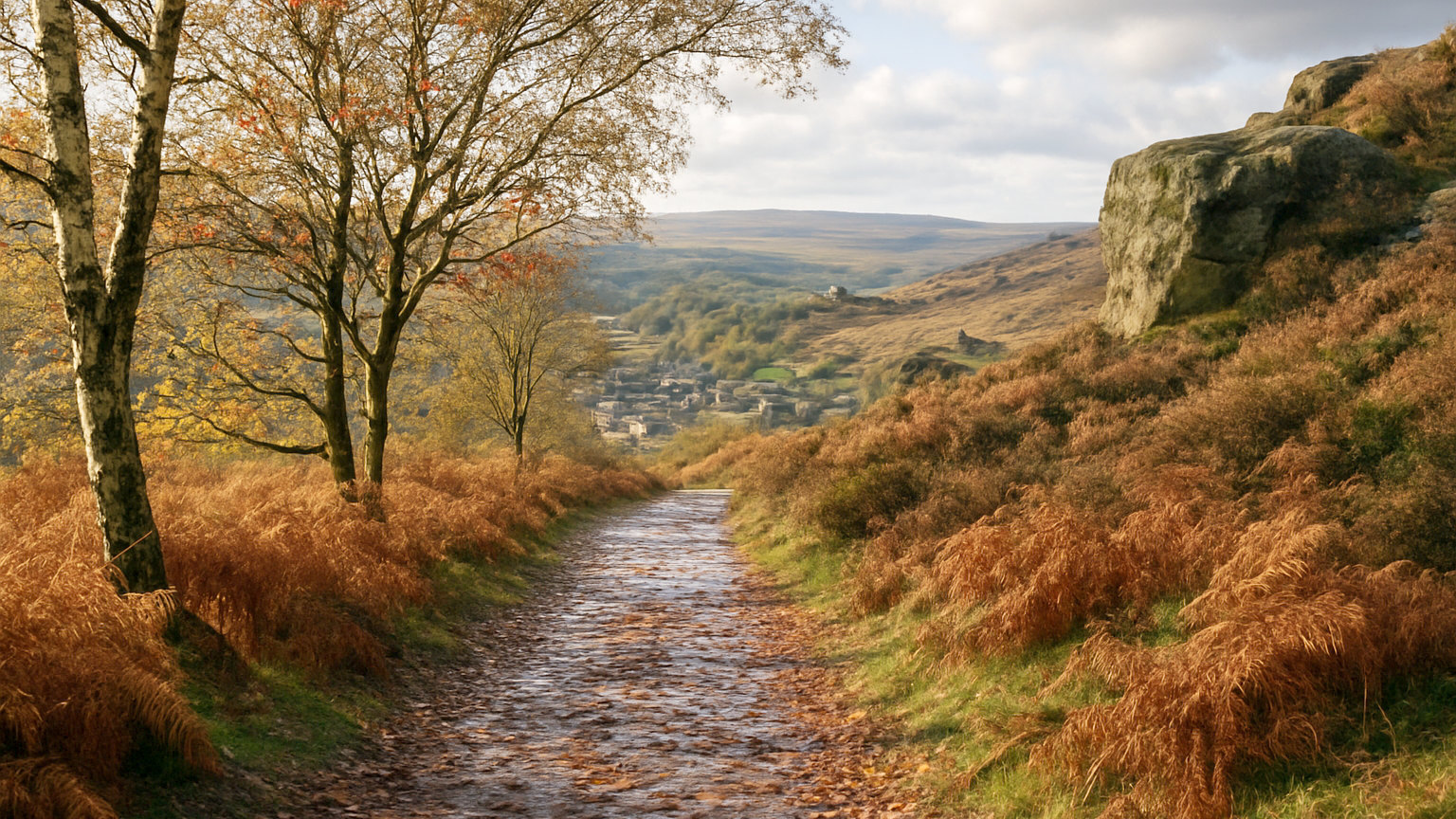
The walk to Top Withens, a ruined farmhouse widely associated with the setting of Wuthering Heights, though the building itself never resembled the house in the novel and the museum is careful to say so.
The route passes the Brontë waterfall and a stone seat, and it takes a couple of hours each way. The moor is exposed and the weather changes fast, so proper clothing matters.
What else is connected?
Thornton, where the sisters were born, with the birthplace on the main street. Ponden Hall, associated with another house in the novels and now offering accommodation.
Scarborough, where Anne died and is buried, on the cliff above the sea, which is a considerable distance away and worth knowing for anyone completing the story.
Why does the landscape matter so much?
Because the novels are unusually attentive to weather, exposure and the physical experience of open ground, and standing on the moor above Haworth in wind explains a great deal of that.
It is one of the few literary landscapes where the connection is not sentimental but structural.
When should you go?
Autumn and winter, when the moor is at its bleakest and the crowds have gone, which suits the material considerably better than a sunny August afternoon.
Spring brings heather later in the year and long days for walking. The museum is open most of the year with a short winter closure.
How long does it take?
Half a day for the parsonage and village, a full day if you walk on the moor. Two days allows Thornton and the surrounding valleys as well.
Haworth combines easily with the Yorkshire Dales, Hebden Bridge and the Calder Valley, all within a short distance.
What should you read first?
Any of the novels, and there is no wrong choice, though the two most closely associated with the landscape are the ones most people arrive having read.
The biographical material at the museum fills in the rest, and the family story is remarkable regardless of the books.
What is the practical advice?
Park at the bottom and walk up, since the village is steep and the upper car parks fill. Take boots and waterproofs if going onto the moor, which is genuine upland.
Go early. The parsonage at opening on a weekday morning is a completely different experience from midday in summer.
What about the wider valley?
Hebden Bridge, Todmorden and the Calder Valley lie a short distance south and have their own literary associations, including a twentieth century poet who grew up there and wrote about the same Pennine country. The valleys are steep, wooded and post industrial, and they make a considerably less visited alternative to Haworth itself.