Shropshire is the largest inland county in England and one of the least visited for its quality. It holds a World Heritage Site, a substantial Roman city, two of the finest small towns in the country and a range of hills that would be a national park almost anywhere else.
Why does nobody go?
Because it is not on the way to anywhere. Shropshire sits between the Midlands and Wales with no motorway through it and no single famous attraction pulling visitors in.
That is precisely the appeal. The roads are empty, the accommodation is cheap and the footpaths are unused even in August.
What is at Ironbridge?
The gorge where the first iron bridge in the world was cast and erected in 1779, now a World Heritage Site with around ten separate museums along a few miles of the Severn.
Blists Hill is a recreated Victorian town with working trades and its own currency, and the china and tile museums cover industries that were world leaders. One ticket covers all the sites and is valid for a year.
What is Shrewsbury like?
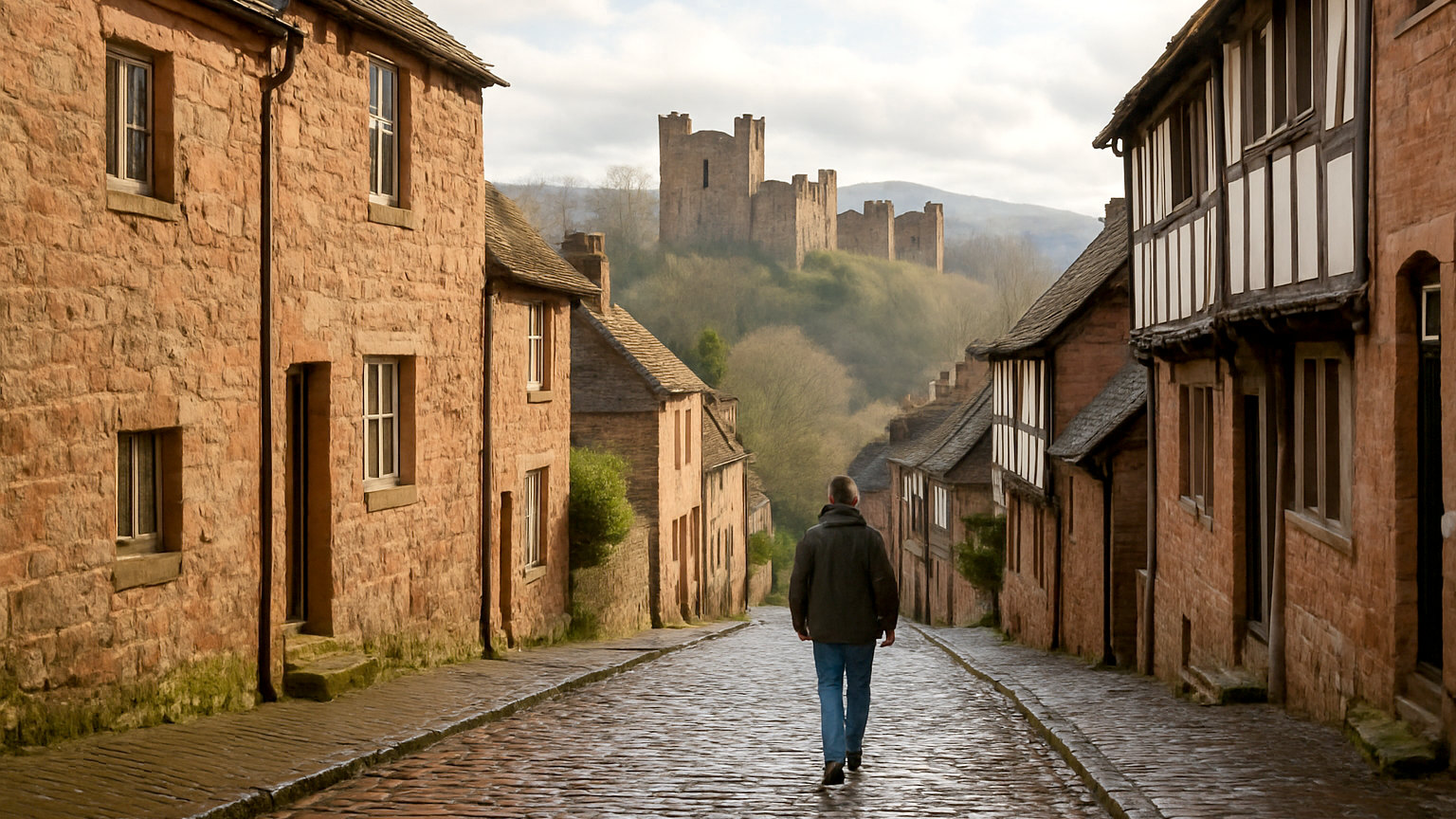
A medieval town almost entirely enclosed by a loop of the Severn, with a street plan largely unchanged since the middle ages and a great many timber framed buildings.
Narrow passages called shuts run between the streets, there is a castle, an abbey and a park, and Charles Darwin was born and schooled here. It is walkable in a morning and rewards a day.
What is at Ludlow?
A castle on a bluff above two rivers, around five hundred listed buildings, a grid of medieval streets and a parish church of cathedral proportions.
It also has a serious food reputation, with independent butchers, bakers and delis and a long established food festival in September.
What are the Shropshire Hills?
A protected landscape covering the south west of the county, including the Long Mynd, a high moorland plateau above Church Stretton cut by steep valleys called batches.
The Stiperstones is a quartzite ridge topped with jagged tors, the largest called the Devil's Chair, and is among the strangest hills in England.
What is Wenlock Edge?
A wooded limestone escarpment running for around fifteen miles, formed from an ancient coral reef, with paths along its length and views west into the hills.
The fossils in the rock are Silurian and the geology of this area was important in establishing the geological timescale.
What is Wroxeter?
The remains of Viroconium, the fourth largest city in Roman Britain, with a substantial standing wall from the bath house and a reconstructed town house on the site.
Most of the city lies unexcavated beneath fields, which is part of what makes it interesting.
Which other towns are worth seeing?
Bridgnorth, in two halves connected by a cliff railway, with the Severn Valley Railway running steam trains south from it.
Much Wenlock, small and medieval, whose local games influenced the founding of the modern Olympics. Oswestry, with an enormous Iron Age hillfort on its edge.
What about the Welsh border?
Offa's Dyke, an eighth century earthwork running along the border, is walkable as a national trail and passes through the west of the county.
The border country here is quiet, hilly and dotted with the remains of the fortifications that made it contested for centuries.
Where should you base yourself?
Shrewsbury for the county generally, Church Stretton for the hills, Ludlow for the south and food, and Ironbridge for the gorge.
Everything is within an hour of everything else, which makes a single base entirely workable.
How do you get there?
By train to Shrewsbury from Birmingham, Cardiff and Manchester, with branch lines to Ludlow, Church Stretton and Wellington for Ironbridge.
A car is genuinely useful for the hills and the gorge, though the towns are all reachable by rail.
When should you go?
Late spring for the hills and the hawthorn, September for the Ludlow food festival, and autumn for colour along Wenlock Edge and the Severn.
The county is quiet in every month, which is the single best thing about it.