A handful of English cathedrals absorb the great majority of visitors while others of equal or greater interest sit in small cities that almost nobody makes a point of reaching. In several cases the quieter buildings are the more remarkable ones.
Which is the most overlooked?
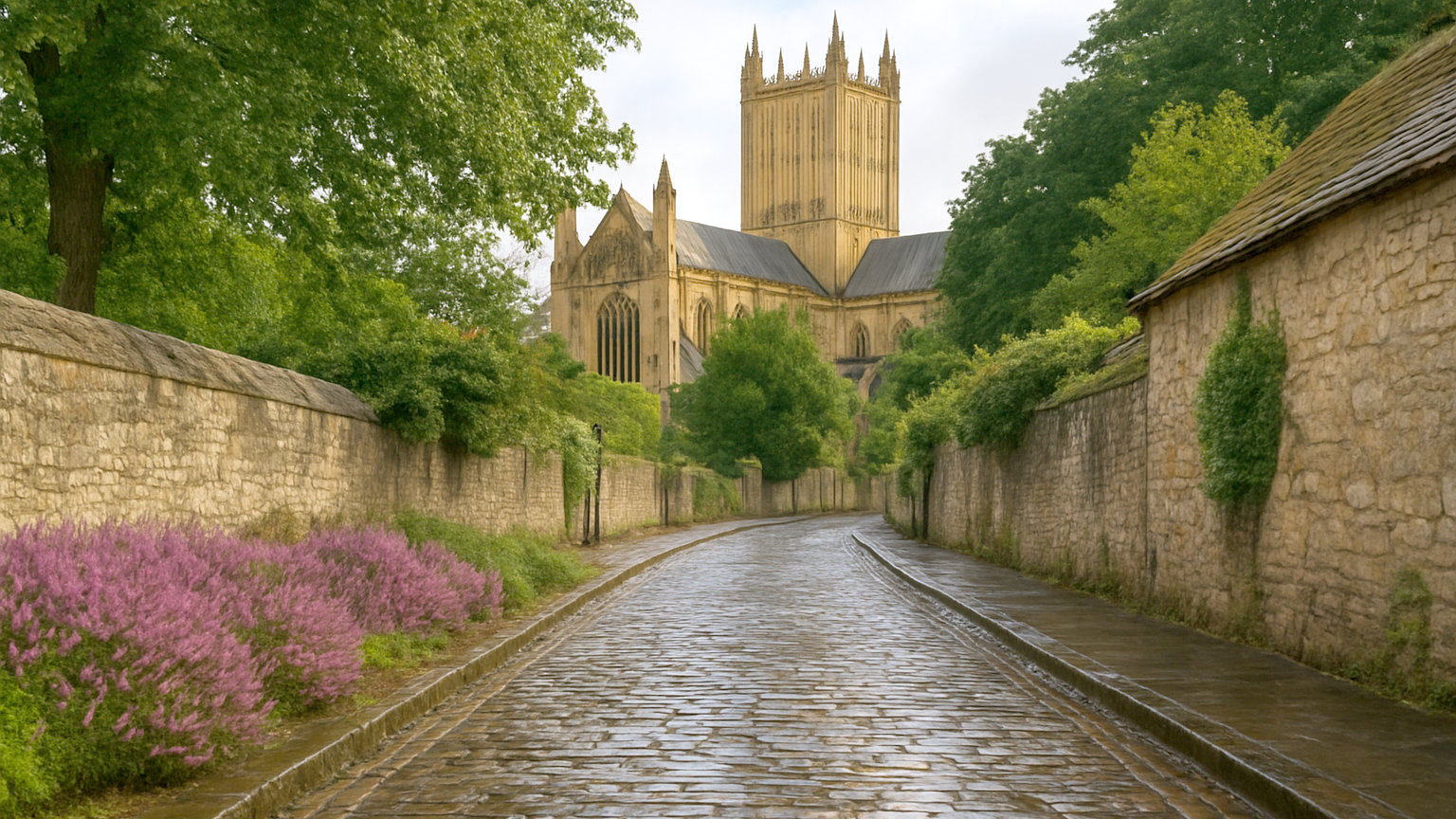
Wells in Somerset, the smallest city in England, with a cathedral whose west front holds one of the largest collections of medieval sculpture in the country and an interior containing the extraordinary scissor arches.
The adjoining bishop's palace is moated, the medieval Vicars' Close is claimed as the oldest continuously inhabited street in Europe, and the whole city is walkable in an hour.
What is at Hereford?
Two objects of international importance in one building. The Mappa Mundi, the largest surviving medieval world map, and the chained library, the largest of its kind anywhere with its chains, rods and locks intact.
The city is small, on the Wye, and receives a fraction of the visitors that comparable cathedral cities do.
Which are quiet in the north?
Ripon, with a Saxon crypt beneath the cathedral dating from the seventh century, and Fountains Abbey a short distance away. Southwell in Nottinghamshire, whose chapter house carving of foliage is celebrated among medievalists and unknown to everyone else.
Beverley in East Yorkshire, whose minster is not a cathedral and is finer than most that are.
What about Wales?
St Davids in Pembrokeshire, the smallest city in Britain, with a cathedral set below ground level in a valley and the ruined bishop's palace beside it.
It sits on a spectacular coast at the western tip of Wales, which makes it a destination in its own right rather than only a religious site.
Which are overlooked in Scotland?
Kirkwall in Orkney, whose red sandstone cathedral was founded by Norse earls and is unlike anything on the mainland. Dunkeld and Dornoch, both small and both beautifully sited.
Elgin, ruined after the reformation and one of the most atmospheric ecclesiastical ruins in Britain.
What is at Armagh?
Two cathedrals on facing hills, both dedicated to the same saint, in a small Northern Irish city that is the ecclesiastical capital of the island and receives very few visitors.
The city has a Georgian centre, an observatory and a planetarium, and is easily reached from Belfast.
Why are the famous ones so busy?
Proximity to tourist routes rather than merit. The cathedrals in the most visited cities are magnificent and they are also on the way to somewhere, which the quieter ones are not.
Several of the busiest now charge substantial admission, while many of the quieter ones ask only a donation.
What should you look for inside?
Misericords, the carved seats in the choir, which frequently show secular and comic scenes. Chantry chapels, medieval glass, tombs and floor brasses.
Also the crypt where one survives, which is usually the oldest part of the building and frequently the most affecting.
Is attending a service worthwhile?
Evensong is free, takes place daily in most cathedrals during term, lasts under an hour and is sung by a professional or scholastic choir.
It is among the finest free experiences in Britain, and anyone may attend regardless of belief provided they are quiet and respectful.
Which should you visit?
Wells for the completeness of the medieval city, Hereford for the two objects, St Davids for the setting and Kirkwall for the strangeness.
All four are in small places where the cathedral dominates, which is how these buildings were meant to be experienced.
What about the smaller minsters and abbeys?
Several churches that are not cathedrals rival those that are. Beverley and Selby minsters in Yorkshire, Tewkesbury Abbey, Christchurch Priory and Bath Abbey are all of cathedral scale and quality without the status or, in most cases, the admission charge. They are consistently quieter and are among the best free interiors in England.
One final practicality: check whether photography is permitted and whether any part is closed for a service. Cathedrals are working churches first, and a wedding, funeral or ordination will close areas at short notice without any prior notice online.