Britain has hundreds of springs and wells with a religious or folk tradition attached, some of them in continuous use for over a thousand years. They are among the least visited historic sites in the country and several are still active places of pilgrimage.
Which is the most important?
St Winefride's Well at Holywell in Flintshire, which has an unbroken record of pilgrimage stretching back well over a millennium and is sometimes described as the Lourdes of Wales.
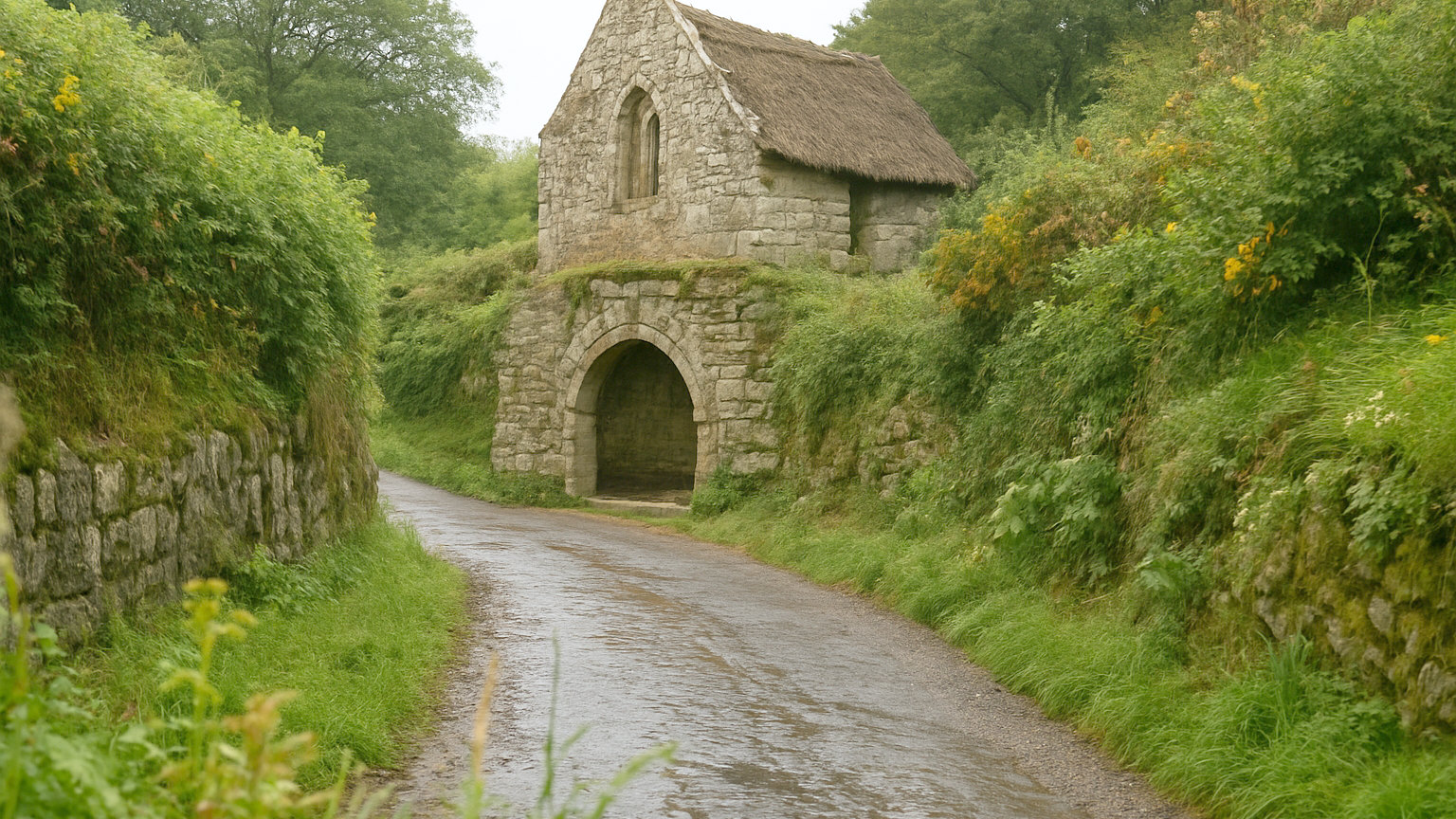
The well is enclosed within a late medieval chapel building, the water still flows, and pilgrims still bathe in it. It remains an active site rather than a monument.
What are clootie wells?
Wells, mainly in Scotland and Ireland, where strips of cloth are tied to surrounding trees as part of a healing tradition, the intention being that the ailment fades as the cloth rots.
The well at Munlochy on the Black Isle is the best known. Modern synthetic fabrics do not rot, which has created a conservation problem the tradition never anticipated.
Which English sites are notable?
The Chalice Well at Glastonbury, in a garden below the tor, with iron rich water that stains the stone red and a substantial body of legend attached.
Madron Well in Cornwall, beside a ruined chapel, with a cloth tying tradition of its own. The hot springs at Bath, sacred long before the Romans arrived and then dedicated to a combined Celtic and Roman deity.
What about Wales?
An unusually dense concentration, with hundreds recorded. St Non's near St Davids, on a clifftop beside a ruined chapel at the traditional birthplace of the Welsh patron saint.
Ffynnon Gybi at Llangybi and numerous others, many marked on maps and reached across fields with no signage at all.
What is at Struell?
A group of wells and bathhouses in County Down, in a small valley associated with an early saint, with stone buildings surviving over the spring.
Northern Ireland has a considerable number of such sites, several still visited on the relevant saint's day.
What about pilgrimage routes?
Several have been revived, including routes to Canterbury, St Davids, Holywell and Iona, and there is a growing network of long distance walking pilgrim ways with waymarking and accommodation.
These are open to anyone regardless of belief, and many walkers use them as long distance paths with an added structure.
Which islands are sacred sites?
Iona, where Columba founded a monastery in the sixth century and from which Christianity spread through much of Scotland, with an abbey and a burial ground of early kings.
Lindisfarne in Northumberland, tidal and reached by causeway. Bardsey off the Llyn Peninsula, with a tradition of thousands of saints buried on it.
How should you behave at them?
As at any place of worship. Several are actively used, and objects left at a well are offerings rather than litter, however they appear.
Do not remove anything, do not add non biodegradable material at clootie sites, and be quiet if others are there for religious reasons.
Why are they interesting even without belief?
Because they represent an unbroken thread of practice, frequently pre Christian in origin and absorbed into later religion, that continues in ordinary fields and lanes.
They also tend to be beautifully sited, since springs occur where water meets rock and those places are usually worth walking to anyway.
How do you find them?
Ordnance Survey mapping marks many with the word well or ffynnon, and county archaeological records list them. Several enthusiast surveys and gazetteers exist.
Most are unsignposted, on private land or reached by footpath, and finding one is frequently the most rewarding part of the exercise.
What about the water itself?
Several wells have genuine mineral properties, and the iron rich or sulphurous water that made a spring notable is frequently why it was venerated. That said, water from an open well in farmland is not treated and should not be assumed safe to drink, whatever the tradition attached to it. Bathing at managed sites is a different matter and is provided for at the few that are actively used.