Scotland is among the most filmed landscapes in Europe, and the reasons are the obvious ones: mountains, sea lochs and empty glens within reach of a road, with production infrastructure in the central belt and a well established film office.
Which glen appears most?
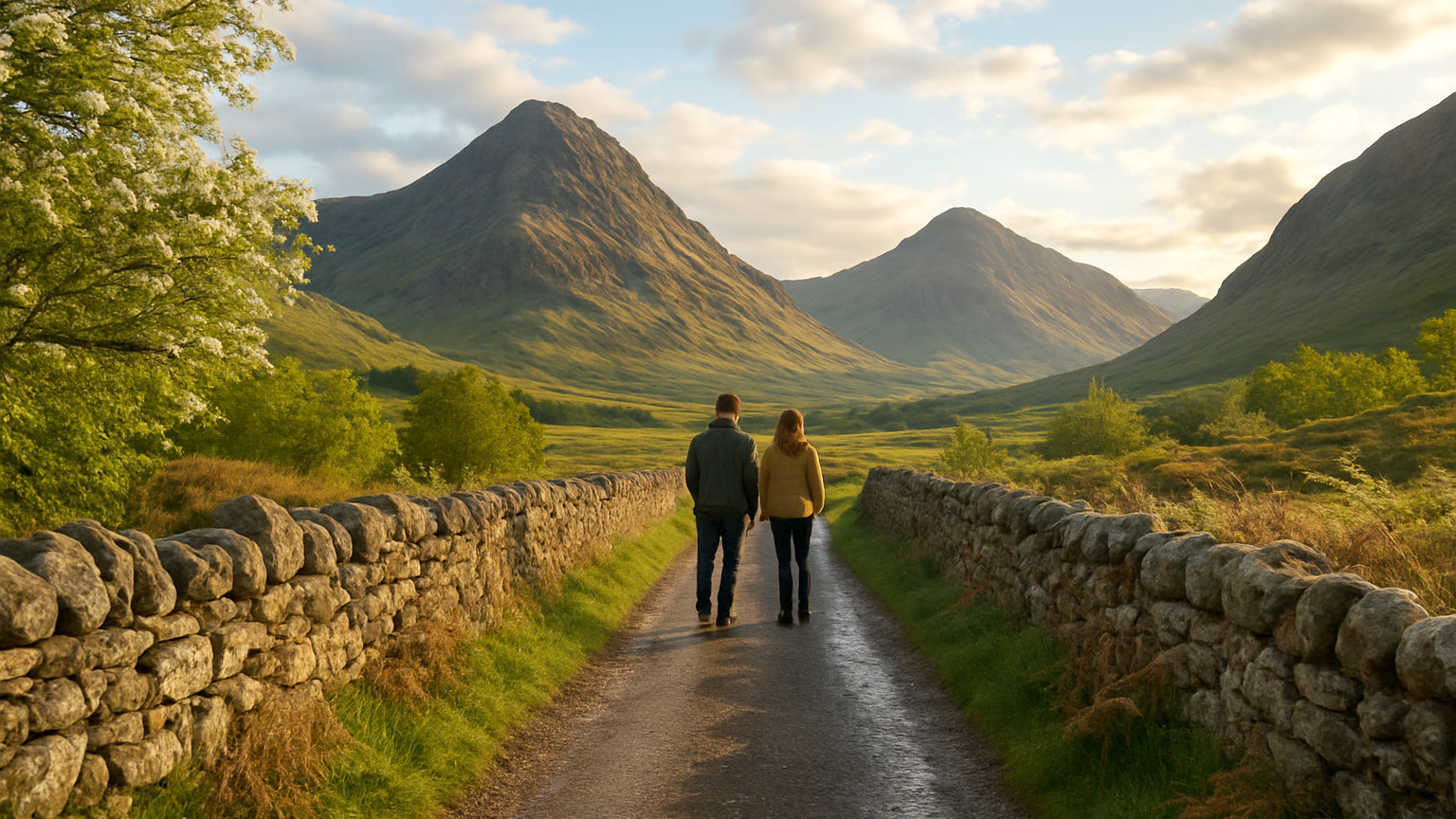
Glencoe, where the main west Highland road runs through a narrow valley between enormous buttresses. It is unmistakable, entirely public and requires nothing more than driving through it.
The approach across Rannoch Moor beforehand is equally recognisable, a vast expanse of bog and lochans with no settlement at all.
What about Skye?
The Quiraing and the Old Man of Storr on the Trotternish ridge, both landslip formations reached by footpath from roadside car parks.
Both are extremely popular, parking is limited and charged, and the paths are eroded and slippery. Go early and wear proper footwear rather than treating it as a photograph stop.
Which lochs feature?
Loch Shiel beneath the Glenfinnan viaduct, Loch Duich beside Eilean Donan, and Loch Katrine in the Trossachs, which drew visitors on literary grounds long before any camera arrived.
Loch Ness appears occasionally, though its fame rests on other grounds entirely.
Which villages have been used?
Culross in Fife, a remarkably preserved burgh of the sixteenth and seventeenth centuries in the care of the national conservation charity, which requires almost no dressing to look convincing.
Falkland, also in Fife, and several small Highland settlements. All are lived in, and residents have absorbed a great deal of visitor traffic.
What about Edinburgh?
The old town closes, the Grassmarket and Victoria Street appear regularly, and the city is used both as itself and as other places.
It is heavily visited already, and the filming interest concentrates on streets that were busy before it.
Which coastal locations are used?
The beaches of the north and west, including several on Harris and Lewis, and the Fife coast. St Abbs in the Borders has stood in for other places entirely.
Most are open landscape with limited facilities, which is worth knowing before driving a long way.
What are the practical difficulties?
Distance, principally. Scottish locations are spread across a large area with slow roads between them, and attempting several in a short trip means driving rather than looking.
Parking at the popular sites is the other constraint and has become a serious issue on Skye in particular.
Has it caused problems?
In places, yes. Small communities on single track road networks have received visitor numbers far beyond what the infrastructure supports, with pressure on parking, waste and services.
Use designated parking, never block passing places, take rubbish away and spend money locally, which is the part that makes the visitor economy work for residents.
When should you go?
May, June, September and October, avoiding both the summer peak and the worst of the midges. Winter gives dramatic light and short days.
Early morning at the popular sites is transformative, both for parking and for having the place to yourself.
What is the best approach?
Treat the locations as an addition to a Highland trip rather than the purpose. Glencoe, Skye and Glenfinnan are outstanding landscapes that would justify the journey with no cameras involved.
Base yourself in one area for several nights and drive short distances, which is better than chasing a list across the country.
What about the weather?
The scenes that look dramatic on screen were frequently filmed over many days in whatever conditions arrived, and the version you see is the best of them. Arriving on a wet afternoon with cloud down to three hundred metres shows you a real Highland day rather than a bad one. Allow more than a single visit if a particular view matters.
What about the midges?
A genuine consideration between June and August, particularly at dawn and dusk near water and in still conditions, which are exactly the times and places filming locations are most photogenic. Repellent and a head net make the difference, and a breeze or a bright day disperses them entirely.