London is among the most filmed cities anywhere, and the great majority of its locations are public streets that cost nothing to visit. That makes it the easiest place in Britain for screen tourism, and the least in need of an organised tour.
Which markets appear most?
Leadenhall Market in the City, a Victorian covered market with painted ironwork and glass, which has stood in for several fictional places and is open on weekdays.
Borough Market beneath the railway arches in Southwark, and Portobello Road in Notting Hill, both of which are working markets first and locations second.
What about Notting Hill?
The area appears constantly, with a particular blue door on a residential street becoming a fixture on tourist itineraries.
It is somebody's house on an ordinary street. Photograph from the pavement if you must and do not linger, since residents have lived with this for decades.
Which bridges and river locations recur?
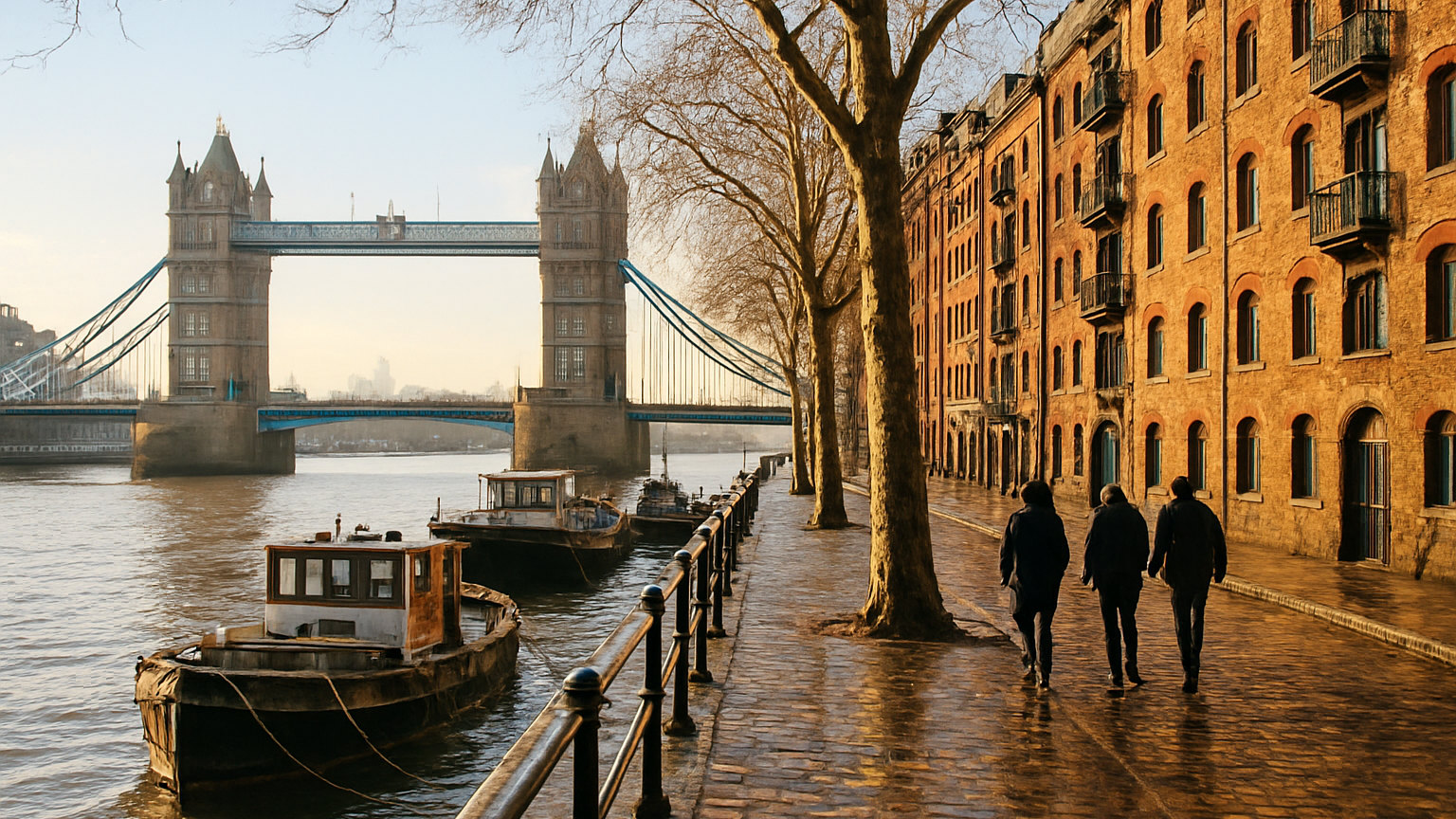
The Millennium Bridge, Tower Bridge, the south bank between Westminster and Blackfriars, and Greenwich, where the baroque naval buildings supply period grandeur.
All are public, all are free and all are pleasant walks regardless of any screen connection.
What about the stations?
Several termini appear regularly, and one has a permanent photographic installation on the concourse where a queue forms throughout the day.
St Pancras, Waterloo and Liverpool Street all feature, and the underground network appears in films despite filming there being tightly controlled and expensive.
Which streets and squares?
Trafalgar Square, Piccadilly Circus, the Strand, Whitehall and the streets around St Paul's, all used so frequently that they are effectively shorthand for the city.
Less obviously, the brutalist estates and the Barbican, which supply a different London entirely and are increasingly used.
What about the parks?
Hyde Park, Kensington Gardens, Regent's Park and Hampstead Heath all appear, and Richmond Park stands in for open countryside without leaving the city.
Several film units use them regularly, and filming notices appear on gates when a production is working.
Are there guided walks?
Numerous, covering specific productions or general film history, and they are inexpensive. Guides know which unmarked buildings matter, which is the main advantage over walking alone.
Self guided routes are published by tourist organisations and by fan communities, and the locations are close enough together to link on foot.
Why is London filmed so much?
Because it has crews, studios and infrastructure, a film office that processes permissions, an enormous range of architecture within a small area, and buildings that can double for other cities.
It also appears as itself more than most cities, since the recognisable landmarks are frequently the point.
What should you know before going?
That several locations are residential, that markets are busy working places and that filming may close a street entirely at short notice.
Also that the underground is frequently slower than walking between central locations, which are closer together than the map suggests.
How should you do it?
On foot, linking half a dozen locations across a morning with a market and a river crossing in the middle.
Treat it as a walk through the city with an added layer rather than a checklist, which is both more pleasant and considerably more informative.
What about filming in progress?
Common enough that you may walk into it. Yellow notices posted on lamp posts announce productions in advance, and streets are closed with marshals directing pedestrians. Watching is permitted from wherever you are allowed to stand, photographing the crew generally is not, and following instructions is expected rather than optional.
When are the locations quietest?
Early morning, before about nine, when the markets are setting up and the streets are empty of visitors. The City at weekends is unusually quiet, since the financial district empties entirely, which makes Leadenhall and the surrounding lanes considerably easier to photograph than on a weekday.
One final point: almost all of it is free. Beyond a studio tour or a paid attraction, a day linking London film locations costs a travel fare and whatever you buy for lunch, which makes it among the cheapest days out in the city.