A small number of British castles appear repeatedly on screen, and the reasons are practical. They are complete enough to look convincing, empty enough to film in, accessible for equipment and willing to close to the public for a fee.
Which appears most often?
Doune Castle in Stirlingshire, a compact fourteenth century courtyard castle that has served as a location across several decades and multiple productions in different genres.
Its audio guide is famously narrated with a sense of humour about that history, which makes it among the more entertaining castle visits in Scotland.
What about Alnwick?
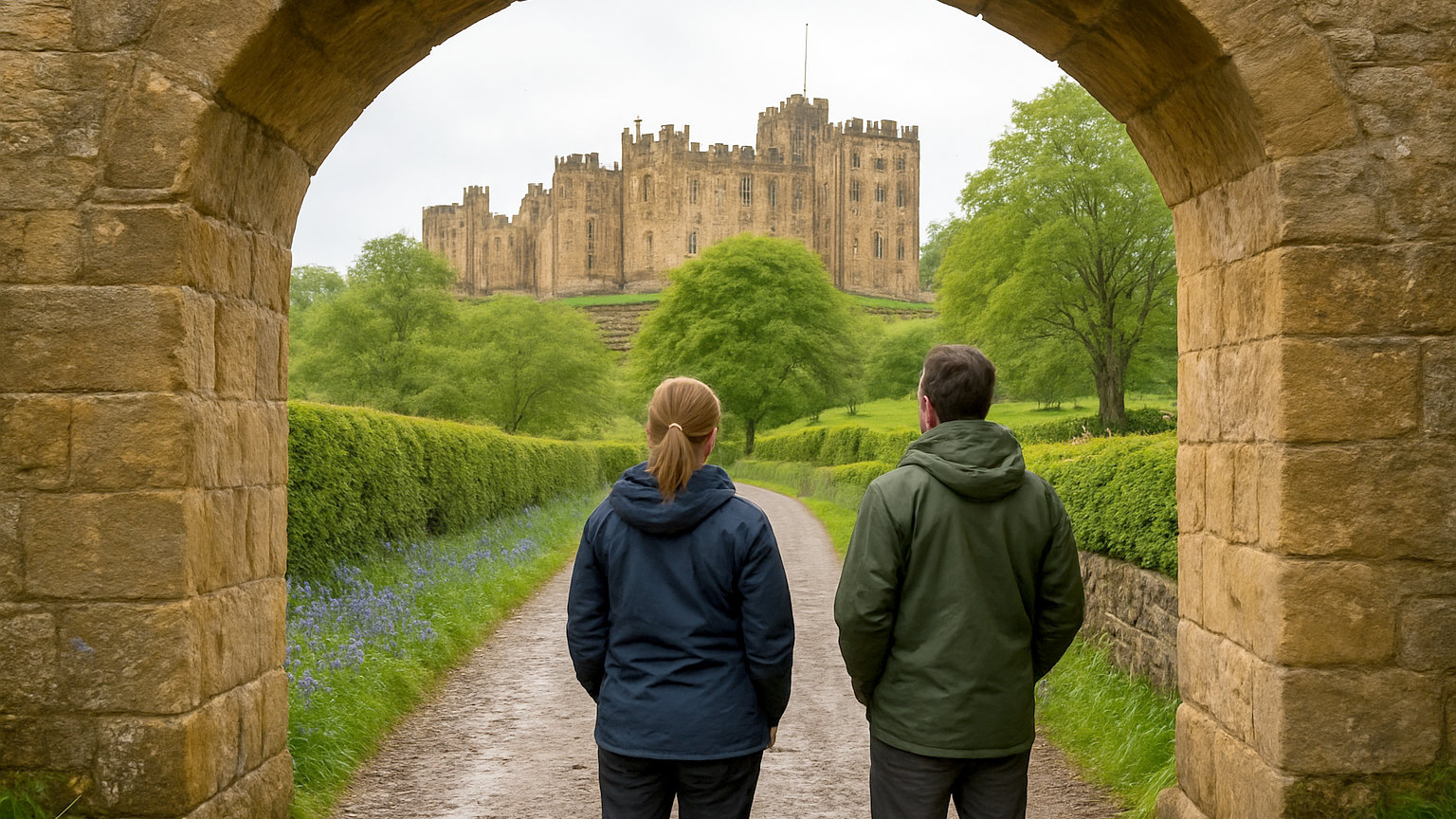
The second largest inhabited castle in England, still a family seat, with substantial state rooms open in season and a modern garden adjacent.
It has appeared in fantasy and period productions repeatedly, and it programmes activities around that, which suits families particularly well.
Which Scottish castles are used?
Eilean Donan on Loch Duich, on an island reached by a stone bridge, which is among the most photographed buildings in Scotland and appears constantly in film and advertising.
Blackness on the Forth, Dunnottar on its sea stack, Culzean in Ayrshire and Midhope, a private tower used as a location and open on limited terms.
What about English castles?
Bamburgh in Northumberland, on a dune above a beach, which has stood in for a great many periods and places. Bodiam in Sussex, moated and photogenic though largely a shell inside.
Warwick, Dover, Berkeley and Hever all appear regularly and all are open with substantial visitor facilities.
Which Welsh castles feature?
Caerphilly, Chepstow and Pembroke have all been used, along with several of the Edwardian castles of the north, which are among the most complete medieval fortifications in Europe.
They are open in the ordinary way through the Welsh heritage body and are worth visiting for their architecture regardless.
Why are the same ones chosen?
Because they photograph well from particular angles, have space for crews, are near enough to production infrastructure and have owners willing to accommodate filming.
Interiors are frequently filmed elsewhere, so a castle you recognise from the outside may not be the building seen inside.
Do they promote it?
Several do, with location trails, signage and events, and one or two have built a substantial part of their visitor offer around it.
Others mention it barely at all, preferring to be visited for their history, which is a reasonable position given how much of it there usually is.
When do they close for filming?
Occasionally and at short notice, sometimes for several days. Properties in demand may close annually for a production.
Check the site's own page before travelling, particularly if a specific area is the reason for the visit.
What should you actually look at?
The castle. These are significant historical buildings, several of them of national importance, and the screen connection is the least interesting thing about them.
Wall walks, keeps, gatehouses and the reasons each was sited where it is repay far more attention than identifying a camera angle.
Which should you visit?
Doune for the audio guide and the compact completeness, Bamburgh for the setting, Eilean Donan for the photograph and Alnwick for a full day with children.
All four are excellent castles that happen to have been filmed, which is the right order of priority.
What about the smaller castles?
Several less famous castles appear regularly precisely because they are quieter and easier to work in. Tower houses, ruined keeps and courtyard castles in the care of the national heritage bodies turn up across many productions. They are also cheaper to visit, far less crowded and frequently more atmospheric than the well known names.
What should you check before travelling?
Opening season, since many castles close from November to March, and whether the site is closed for filming, which happens at short notice at the properties in most demand. Also whether the specific area you want is accessible, as wall walks and towers close in high wind and during maintenance.