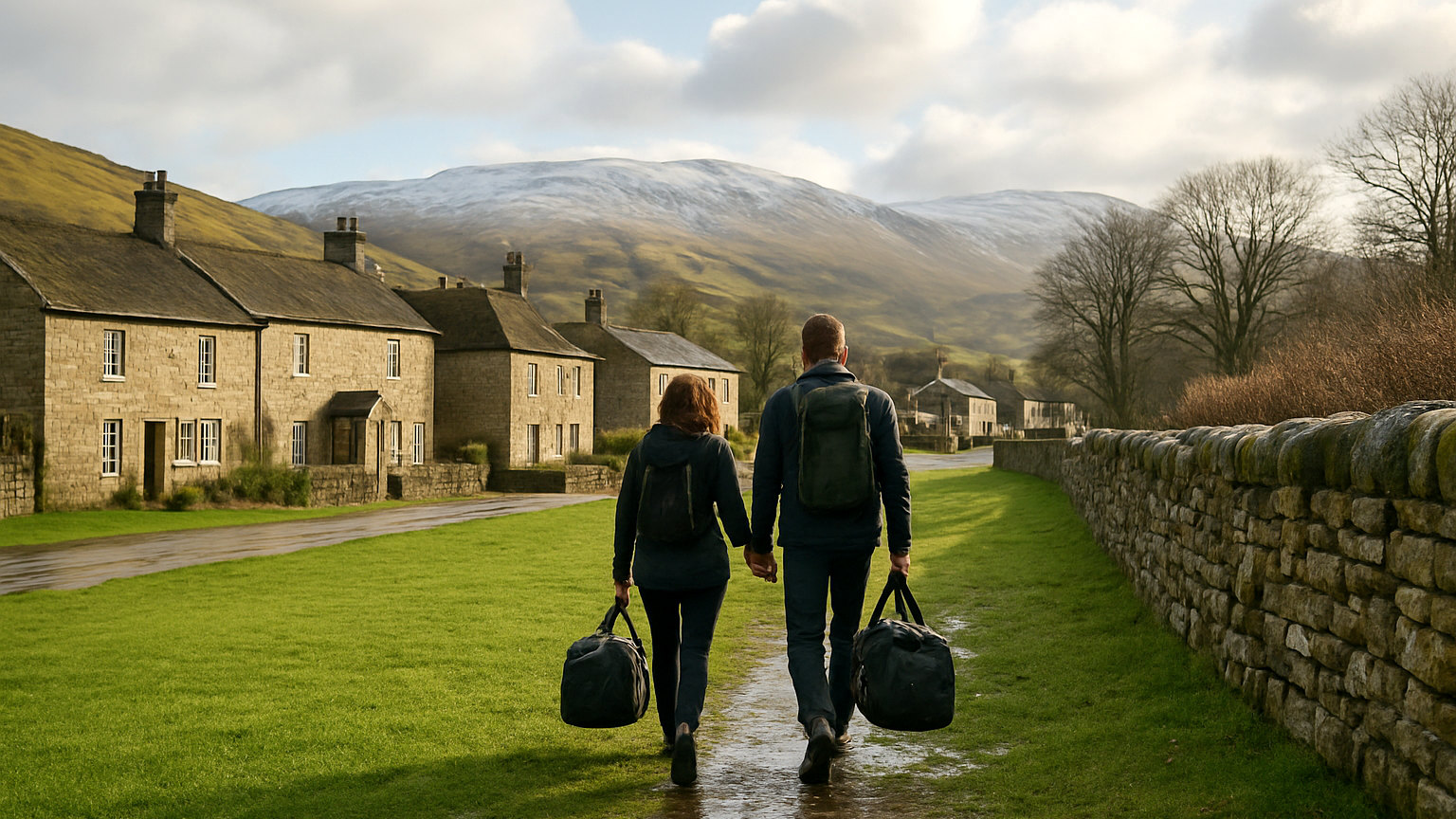
Baggage transfer is a service that moves your main bag from one night's accommodation to the next while you walk with only a daypack. It is widely available on the popular British long distance trails and it changes the experience substantially, particularly for anyone attempting a multi day walk for the first time.
How does it work?
You leave your bag at the accommodation before setting off, usually by a stated time in the morning, and it is collected and delivered to your next booked accommodation during the day, generally by mid afternoon.
You carry a daypack with waterproofs, food, water, map, first aid and anything you need during the day. The main bag holds clothes, toiletries and everything for the evening.
What does it cost?
A per bag, per stage charge, so the total scales with the number of days rather than the distance. Over a week it adds a meaningful but not enormous amount to the trip.
Several companies operate on each major trail, and self guided package holidays usually include it in the price alongside accommodation.
What are the limits?
Most operators impose a weight limit, commonly around twenty kilograms per bag, and require one bag per person rather than several small ones. Rucksacks and holdalls are both accepted; hard suitcases are sometimes not.
Bags must be clearly labelled with the destination for that night. Operators supply labels and getting one wrong means your bag is forty miles away.
How much difference does it make?
A great deal. Carrying a full pack of fifteen kilograms or more adds significant effort to every ascent and increases the risk of blisters, knee problems and fatigue.
The difference between a seven kilogram daypack and a fifteen kilogram full pack is roughly the difference between a walk and an expedition, particularly on consecutive days.
Who should use it?
First time long distance walkers, anyone over about fifty unless they are already conditioned, anyone with a history of knee or back trouble, and anyone walking with a partner of different fitness.
It also suits anyone who wants to enjoy the walking rather than endure it, which on a holiday is a legitimate objective.
When should you skip it?
If you are camping, since the tent and sleeping kit have to come with you anyway. If you are wild camping in Scotland, where the whole point is self sufficiency.
Also on trails where it is unavailable, which includes the remoter Scottish routes and some sections where road access to the accommodation does not exist.
What should you keep in the daypack?
Waterproof jacket and trousers, a warm layer, food and water for the day, map and compass, phone and battery, first aid including blister treatment, a head torch and any medication.
Add a spare pair of socks, which is the single most useful luxury item on a wet trail. Everything else goes in the transferred bag.
What can go wrong?
Bags occasionally arrive late, particularly on long stages or where the accommodation is remote. Very occasionally one goes to the wrong place, which is why anything essential should be with you rather than in it.
Keep medication, valuables and documents in the daypack. Assume you might arrive before the bag and have what you need for a couple of hours.
Is it cheating?
Some walkers think so and say so. The practical answer is that it is the difference between a great many people walking a national trail and not walking one at all, and the walking itself is unchanged.
Carrying everything is a distinct challenge and worth doing if it appeals. It is not a requirement for a walking holiday to count.
How do you arrange it?
Either through a self guided package, which includes it automatically, or by booking directly with an operator covering your trail. Most take a booking for the whole itinerary at once, needing your accommodation list and dates, and several have online forms. Book at the same time as the accommodation rather than afterwards, since operators on the busier trails have finite capacity in peak season and a late booking occasionally cannot be fitted in.