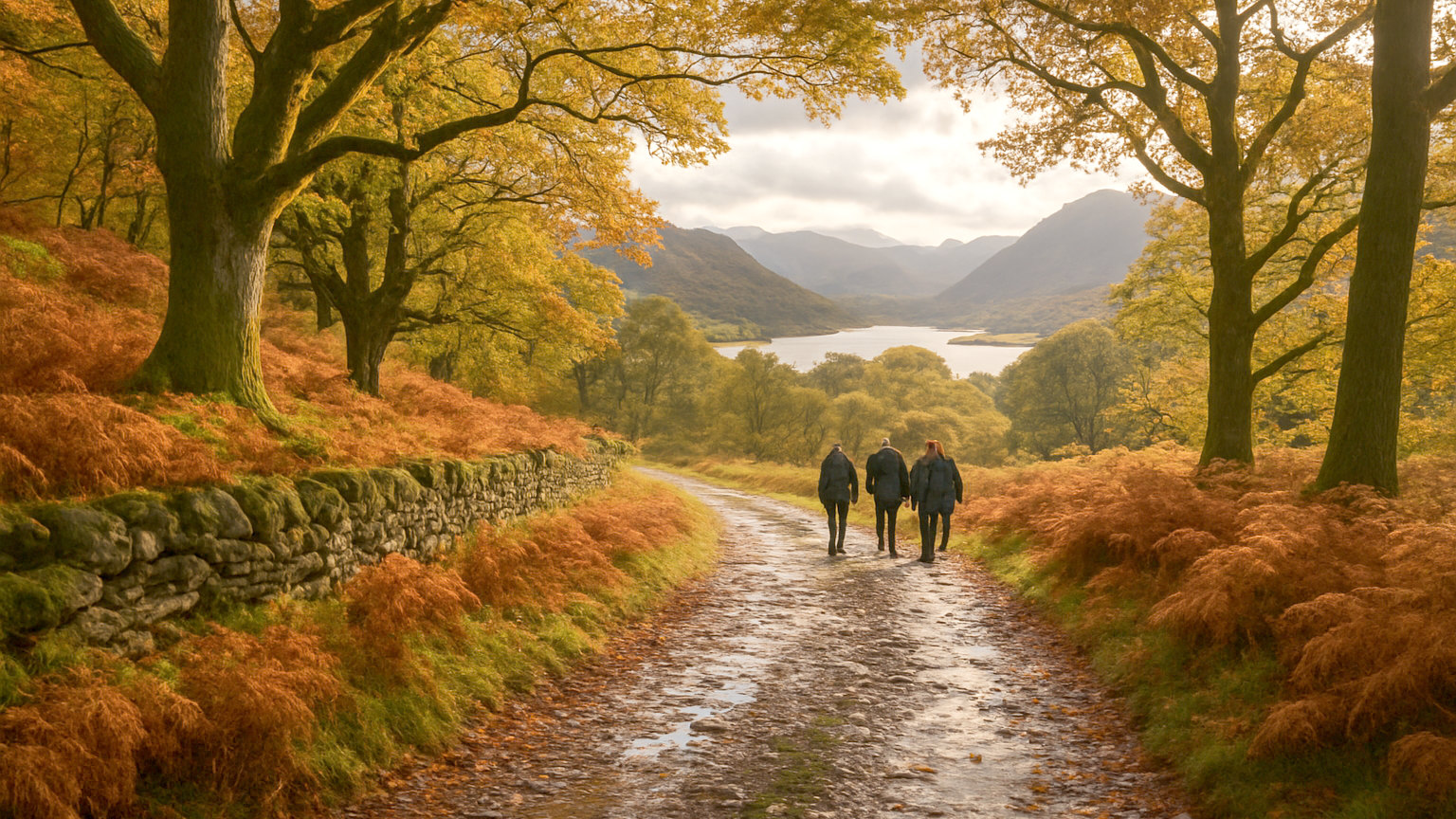
The Lake District holds the highest ground, the deepest lake and the wettest place in England, packed into an area you can drive across in an hour. It became a World Heritage Site in 2017, recognised for the combination of farming, landscape and the ideas about scenery that developed here.
What are the main lakes?
Windermere is the longest and the busiest, with cruises, towns along its shore and most of the region's traffic. Ullswater is quieter with a steamer service and a celebrated lakeside path.
Derwentwater sits below Keswick with island crossings, and Wastwater in the west is the deepest and by far the most dramatic, backed by screes and the highest fells.
What about the fells?
Scafell Pike is the highest point in England at 978 metres and is climbed in very large numbers, most often from Wasdale. Helvellyn draws similar crowds, with the exposed ridge of Striding Edge as its classic approach.
Striding Edge is a scramble with genuine drops and people are killed on it. It requires a head for heights, decent conditions and proper footwear, and it is not a walk.
What is the literary connection?
Wordsworth lived at Grasmere and later at Rydal, and his cottage and the surrounding landscape are central to how the English came to see mountains as beautiful rather than merely inconvenient.
Beatrix Potter farmed here, wrote here and left substantial land to the National Trust, which is a large part of why the valleys look as they do. Her farmhouse is open and extremely busy.
Where are the quiet parts?
The west. Wasdale, Eskdale, Ennerdale and the Duddon valley are reached only by long drives or high passes and receive a fraction of the visitors of the central lakes.
The far north around Caldbeck, and the eastern fells beyond Haweswater, are similarly empty. The crowding is concentrated in a small number of places rather than general.
How bad is the congestion?
Serious in summer. Ambleside, Bowness, Grasmere and Keswick are heavily congested, roadside parking is enforced and popular trailhead car parks fill before nine.
The answer is early starts, midweek visits and choosing the valley next door, all of which work.
Can you manage without a car?
Reasonably. Trains reach Windermere on a branch line, and Penrith and Oxenholme sit on the main line with bus connections.
An open top bus network serves the main valleys in season and lake launches connect points around Windermere, Ullswater and Derwentwater, which allows walk one way and sail back.
What is there beyond walking?
Lake cruises, a slate mine tour at Honister, several small museums, a pencil museum in Keswick and gardens including a substantial one at Holehird.
Swimming in the lakes is popular and requires care, since the water is genuinely cold year round and deep close to shore in places.
What about the weather?
Wet. Parts of the central fells receive more rainfall than anywhere else in England, and the western valleys catch the worst of it.
Plan for it rather than around it, with waterproofs, spare clothing and an alternative for each day. Mountain weather forecasts specific to the fells are published daily and should be checked.
Where should you stay?
Keswick for the northern fells and Derwentwater, Ambleside or Grasmere for the centre, Coniston for the south west and Wasdale or Eskdale for quiet.
Accommodation is expensive in season and books far ahead. Camping barns, bunkhouses and hostels are considerably cheaper and well placed for walking.
When should you go?
May, June, September and October. Spring gives long days before the school holidays; autumn gives colour and quiet. Winter is beautiful and demands winter skills on the tops.
Avoid the August peak and bank holidays entirely if you have any flexibility.
What should you know before walking?
That the fells are mountains despite their modest height, that mountain rescue teams are called out several hundred times a year, and that most incidents involve poor footwear, no map and a late start.
Carry a map and compass and know how to use them, take extra layers and food, and tell someone where you are going.