Britain lost most of its woodland centuries ago, but the large plantation forests created during the twentieth century now cover substantial areas and are managed with public access in mind. They offer a specific kind of break: cabins among trees, waymarked trails, mountain biking and, in several cases, some of the darkest skies in the country.
What is forest accommodation like?
Mostly cabins and lodges, ranging from simple timber huts to substantial properties with hot tubs and floor to ceiling glass facing the trees. Several operators run purpose built sites within managed forests.
Camping and glamping are widely available, and some forests have bunkhouses and hostels. The common feature is that you step out of the door directly into woodland rather than driving to it.
Which forests are worth the trip?
Kielder in Northumberland, the largest planted forest in England, wrapped around a substantial reservoir, with an observatory and international dark sky status. Galloway Forest Park in Scotland, the first designated dark sky park in Britain and one of the emptiest places in the country.
The Forest of Dean between the Severn and the Wye, ancient rather than planted, with sculpture trails and a history of free mining. Grizedale in the Lake District, Sherwood in Nottinghamshire and Coed y Brenin in Wales are all substantial.
What is there to do?
Walking on waymarked trails graded by length and difficulty, which suits families because the routes are signed and hard to lose. Mountain biking, with several forests holding purpose built trail centres of national standard.
Coed y Brenin in Snowdonia was the first dedicated mountain bike centre in Britain and remains among the best. Kielder, Glentress in the Borders and the Forest of Dean all have extensive trail networks with bike hire on site.
What wildlife can you see?
Red squirrels survive in several northern and Scottish forests including Kielder, which holds one of the largest remaining English populations. Ospreys nest at Kielder and elsewhere with viewing hides.
Deer are widespread, pine martens are recovering in Scotland and parts of Wales, and goshawks breed in several large forests. Dawn and dusk are the productive times, which is an advantage of staying in the forest rather than visiting it.
Why are forests good for stargazing?
Because they are large, unlit and usually far from towns. Kielder and Galloway both hold formal dark sky designations, and the open areas around reservoirs and clearings give the unobstructed horizons that woodland otherwise blocks.
Autumn and winter give the long dark nights required. Several forest sites run stargazing events and some cabins are marketed specifically for it.
When is the best time to go?
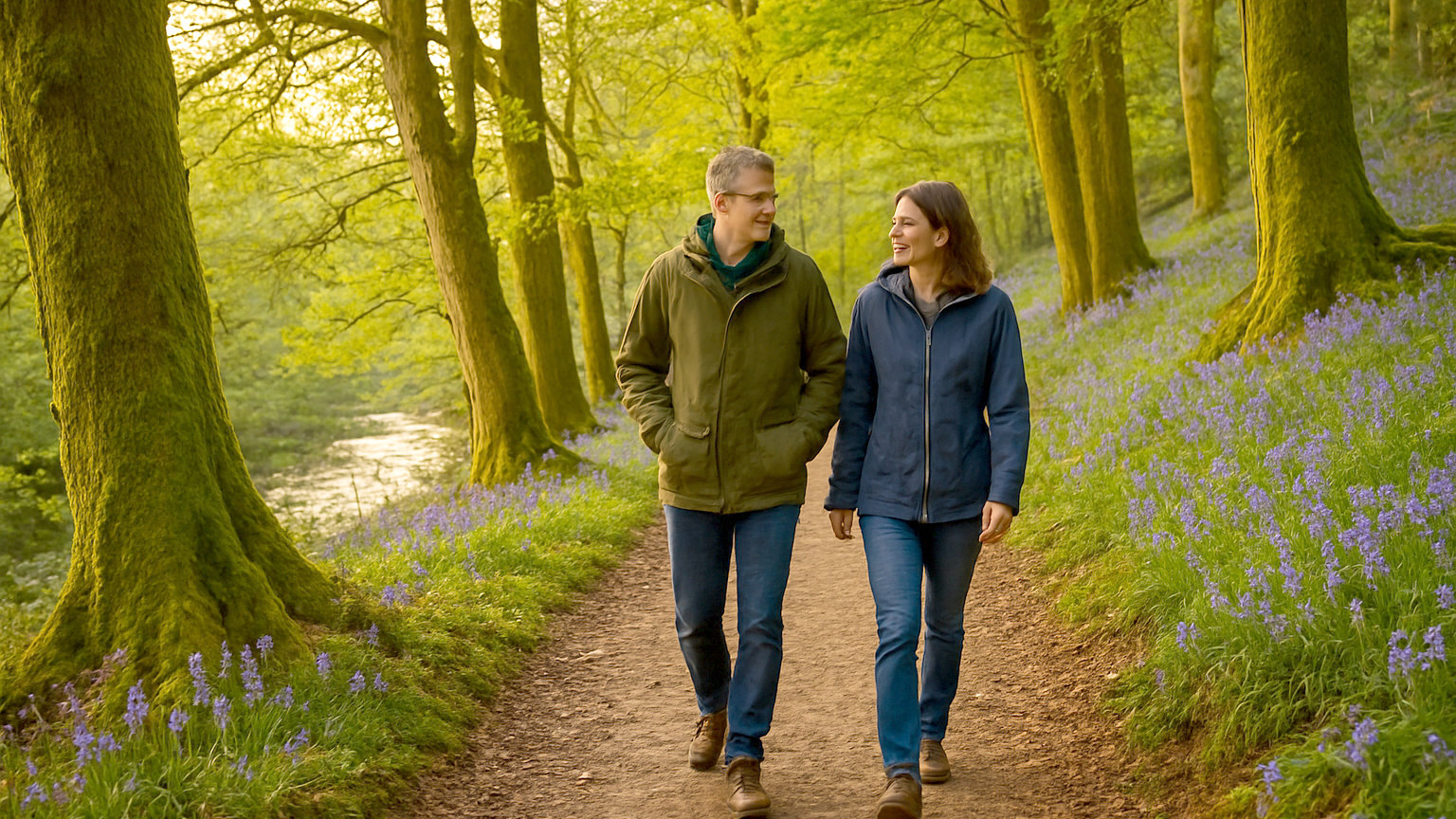
Autumn for colour, particularly in mixed and broadleaf woodland such as the Forest of Dean and Grizedale. Spring for birdsong and bluebells. Summer for the long evenings, though midges can be a nuisance in damp Scottish forests.
Winter is quiet and cheap, and the bare canopy opens up views. Trails can be very muddy, and some forest roads close in snow.
What should you know before booking?
Forests are working environments. Timber harvesting closes trails and involves heavy machinery and lorries on the access roads, and operations are usually published in advance. Windblown trees close paths after storms.
Mobile signal in large forests is frequently absent, and satellite navigation struggles with forest tracks. Take directions and download maps before arriving.
Who do forest breaks suit?
Families, cyclists and anyone wanting a quiet base with activities on the doorstep. The trails are graded and signed, which removes the navigation anxiety some people feel in open country, and children can be given more independence than on a mountain.
They suit anyone seeking dramatic views less well, since forests by their nature obscure them. Pairing a forest stay with a nearby range of hills gives both.
What should you check before booking?
Whether the accommodation is inside the forest or beside it, since the difference is the whole point. Whether trails start from the property or require driving. Whether bike hire is on site or in the nearest town. And whether any harvesting operations are scheduled for your dates, which forestry bodies publish and which can close the trails you came for. A short enquiry to the site before booking usually answers all four.