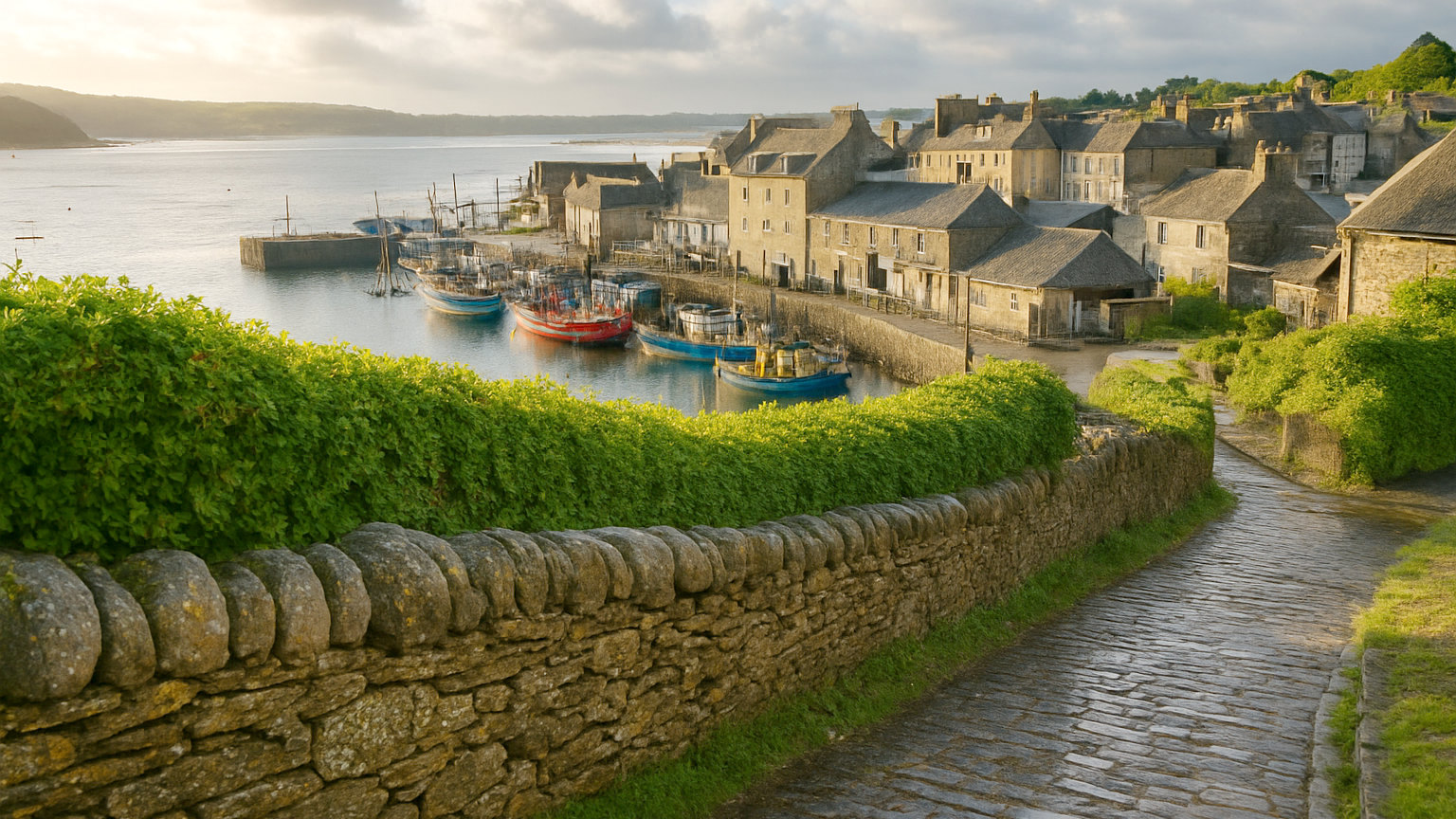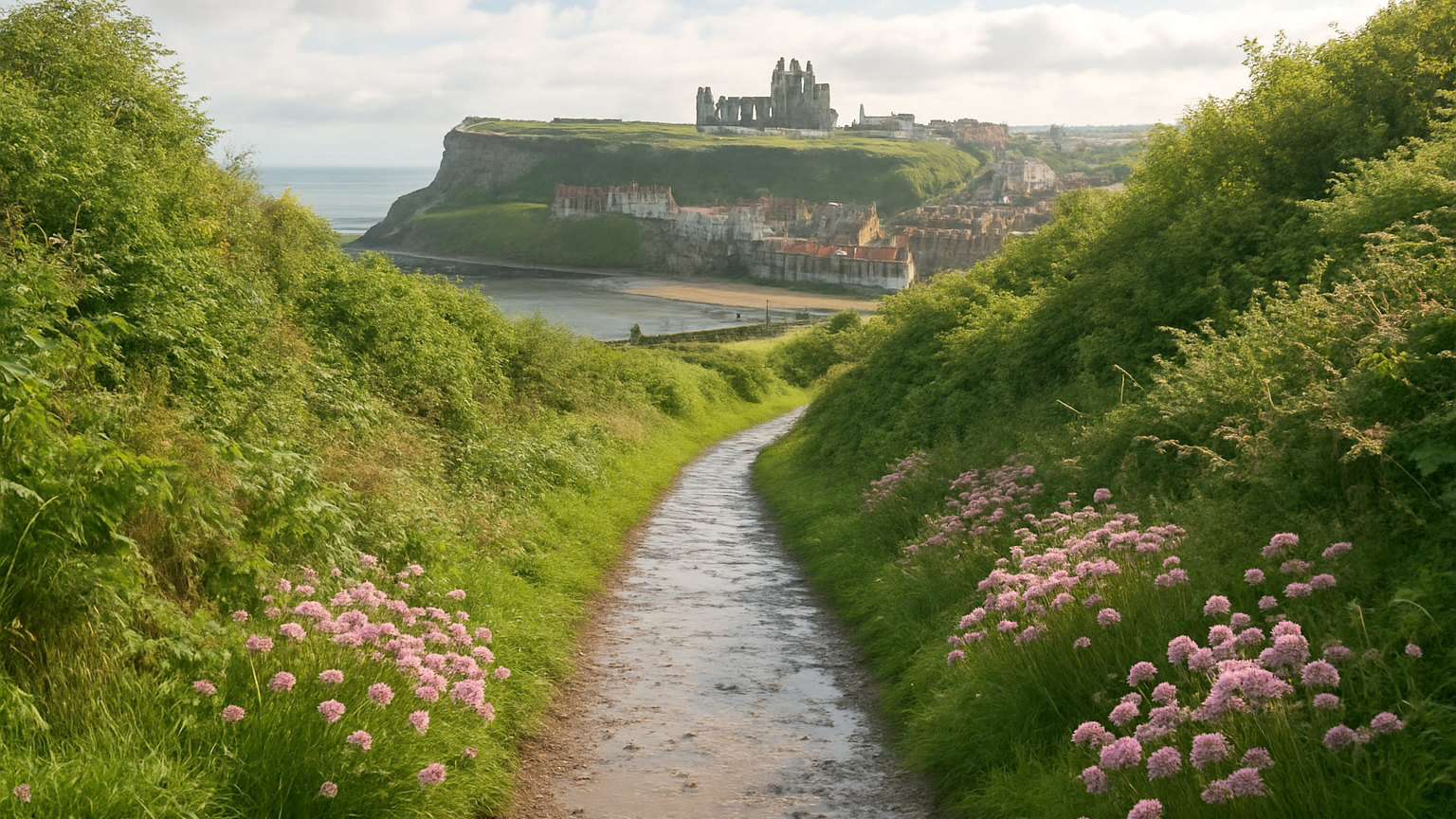
Whitby sits where a river cuts through high cliffs on the North Yorkshire coast, with a ruined abbey above and a working harbour below. It built ships, launched Arctic whalers and sent Captain Cook to sea, and it remains a genuine port rather than a resort with boats.
What is the abbey?
A ruined Benedictine monastery on the east cliff, on the site of a much older Anglo Saxon foundation where a synod of considerable importance to English Christianity was held in 664.
The gaunt shell above the town is the defining image of Whitby and contributed to the atmosphere of a well known Victorian novel partly set here.
What are the 199 steps?
A stone stair climbing from the old town to the church and abbey on the cliff, used for centuries to carry coffins up to the churchyard, with flat sections where bearers rested.
The climb is the main approach and the view back over the harbour from the top is the reason to do it.
What is Whitby jet?
A black fossilised wood found in the local cliffs, worked into jewellery in the town for centuries and enormously fashionable during the Victorian mourning period.
Several workshops still cut and polish it, and genuine Whitby jet is distinguishable from imitations, which the shops will explain.
What about fossils?
The coast here is Jurassic and ammonites erode from the cliffs and shore, particularly around Saltwick and Sandsend after storms.
Collect loose material on the beach rather than hammering the cliffs, which are unstable and dangerous.
What is the Cook connection?
He was apprenticed here and the ships he later sailed to the Pacific were Whitby built colliers, chosen for their strength and shallow draught.
A museum occupies the house where he lodged, and a replica of one of his vessels is sometimes in the harbour.
What about the fish and chips?
Whitby has a strong claim to the best in England, with several long established shops and fish landed locally. Queues in summer are substantial.
Eat it from the paper on the harbour wall, which is the correct method, while keeping a firm grip against the gulls.
What are the goth weekends?
Twice yearly gatherings drawing thousands of people in Victorian and gothic dress, arising from the town's literary associations, held in spring and autumn.
They fill the town entirely and are worth either seeking out or avoiding depending on your preference. Dates are published well ahead.
What is nearby?
The North York Moors immediately inland, with a preserved steam railway running from the town across the moor to Pickering.
Robin Hood's Bay to the south, a village of steep alleys dropping to the sea, and Staithes to the north.
How do you get there?
By train on a branch line from Middlesbrough, or on the preserved railway from Pickering in summer, which is the more enjoyable approach.
By road it is a slow drive across the moors from any direction, which is part of why the town retains its character.
How long do you need?
Two or three nights, with time for the abbey, the town, a coastal walk and a day on the moors.
It is very busy in summer and at the goth weekends, and is at its atmospheric best on a foggy day out of season.
What is the harbour like to walk?
Two piers extend from the harbour mouth, both walkable, giving views back to the abbey and out to sea. The east side holds the old town with narrow yards running off Church Street, and a swing bridge crosses to the newer west side. Walking both sides and both piers takes an hour and is the best way to understand the town.
One final suggestion: climb the steps early. The abbey and churchyard at eight in the morning, with the harbour below and the town not yet awake, is the version of Whitby worth travelling for.