Falmouth sits on one of the deepest natural harbours in the world, which made it a packet port carrying mail across the Atlantic and keeps it a working maritime town today. It is livelier and less picturesque than the Cornish fishing villages and considerably more interesting for it.
What is the harbour?
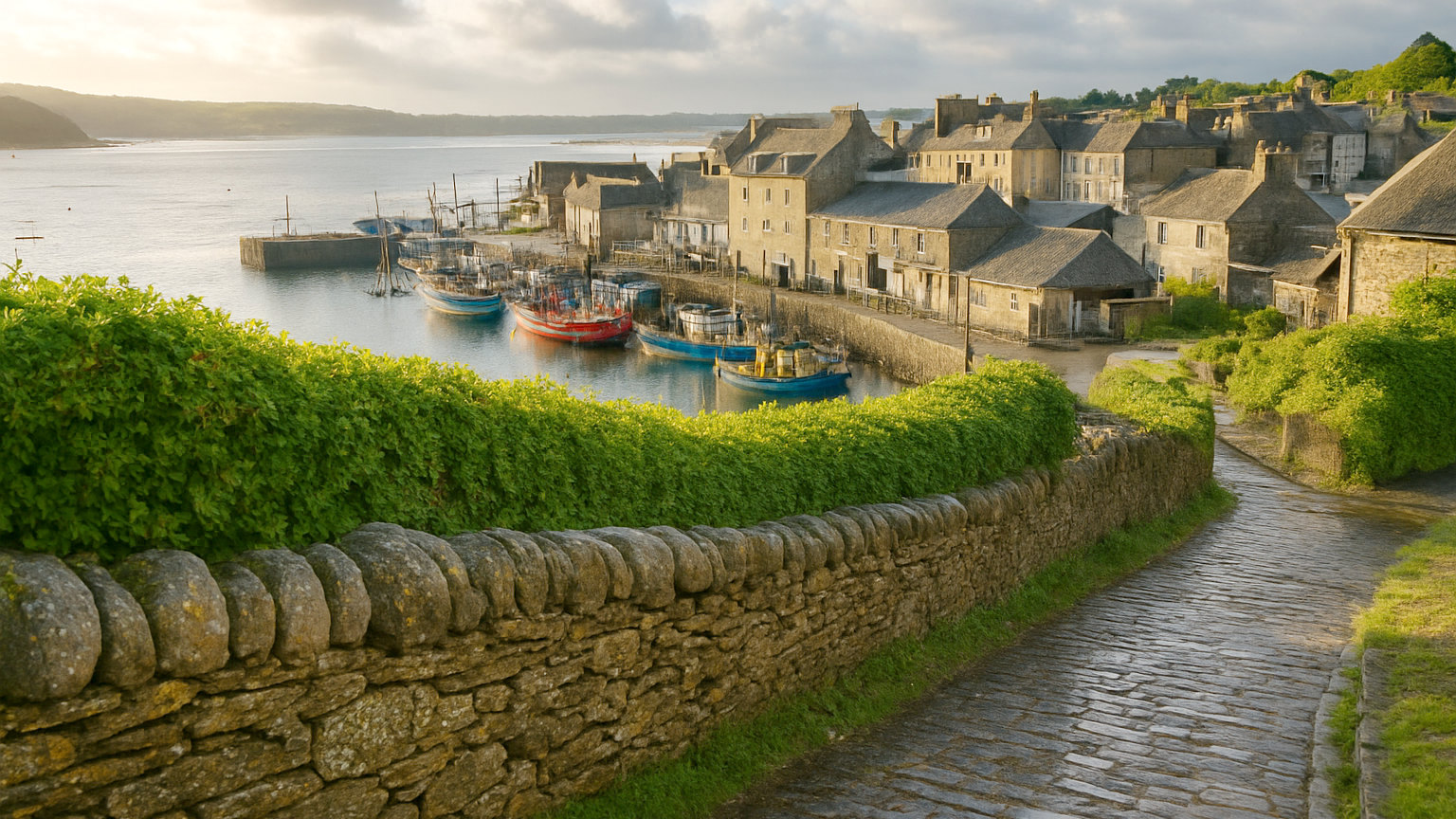
A drowned river valley, deep enough for very large vessels and sheltered on all sides, which is why the town became a naval and commercial port rather than a fishing village.
Ships are still repaired in the docks, and the water is busy with working boats, yachts and ferries rather than being purely ornamental.
What is Pendennis Castle?
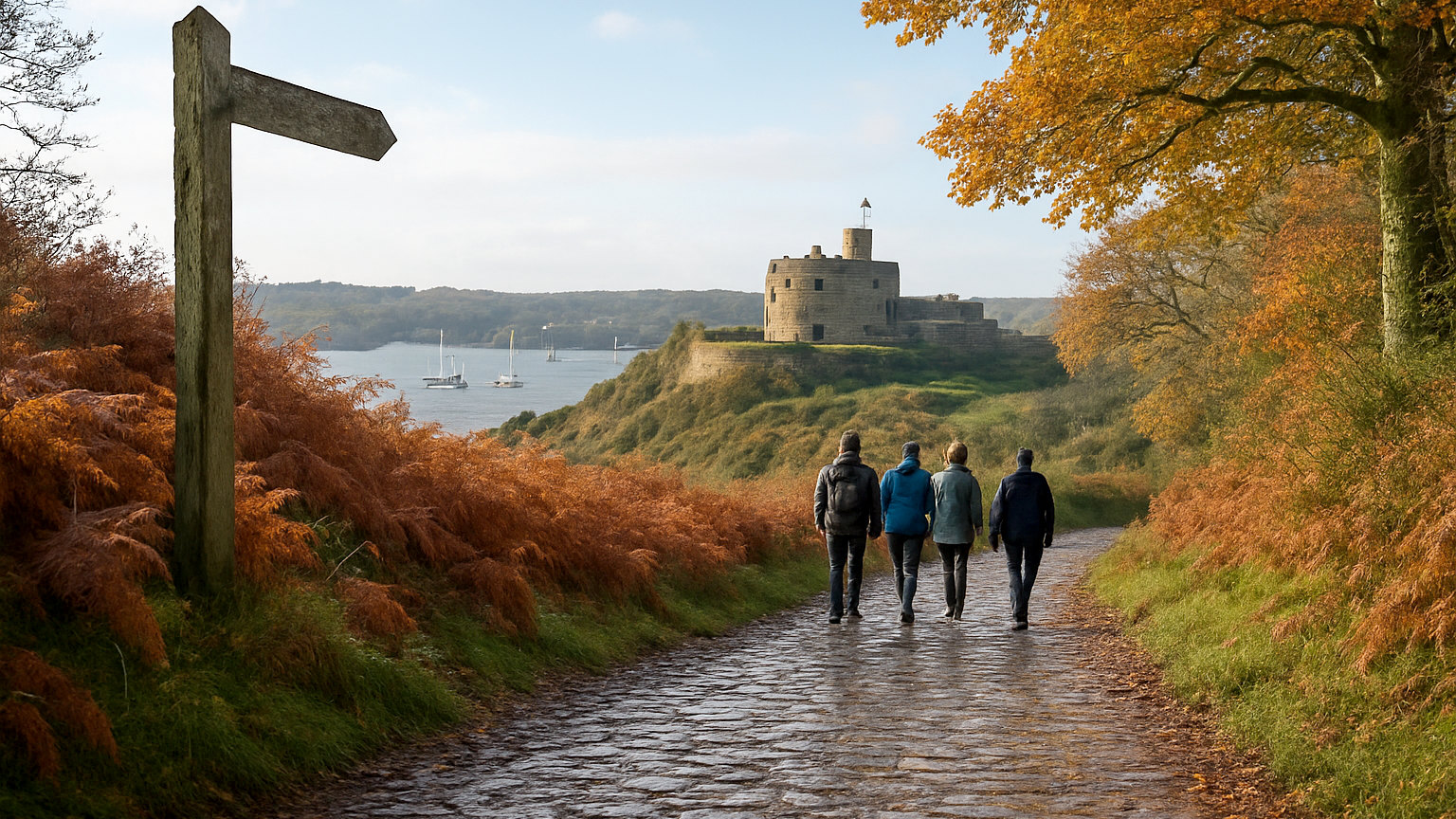
An artillery fort built by Henry the Eighth on the headland, one of a chain along the south coast, with a second fort facing it across the estuary at St Mawes.
It was besieged during the civil war and remained in military use into the twentieth century, so the site covers Tudor, Victorian and wartime defence together.
What is at the maritime museum?
The National Maritime Museum Cornwall on the waterfront, holding a substantial small boat collection displayed hanging in a tall hall, with a tidal gallery below water level.
It covers Cornish maritime history, navigation and boatbuilding, and is the best wet weather option in town.
What are the beaches like?
Gyllyngvase is the main town beach, sandy, sheltered and a short walk from the centre with a cafe and lifeguards in season.
Swanpool and Maenporth lie further round, both smaller and quieter, and the coast path links all three.
Where do the ferries go?
Across to St Mawes on the Roseland peninsula, a short crossing to a village with its own castle and a very different feel.
Also up the Fal to Trelissick and Truro on the tide, and to the Helford river, which is one of the loveliest estuaries in Cornwall.
What is the Helford?
A wooded creek system south of the town, quiet and largely undeveloped, with a passenger ferry, small villages and a celebrated garden at Glendurgan.
Frenchman's Creek, a side inlet, gave its name to a novel and is reached on foot from Helford village.
What is the town like?
A long main street running parallel to the water with independent shops, galleries and pubs, and a substantial art school population that keeps it lively out of season.
It is a real town with a working economy rather than a resort that closes in winter, which is a genuine advantage.
What about sailing?
Falmouth is a major sailing centre with schools, charter and racing, and regattas through the summer including a large tall ships and classics event in some years.
Boat trips run for those who would rather be a passenger, including fishing and wildlife trips.
What gardens are nearby?
Several of the great Cornish gardens are within a short drive, planted in sheltered valleys running down to the water and outstanding in spring for magnolias and camellias.
Trebah and Glendurgan sit side by side on the Helford, and Trelissick is on the Fal.
How do you get there?
By train on a branch line from Truro, which itself is on the main line from London, making it one of the more accessible Cornish towns without a car.
Buses serve the surrounding villages and the ferries cover the water routes.
When should you go?
Spring for the gardens, which peak in March and April, and September for warm sea and fewer people.
The town works in winter too, unlike much of the Cornish coast, since the students and the working port keep it open.
What about Truro?
The county town sits at the head of the river, ten minutes away by train, with a Victorian Gothic cathedral of considerable scale built on the site of a parish church. It has a good museum, a Georgian centre and the county's main shopping, and the tidal boat trip down the river from Truro to Falmouth is among the best short cruises in Cornwall.
What about Pendennis and the headland?
The headland the castle occupies is worth walking round for its own sake, with a path circling it, views to St Anthony lighthouse and out to sea, and Gyllyngvase beach at the far end. It takes under an hour and is free, and it gives the best sense of why the harbour was worth defending.