Brighton grew from a fishing village into a fashionable resort when a prince began visiting in the eighteenth century, and it has kept a certain raffishness ever since. It is the most vigorous seaside town in Britain, an hour from London, and it functions as a small city rather than a resort.
What is the Royal Pavilion?
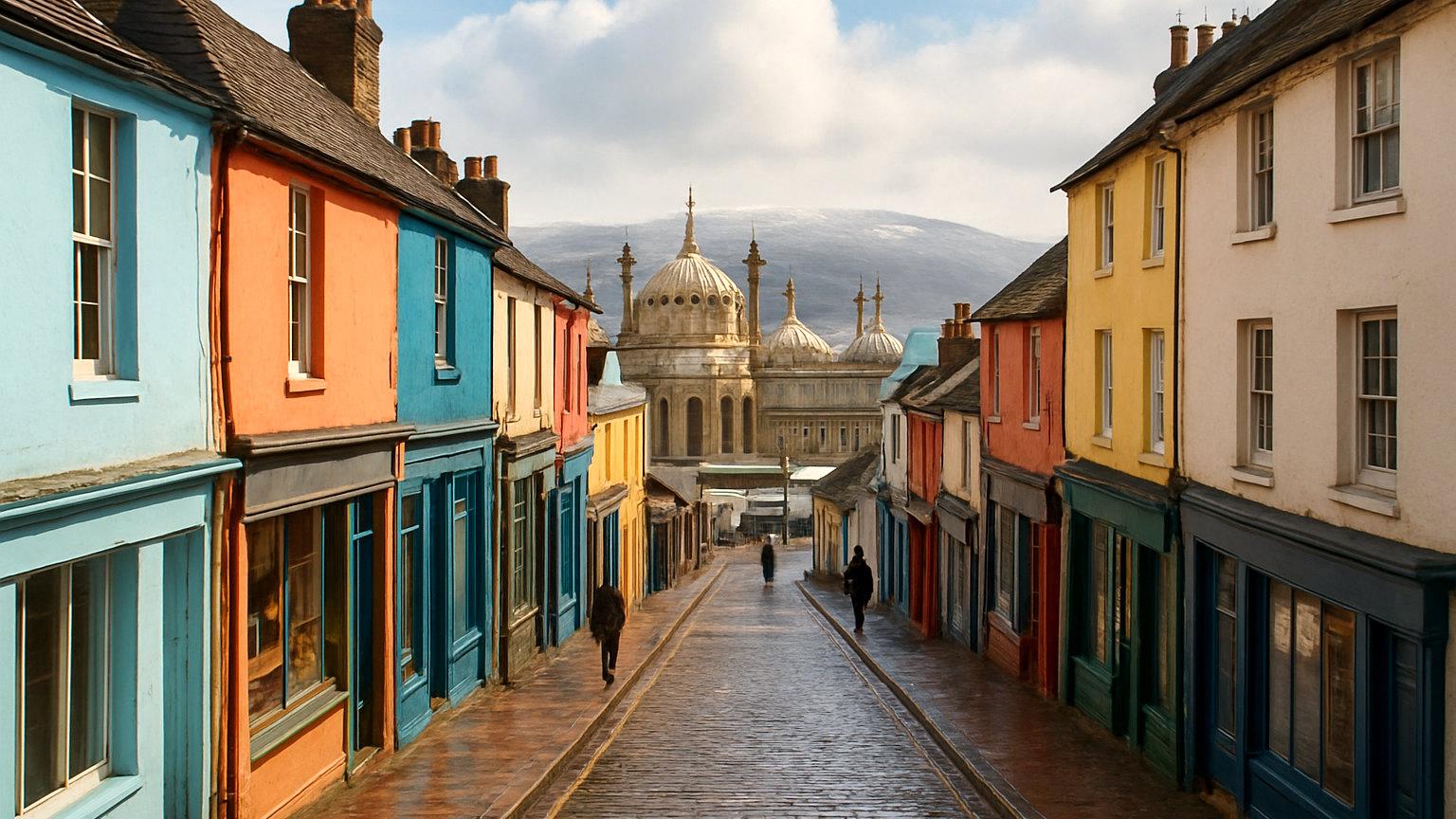
A palace built for the prince who later became George the Fourth, with an exterior of domes and minarets and an interior of Chinese inspired decoration of extraordinary elaboration.
It is unlike anything else in Britain and takes an hour or two. The kitchen, designed with palm tree columns, is as remarkable as the state rooms.
What is the beach like?
Shingle rather than sand, steeply banked, which makes for uncomfortable sitting and easy swimming since the water deepens quickly.
It is lifeguarded in season and busy on any warm day. The remains of a burnt out pier stand in the sea to the west and a working pier with amusements extends from the centre.
What are the Lanes?
A network of narrow alleys on the site of the original fishing village, now holding jewellers, antiques and independent shops, easy to get pleasantly lost in.
North Laine, a separate area despite the confusing name, is larger, less polished and holds vintage clothing, record shops and cafes.
What is the city known for?
A long standing reputation for tolerance and a substantial LGBT community, with a large annual pride event in August that fills the city entirely.
Also for arts, with a major festival each May, a strong music scene and a large student population.
What else is on the seafront?
A viewing tower with a rotating pod, a Victorian aquarium, and a volk's electric railway running along the shore, which is claimed as the oldest operating electric railway in the world.
The beachfront arches hold bars, galleries and workshops, and are best in the evening.
What is behind the town?
The South Downs, which rise immediately inland and are a national park, with Devil's Dyke and Ditchling Beacon both reachable by bus and giving views over the Weald.
The Seven Sisters cliffs are half an hour east and are among the finest coastal walks in southern England.
How do you get there?
By train from London in around an hour, with frequent services, and the station a ten minute walk downhill to the sea.
Driving is unnecessary and parking is expensive and restricted. The city is walkable end to end.
Where should you eat?
Widely. Brighton has a strong independent food scene, a substantial number of vegetarian and vegan restaurants and a good range of prices.
The seafront is touristy; walking two streets inland improves both quality and price considerably.
When should you go?
Spring and autumn for the balance of weather and space. Summer weekends and festival dates are extremely busy and accommodation prices rise accordingly.
Winter is cheap, the sea is dramatic and a starling murmuration gathers around the pier at dusk from autumn onwards.
How long do you need?
Two nights covers the Pavilion, the Lanes, the seafront and an evening. Three allows a day on the Downs or the cliffs.
It also works as a day trip from London, though the town is at its best in the evening once the day visitors have gone.
What about the day trip crowds?
Brighton is an hour from London and receives enormous numbers on hot weekends, when the trains are full, the beach is packed and the seafront is difficult to move along. Midweek and out of season the city is entirely different. Anyone visiting on a summer Saturday should expect a crowd and go early or stay overnight rather than arriving at midday.
What about the surrounding coast?
Hove adjoins Brighton to the west and is quieter, more residential and has the better beach huts and lawns. East of the city the coast rises into the chalk cliffs of the Seven Sisters and Beachy Head, with Newhaven, Seaford and Eastbourne beyond. All are reachable by train or bus along the coast.